
Freightliner Truck and Trailer Trucks For Sale in Ontario
Browse Freightliner truck and trailer units for sale in Ontario, including Cascadia and Columbia models built for regional and long-haul work.
Learn more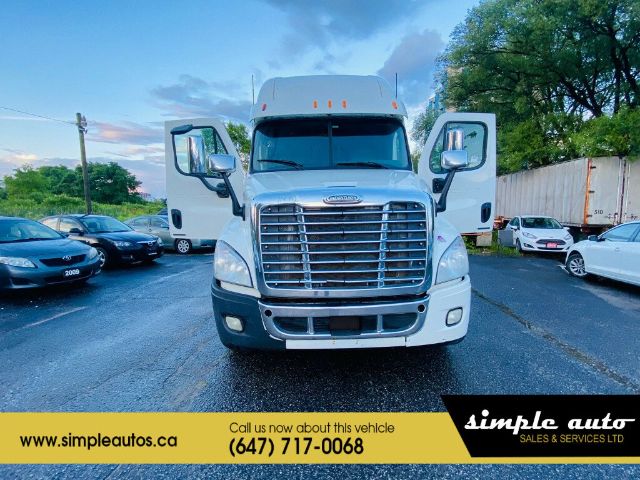
Have freightliner truck and trailer truck to sell? List it here to reach thousands of buyers.
About Freightliner Truck and Trailer Trucks in Ontario
Engine choice matters more than badge preference. Many Freightliner truck and trailer setups are spec'd with Detroit diesel power, commonly DD13 or DD15 engines, with manual, automated manual, or 10-speed and 13-speed transmissions depending on age and duty cycle. A buyer in Ontario should pay close attention to horsepower, rear axle ratio, and whether the truck is geared for highway speed, stop-and-go city work, or mixed regional hauling. Tandem and tri-axle configurations are both common, and suspension details such as air ride, lift axles, and brake condition can have a direct impact on payload flexibility, ride quality, and compliance.
A truck and trailer combination is often chosen for freight that needs better cube utilization and maneuverability than a full semi setup in certain routes. These units are common in LTL, beverage, parcel, moving, and regional freight operations, and they can also be found in transfer and B-train style applications depending on the body and hitch arrangement. When comparing listings, look beyond the cab features and verify PTO requirements, hitch type, frame condition, fifth wheel or pintle setup, trailer connections, and tire spec. Super singles versus duals, aluminum versus steel wheels, and fuel capacity can all affect operating cost and route suitability.
For used Freightliner truck and trailer trucks, condition assessment should focus on the complete working package rather than just the tractor. Review engine history, emissions system status, recent inframe or motor work, clutch and transmission operation, and any record of suspension or frame repairs. In Ontario, buyers should also confirm current safety requirements, registration details, and whether the unit's axle spread and trailer configuration line up with the intended haul. Freightliner remains a popular choice in this class because the trucks are familiar to drivers, widely supported by dealers and independents, and available in specs that suit both owner-operators and larger fleet replacement cycles.
Frequently Asked Questions
What is a Freightliner truck and trailer truck?
A Freightliner truck and trailer truck is a power unit configured to pull or work with a trailer in a combination setup rather than operating strictly as a standalone straight truck or a traditional highway tractor. Depending on the application, it may be used in transfer operations, regional freight, LTL, moving, or other commercial hauling where a truck-and-trailer combination offers the right balance of payload, cube, and maneuverability.
Which Freightliner models are most common in the truck and trailer category?
Freightliner Cascadia and Columbia models are among the most common platforms found in this category, especially on the used market. The Cascadia is typically favored for newer aerodynamics, driver comfort, and highway efficiency, while the Columbia remains common in older fleet and vocational specs because of its simpler design and broad parts availability.
What specs should matter most when buying a used Freightliner truck and trailer unit?
The most important specs are the engine model, horsepower, transmission type, axle configuration, suspension, wheelbase, and the actual trailer or hitch setup the truck was built to handle. Buyers should also verify rear axle ratio, brake condition, tire type, fuel capacity, and any PTO or hydraulic requirements. Those details determine how well the unit will perform in city work, regional runs, or heavier transfer applications.
Are tandem or tri-axle Freightliner truck and trailer trucks better for Ontario work?
That depends on the payload target, route profile, and provincial compliance requirements. Tandem axle trucks are common for lighter regional work and can be simpler to maintain, while tri-axle configurations are often chosen when higher legal payload or better weight distribution is needed. In Ontario, axle spread, suspension condition, and how the truck matches the trailer configuration are all important to legal and operational performance.
Why do many buyers choose Freightliner for truck and trailer applications?
Freightliner is a common choice because the brand has strong market penetration, a large dealer and independent repair network, and familiar components across many fleet specs. That usually makes sourcing parts, training drivers, and handling day-to-day maintenance easier. For used buyers, the popularity of Freightliner also means there is usually a wider range of engine, axle, and transmission combinations available to match a specific job.