
Freightliner Tow Trucks For Sale
Browse Freightliner tow trucks, including M2 rollback and wrecker setups with Cummins power, Allison automatics, and medium-duty to heavy-duty specs.
Learn more
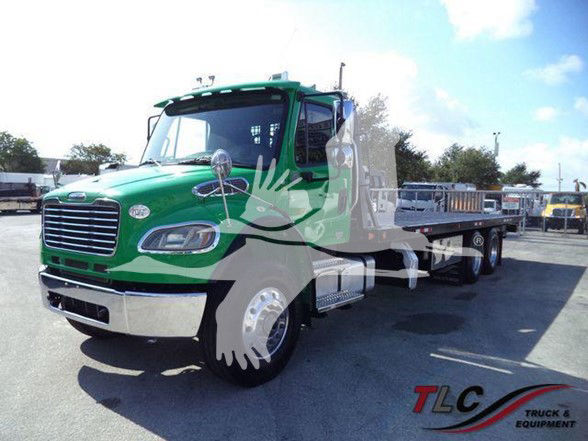
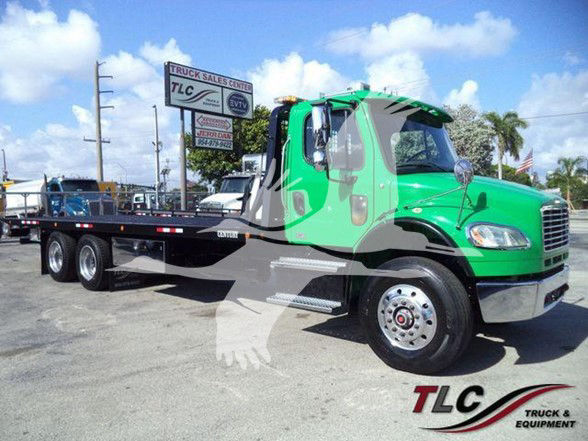
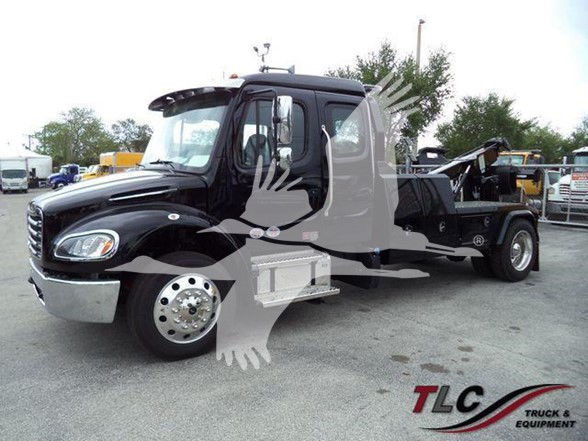
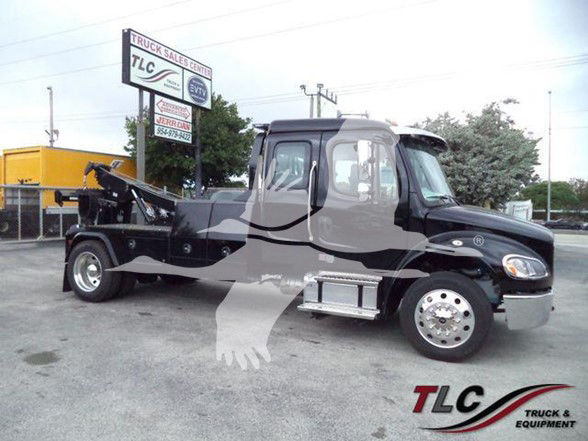
Showing 1 to 12 of 18 results
Have freightliner tow truck to sell? List it here to reach thousands of buyers.
About Freightliner Tow Trucks
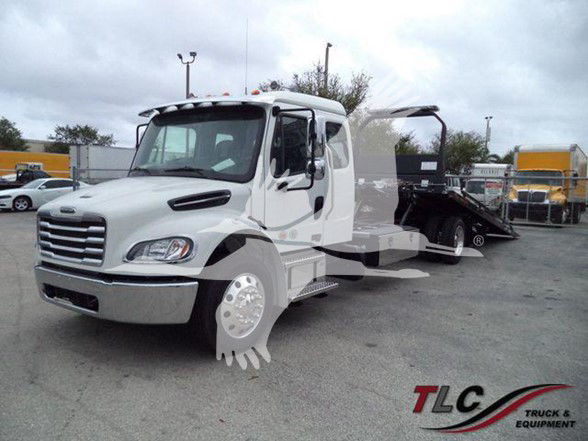
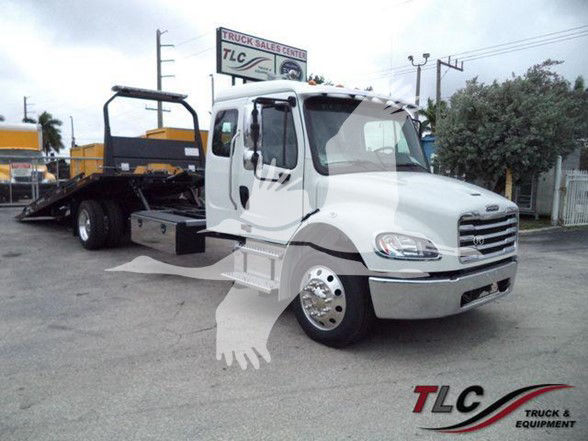
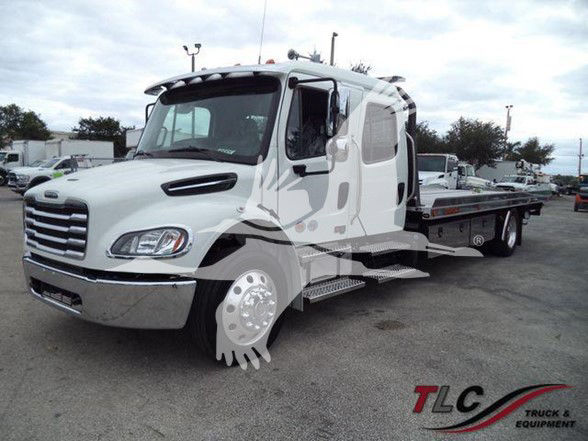
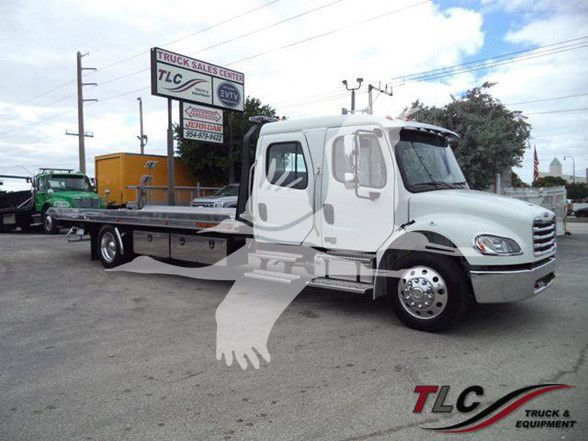
The first decision is usually carrier versus wrecker. Freightliner rollback tow trucks commonly use 22-foot to 28-foot beds, often 102 inches wide, with steel or wood decks, wheel lifts, L-arms, and winches in the 8,000 to 20,000 pound range. These are a fit for repo work, dealership moves, auction transport, light commercial recovery, and general vehicle hauling. Freightliner wreckers, by contrast, are more likely to be spec'd with tandem axles, double frames, PTO-driven hydraulics, dual winches, extendable booms, stabilizers, and higher-capacity underlifts for medium-duty truck recovery. If the work includes vans, box trucks, utility bodies, or loaded commercial units, front axle rating, rear axle rating, wheelbase, and body manufacturer specs become more important than just advertised tonnage.
Most Freightliner tow trucks in this class are powered by Cummins diesel engines paired with Allison automatic transmissions, a combination many operators prefer for stop-and-go towing work and easier driver training. Common horsepower figures fall around 300 to 370 hp, with air brakes, air ride suspension, engine brakes, and aluminum wheels frequently appearing on well-equipped trucks. On rollback units, look closely at bed capacity, deck height, approach angle, wheel-lift rating, toolbox layout, and winch controls. On wreckers, pay attention to boom rating, retracted and extended towing capacity, stabilizer design, free spool function, hydraulic performance, and whether the chassis has dual steering gear, differential lock, or a double frame. Cab setup also matters. Extended cabs can be useful for crews, storage, and day-to-day towing gear.
A buyer comparing Freightliner tow trucks should weigh chassis condition and upfit condition separately. A fleet-maintained M2 chassis with documented axle ratings and service history can be a strong platform, but the tow body still needs careful inspection for cylinder leaks, winch wear, deck cracks, subframe condition, lighting, remote function, and rust around crossmembers and attachment points. Freightliner remains a practical make in the tow market because the M2 platform balances maneuverability, visibility, and vocational durability while supporting a wide range of Jerr-Dan, Century, and similar body installations. For many operators, that makes a Freightliner tow truck a straightforward option for local recovery, roadside service, vehicle transport, and medium-duty towing fleets.
Frequently Asked Questions
What are the most common Freightliner tow truck configurations?
The most common Freightliner tow truck setups are rollback carriers and conventional wreckers built on the Business Class M2 chassis. Rollbacks typically have 22-foot to 28-foot beds with a wheel lift and one or two winches for moving cars, pickups, SUVs, and light commercial vehicles. Wrecker configurations are more likely to include a boom, underlift, stabilizers, and dual winches for recovery work and towing heavier trucks.
Is a Freightliner M2 tow truck a good fit for non-CDL operation?
It can be, if the truck is spec'd at 26,000 GVWR or below and local regulations allow the intended use. Many single-axle Freightliner rollback carriers are built at 26,000 GVWR specifically for operators who want to avoid CDL requirements while still handling standard vehicle transport and light recovery work. Buyers should still confirm state licensing rules, insurance requirements, and actual payload once the carrier body, fuel, tools, and towing gear are included.
What should I look for when buying a used Freightliner rollback tow truck?
Focus on both the chassis and the carrier body. On the chassis side, check engine and transmission service history, brake condition, suspension wear, frame condition, axle ratings, and tire size. On the rollback body, inspect deck structure, slide rails, hydraulic cylinders, hoses, PTO operation, wheel lift, tie-down points, toolboxes, and winch condition. A clean Freightliner chassis does not automatically mean the tow equipment has been maintained to the same standard.
What engine and transmission combinations are common in Freightliner tow trucks?
Cummins diesel engines paired with Allison automatic transmissions are very common in Freightliner tow truck applications. This combination is popular because it handles frequent starts and stops well, is familiar to many technicians, and suits urban towing routes where driver ease and consistent low-speed control matter. Horsepower often falls in the low-300 to mid-300 range on medium-duty units, though exact ratings depend on the chassis and body application.
Are tandem-axle Freightliner tow trucks better than single-axle models?
They are better for heavier work, but not automatically better for every operation. A tandem-axle Freightliner tow truck usually offers higher GVWR, stronger rear axle capacity, and better support for larger rollback bodies, wreckers, booms, and underlifts. A single-axle truck is usually easier to maneuver, lighter, and less expensive to run, making it a strong choice for passenger vehicles, light trucks, and city towing routes.