
Freightliner Tow Trucks For Sale in Florida
Shop Freightliner tow trucks in Florida, including M2 106 rollback carriers and wreckers with Cummins diesel power and towing-ready specs.
Learn more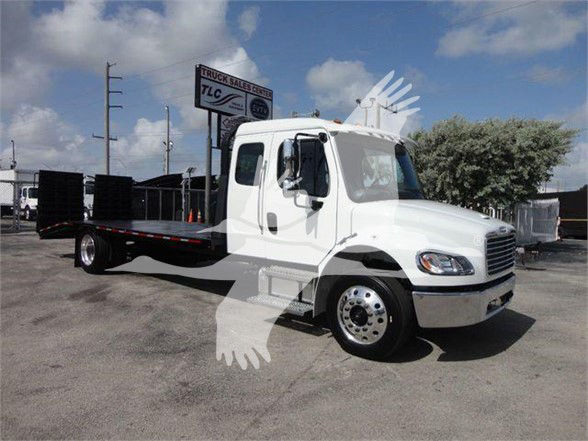
Showing 13 to 16 of 16 results
Have freightliner tow truck to sell? List it here to reach thousands of buyers.
About Freightliner Tow Trucks in Florida
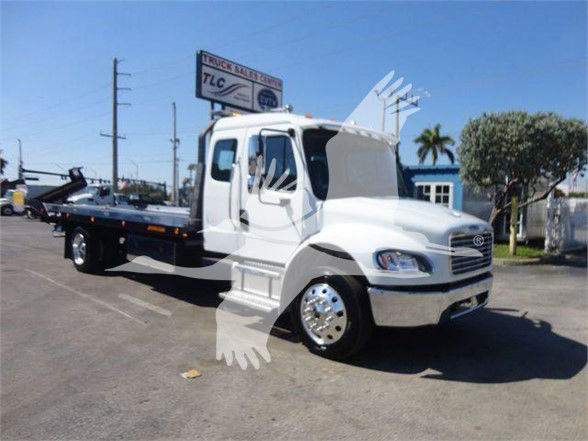
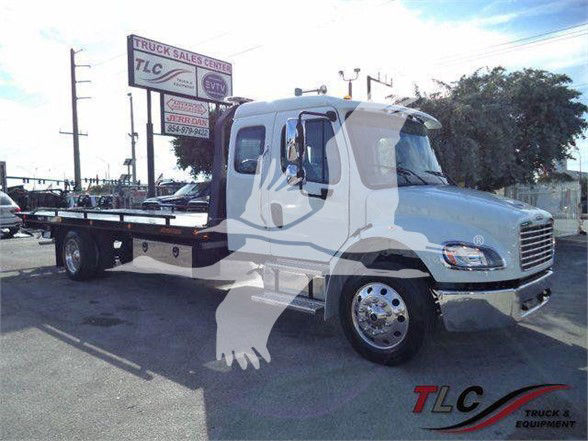
A lot of the buying decision starts with the body style and GVWR. Single-axle M2 tow trucks are often set up around 26,000 GVWR, which can be attractive for urban and regional work where compact dimensions, lower operating weight, and easier driver recruitment matter. Common specs include Cummins diesel engines around the 300 HP range, Allison automatic transmissions, air brakes, air ride suspension, and 4x2 drivetrains. On rollback units, a 21 to 22 foot deck is typical, with steel or aluminum construction, low-profile carrier beds, 8,000 lb winches, and wheel lift packages rated around 3,500 lb. Steel decks tend to appeal to operators who prioritize durability and repairability, while aluminum beds help reduce curb weight and preserve payload.
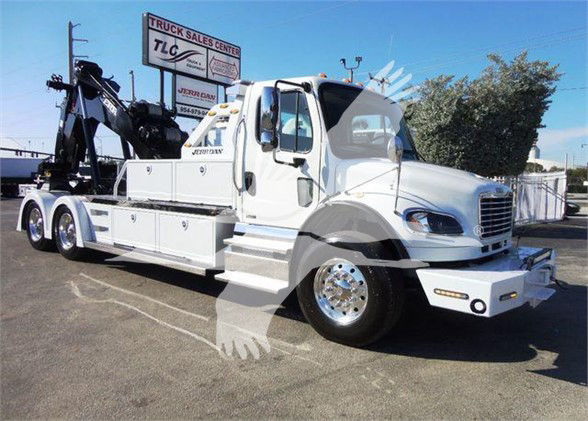
For wrecker applications, Freightliner tow trucks are often equipped with tunnel boxes, work lights, stiff legs, dual winches, sling gear, L-arms, frame forks, and underlift towing equipment. A medium-duty wrecker on an M2 chassis can be a strong fit for municipal towing, police rotation work, commercial account service, and light truck recovery. If heavier work is part of the business model, buyers may also come across tandem-axle Freightliner tow trucks with much higher GVWR ratings and longer rollback bodies. Those trucks are better suited for larger commercial vehicles, equipment transport, and higher-capacity recovery jobs, but they bring different licensing, operating cost, and maneuverability considerations.
Cab layout is another practical decision point. Standard cabs keep overall length tighter, extended cabs add secure interior space for gear, and crew cabs make more sense for operators running multi-person recovery calls. In Florida, corrosion exposure is usually lower than in snow-belt markets, but heat, humidity, and year-round use still make hydraulic condition, bed wear, lighting, PTO operation, suspension condition, and cooling system health worth a close look. Buyers comparing Freightliner tow trucks should pay attention to axle rating, body manufacturer, deck material, wheel lift rating, boom capacity, winch specification, toolbox layout, and how the truck is actually set up for the type of calls it will run day after day.
Frequently Asked Questions
What makes a Freightliner M2 106 a popular tow truck chassis?
The Freightliner M2 106 is popular because it offers a proven medium-duty platform with good maneuverability, broad service support, and compatibility with many rollback and wrecker body manufacturers. It is commonly spec'd with Cummins diesel power, Allison automatic transmissions, air brakes, and air ride suspension, which suits stop-and-go towing work and mixed urban-highway use. For many operators, it hits the middle ground between a light-duty carrier and a heavier tandem recovery truck.
What is the difference between a Freightliner rollback and a Freightliner wrecker?
A rollback uses a tilting slide-back deck to load and transport vehicles fully off the ground, which is ideal for cars, light trucks, all-wheel-drive vehicles, and equipment that should not be towed by the wheels. A wrecker uses an underlift, wheel lift, boom, and winches to recover or tow vehicles without a full carrier deck. Rollbacks are often preferred for transport and damage-free loading, while wreckers are better for repossession, recovery, tight-location towing, and roadside service work.
Should I choose a steel bed or aluminum bed on a Freightliner tow truck?
Steel beds are typically favored for toughness, lower upfront cost, and easier repair after hard commercial use. Aluminum beds reduce weight, which can improve payload margin and fuel efficiency, and they resist corrosion well in humid coastal regions like Florida. The right choice depends on the truck's duty cycle, how rough the loading environment is, and whether lower empty weight or maximum durability matters more to your operation.
What capacity range is typical for Freightliner tow trucks?
Many Freightliner tow trucks in the medium-duty class are built on single-axle chassis around 26,000 GVWR and use rollback beds rated around 6 tons or wheel lifts around 3,500 lb. Wrecker bodies may include dual 12,000 lb winches and booms rated for medium-duty recovery work. Heavier tandem-axle Freightliner tow trucks can move well beyond that range and are used when the operation regularly handles larger trucks, work vehicles, or equipment.
What should I inspect first on a used Freightliner tow truck?
Start with the PTO and hydraulic system, because bed function, boom operation, winch performance, and underlift response all depend on smooth hydraulic operation. Then inspect the frame, crossmembers, deck structure, wheel lift components, winch cables or synthetic lines, lighting, air brake system, suspension, and signs of overloading or poor body installation. On the chassis side, service history, engine hours if available, transmission behavior, cooling system condition, and tire wear patterns can tell you a lot about how the truck was used and maintained.