
Tank Trucks For Sale in Colorado
Shop tank trucks for sale in Colorado, including petroleum transport units with common specs, tank ratings, capacities, and operating features.
Learn moreNo exact matches found for your search
Showing Tank Trucks instead.

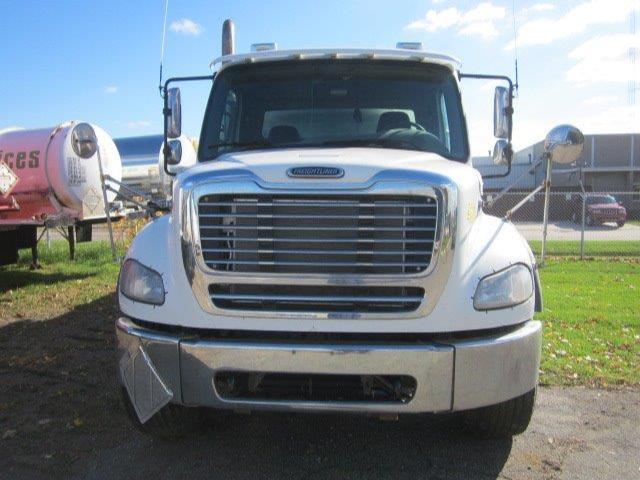
Have tank truck to sell? List it here to reach thousands of buyers.
About Tank Trucks in Colorado
Frequently Asked Questions
What should I check first when buying a used tank truck?
Start with the tank specification, intended product, and compliance status before looking at cosmetic details. A used tank truck must be matched to the commodity it will haul, whether that is gasoline, diesel, oil, water, or another liquid. Confirm the tank code, compartment layout, gallon capacity, discharge configuration, pump or PTO setup, and safety equipment such as vapor recovery and overfill protection. Then review the chassis separately, including engine hours, transmission, axle ratings, suspension, wheelbase, brake condition, and maintenance history. On a tank truck, the tank and the truck have to work as one unit.
What tank capacity is common on a straight tank truck?
A common straight tank truck capacity is roughly 3,000 to 5,000 gallons, although the exact number depends on axle ratings, product weight, compartment design, and state bridge requirements. Petroleum delivery trucks often fall in the low-to-mid 4,000 gallon range because that size balances payload with maneuverability. Heavier products reduce legal payload, so capacity alone does not tell the full story. Buyers should compare gross vehicle weight rating, tare weight, and intended commodity to understand real usable payload.
Why do petroleum tank trucks often use PTO and discharge equipment?
Many petroleum tank trucks use a power take-off, or PTO, to run pumps and related unloading equipment. This allows the truck to transfer product efficiently at delivery points without relying on separate portable systems. PTO-driven setups are especially important when the truck is making route deliveries, feeding tanks on site, or unloading through metered systems. Buyers should confirm the PTO operates properly and that the pump, plumbing, valves, and hose storage are appropriate for the delivery method they need.
Are single-compartment or multi-compartment tank trucks better?
It depends on the delivery pattern. A single-compartment tank truck is simpler and often preferred for hauling one product in larger volume, such as bulk fuel to one location. A multi-compartment tank truck gives more flexibility for route work because it can carry different products or grades on the same truck. That flexibility adds complexity in valves, piping, metering, and load management, so buyers should choose based on operational need rather than assuming more compartments are always better.
What chassis specs matter most on a tank truck in Colorado?
Powertrain and wheelbase are key because tank trucks carry shifting liquid loads and often operate in mixed terrain. In Colorado, many buyers look for enough horsepower and torque for highway grades, plus rear axle ratios that support both startability and cruising speed. Suspension type, axle capacity, braking system, and tire size also matter because they affect stability and legal payload. A longer wheelbase can help with tank fit and ride quality, while a shorter wheelbase may improve maneuverability at terminals, retail locations, and rural delivery points.