
New Ford Service/Utility Trucks For Sale in Missouri
Shop new Ford service and utility trucks with work-ready bodies, cab-chassis options, and upfitter features for fleets, contractors, and field service.
Learn more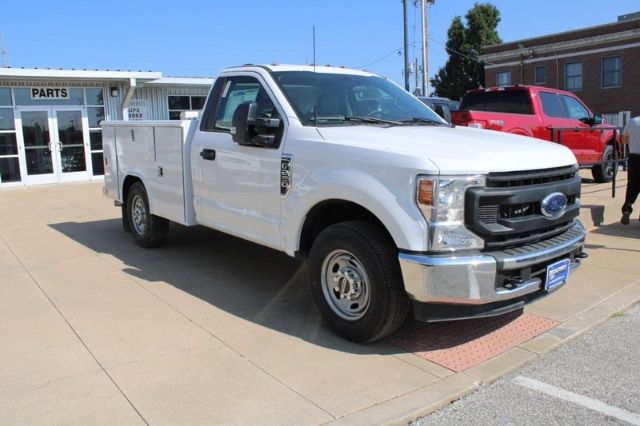
Have new ford service/utility truck to sell? List it here to reach thousands of buyers.
About New Ford Service/Utility Trucks in Missouri
Powertrain choice matters because service trucks spend a lot of time idling, making short trips, and operating PTO-driven or electrically powered accessories. Ford gas engines are popular in utility applications because of lower acquisition cost and straightforward maintenance, especially for municipal, contractor, and campus fleets. Diesel options can make sense when the truck will carry heavier bodies, tow regularly, or log higher annual miles. Buyers should also look closely at axle ratio, alternator output, dual battery setups, upfitter switches, trailer brake controllers, and whether the truck is 4x2 or 4x4. In Missouri, 4x4 can be a practical advantage for construction sites, rural service routes, and winter weather, while 4x2 often works well for paved-route fleet use with a lower upfront cost.
The body itself is what separates a basic work truck from a productive service unit. Common features include multiple side compartments, locking latches, adjustable shelving, ladder racks, hitches, step bumpers, and rear work lighting. Reading, Knapheide, Stahl, and other commercial body manufacturers are common in this segment, and body layout should match the trade. Electricians, plumbers, HVAC technicians, telecom crews, and general contractors all use service trucks differently. A buyer comparing listings should pay attention to body length, compartment depth, interior shelf configuration, material type, and corrosion protection. Steel bodies remain common for durability and cost control, while aluminum bodies can reduce curb weight and improve payload.
Cab configuration, interior trim, and safety technology also affect long-term usability. Regular cab units maximize body length on a shorter wheelbase, while SuperCab and crew cab setups add space for tools, paperwork, or extra personnel. Features such as backup cameras, trailer assist equipment, power groups, integrated towing packages, and factory telematics support can improve driver acceptance and fleet oversight. For many buyers, the best new Ford service truck is the one with the right GVWR, service body layout, electrical capacity, and chassis spec for the exact job, not simply the biggest truck on the page.
Frequently Asked Questions
What is the difference between a service truck and a utility truck?
The terms are often used interchangeably in the light and medium-duty market. Most buyers use both to describe a work truck with exterior compartments, secure storage, and a service body mounted behind the cab. In some fleet settings, a utility truck may refer more broadly to trucks used by public works, telecom, or power companies, while a service truck may describe a mechanic or contractor support truck. The important factor is the body layout, payload capacity, and equipment package rather than the label.
Which Ford chassis is best for a service body?
That depends on payload, towing needs, and body equipment. An F-250 or F-350 can work well for lighter service body applications with hand tools, parts bins, and limited towing. An F-450 or F-550 is usually a better fit when the truck carries heavy compressors, welders, cranes, fuel transfer equipment, or a fully stocked mechanic body. Buyers should compare GVWR, rear axle rating, body weight, and expected daily cargo before selecting a chassis.
Should I choose a gas or diesel engine in a Ford service truck?
Gas engines are a strong choice for many service fleets because they usually cost less upfront and are well suited to shorter routes, idle time, and stop-and-go operation. Diesel engines can offer better low-end torque and may be the better option for heavier loads, more frequent towing, or higher annual mileage. The right answer comes down to duty cycle, total operating cost, and whether the truck will spend most of its life on local calls or hauling heavier equipment between jobs.
What body features matter most on a new service or utility truck?
The most important body features are the ones that support technician productivity and secure storage. Buyers usually focus on compartment size, shelf adjustability, locking hardware, ladder rack design, hitch setup, rear access, work lights, and bumper configuration. Material choice also matters because steel and aluminum bodies affect payload, corrosion resistance, and repair cost differently. A body that keeps tools organized and easy to reach can save time on every stop.
Is 4x4 worth it on a new Ford utility truck in Missouri?
For many Missouri buyers, 4x4 is a practical option rather than a luxury. It can help on gravel roads, muddy jobsites, utility easements, and winter conditions that are common across parts of the state. A 4x2 truck may still be the better value for fleets working mainly on pavement or in urban service areas. The decision should be based on terrain, seasonal weather exposure, and how costly downtime would be if a truck loses traction on the job.