
Rollback Trucks For Sale in Montana
Browse rollback trucks for sale, including low-profile carriers and wheel-lift setups built for towing, recovery, transport, and roadside service.
Learn moreBrowse Rollback Trucks by Make
Have rollback truck to sell? List it here to reach thousands of buyers.
About Rollback Trucks in Montana
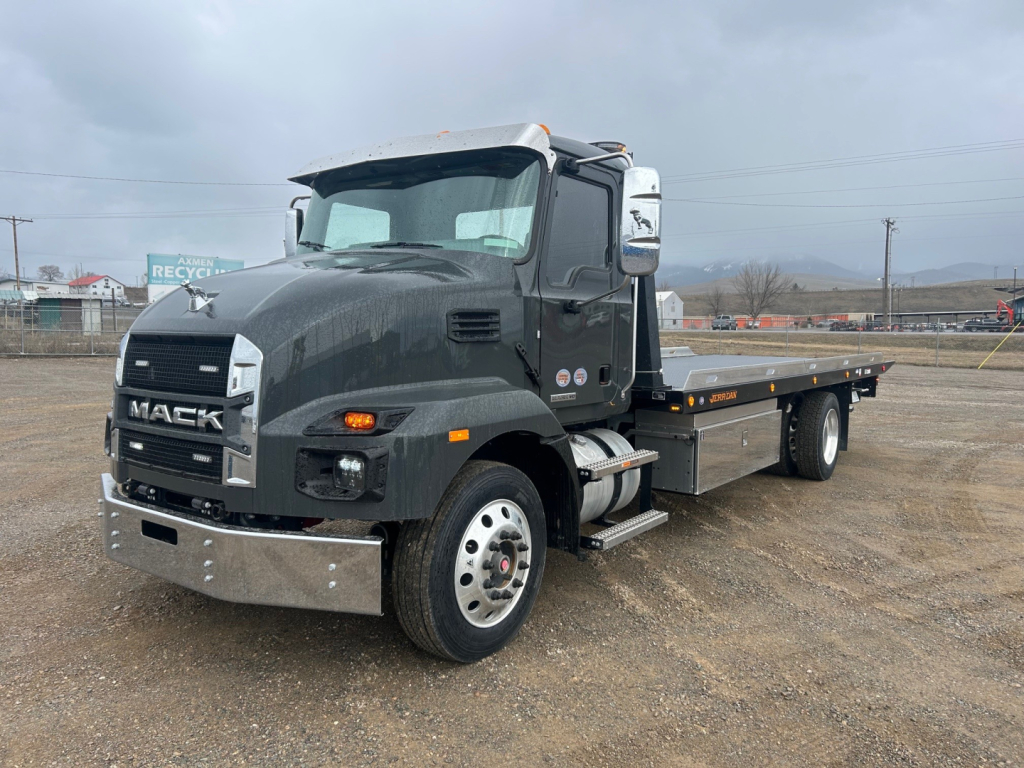
Chassis choice is just as important as the carrier body. Many rollback trucks are spec'd on Class 6 and Class 7 single-axle platforms, often with diesel engines in the 260 to 300 horsepower range and automatic transmissions for stop-and-go towing work. Non-CDL configurations are popular when the GVWR stays at 26,000 pounds or below, but heavier 31,000-pound GVWR setups are common when more deck strength, payload, or wheel-lift performance is needed. Wheelbase, rear axle ratio, suspension type, and turning radius all affect how the truck behaves in tight town streets, on gravel approaches, and at highway speed. Air-ride rear suspension can improve ride quality for transported vehicles, while locking differentials are valuable in snow, mud, and uneven shoulder conditions.
Carrier body specs deserve close attention because small differences change day-to-day usability. Common features include steel or aluminum beds, removable side rails, dual side controls, underbody tool storage, PTO-driven hydraulic systems, and wheel-lifts rated for motorcycles up to light trucks depending on the setup. Winches in the 8,000- to 10,000-pound class are typical on light- and medium-duty rollback trucks, but line speed, cable or synthetic rope preference, and tensioner design matter as much as headline rating. Buyers should also check deck construction, crossmember spacing, tie-down points, pylon design, and how easily the bed can service low vehicles without scraping. For mixed-use towing, a low-profile carrier with an integrated wheel-lift gives more flexibility for recovery, repossession, dealer transport, and short-haul relocation work.
The best rollback truck is the one that fits the work radius, terrain, and average load, not just the biggest rating on paper. In Montana, cold-weather starting equipment, block heaters, corrosion resistance, fuel capacity, and storage for chains, straps, and skates are practical considerations. Service access to the chassis, hydraulic components, winch, and carrier body should be part of the buying decision, especially for operators covering wide distances between calls. A well-matched rollback can handle daily towing, roadside recovery, auction transport, and fleet support with less vehicle damage risk and faster cycle times than many alternative setups.
Frequently Asked Questions
What is a rollback truck used for?
A rollback truck is used to transport vehicles by tilting and sliding the bed to ground level so the vehicle can be winched or driven onto the deck. This design is commonly used for towing disabled vehicles, moving wrecked units, transporting low-clearance cars, dealer transfers, auction runs, and light equipment hauling. Because the whole vehicle rides on the bed, rollback trucks generally reduce the risk of driveline damage and tire wear compared with towing a vehicle with only two wheels off the ground.
What deck length is most common on a rollback truck?
A 21- or 22-foot deck is one of the most common configurations for light- and medium-duty rollback trucks. That size works well for most passenger cars, pickups, SUVs, and many vans while still keeping the truck manageable in town and on service calls. Buyers hauling longer crew-cab pickups, commercial vans, or small equipment should pay attention not only to deck length but also usable deck space, headboard design, wheel-lift interference, and bed approach angle.
Do I need a CDL to operate a rollback truck?
That depends on the truck's GVWR and the regulations that apply to your operation. Many rollback trucks are built in non-CDL configurations at 26,000 pounds GVWR or below, which appeals to fleets trying to widen the driver pool. Heavier rollback trucks often exceed that threshold and may require a CDL. Buyers should verify GVWR, combined weight ratings, state rules, and any towing or recovery-specific requirements before purchase.
What should I look for in a rollback truck for Montana conditions?
For Montana use, traction and cold-weather reliability should be high on the list. A locking differential, appropriate rear axle ratio, strong heater and defrost performance, block heater, and good ground clearance can all help in winter and on rural roads. Fuel capacity matters when service areas are wide, and corrosion resistance is important if the truck will see road chemicals, snow, and repeated weather exposure. Buyers should also consider storage space for chains, binders, straps, skates, and recovery gear.
Is a low-profile rollback bed better than a standard carrier bed?
A low-profile bed is often the better choice if you regularly transport sports cars, lowered vehicles, EVs with low front fascias, or damaged vehicles with limited ground clearance. The lower loading angle helps reduce scraping and makes winching easier on vehicles that cannot roll freely. A standard carrier bed may still be suitable for general towing, but buyers handling a broad mix of passenger vehicles usually see real value in the extra loading versatility of a low-profile setup.