
Mack Rollback Trucks For Sale in Montana
Shop Mack rollback trucks for towing and vehicle transport. Compare MD6 specs, carrier bodies, GVWR, wheel-lift capacity, and winch options.
Learn more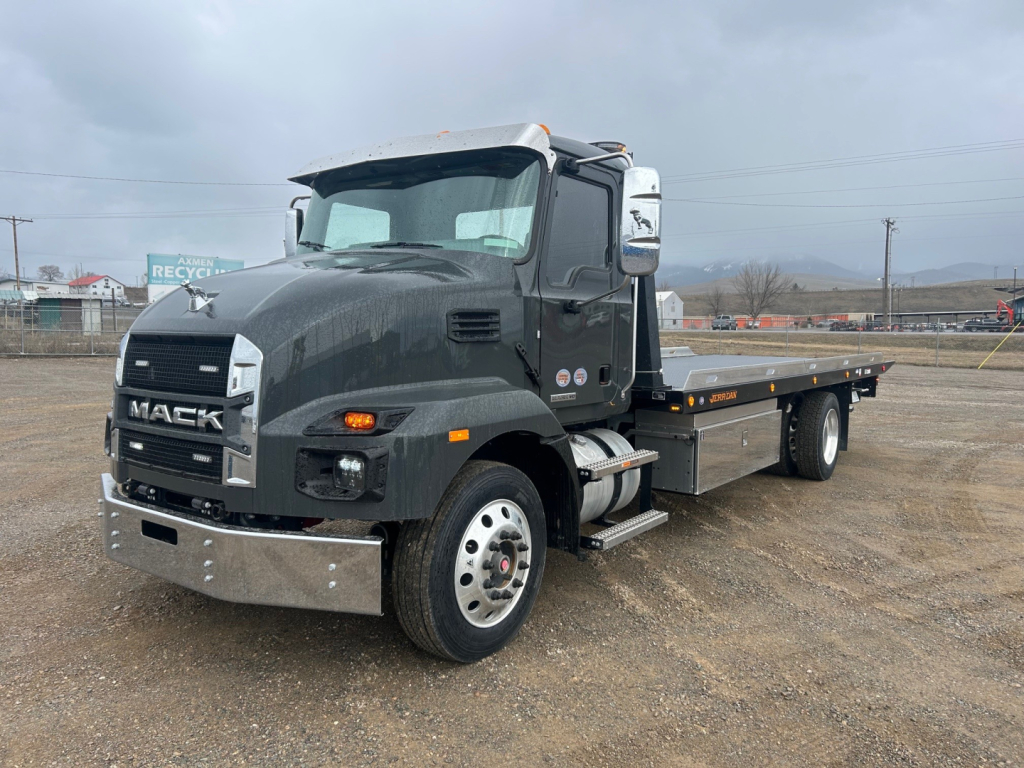
Have mack rollback truck to sell? List it here to reach thousands of buyers.
About Mack Rollback Trucks in Montana
A common setup in this class is a Class 6 chassis such as the Mack MD6 with a 22-foot low-profile carrier body, single rear axle, automatic transmission, and diesel power in the 250 to 300 horsepower range. On many rollback trucks, the body spec matters as much as the cab and chassis. Bed width, deck material, pylon style, removable rails, wheel-lift rating, and winch capacity all affect how versatile the truck will be. A 6-ton deck with a 3,500-lb wheel-lift and a 10,000-lb winch is a typical light-duty towing and transport package, but buyers should confirm real working capacity after accounting for chassis weight, body weight, fuel, driver, and tools. Low-profile decks can make loading easier for lowered cars, SUVs, and light trucks, while adjustable pylons and removable rails add flexibility for mixed-use service.
Powertrain choice is important on a rollback because start-stop work, PTO operation, and urban maneuvering put different demands on the truck than over-the-road freight hauling. Many Mack rollback configurations use an Allison automatic paired with a medium-duty diesel, which is a practical combination for tow work because it simplifies driver training, improves low-speed control, and works well with PTO-driven hydraulic systems. Rear axle ratio, suspension type, wheelbase, and brake spec all affect performance. A longer wheelbase can improve deck length and ride quality but may reduce maneuverability in tight lots or city streets. Air rear suspension can help ride and load stability, while locking differentials are valuable for winter weather, gravel yards, and uneven recovery locations common in rural parts of Montana.
The best Mack rollback truck for sale depends on the type of calls you run most often. For dealership moves, rental fleet transport, and general light-duty towing, a non-CDL-friendly configuration near the 26,000-lb threshold can be attractive if payload still fits your work. For heavier pickups, cargo vans, and frequent wheel-lift use, buyers may want more chassis capacity, stronger rear axle ratings, and a body spec that supports repeated commercial service. Look closely at the carrier manufacturer, hydraulic setup, toolbox placement, tie-down system, lighting, and control layout on both sides of the body. Those details affect loading speed, operator safety, and long-term uptime just as much as the badge on the hood.
Frequently Asked Questions
What should I look at first when buying a Mack rollback truck?
Start with GVWR, front and rear axle ratings, wheelbase, and the actual carrier body specifications. On a rollback, the usable capacity depends on the complete truck, not just the deck rating printed by the body manufacturer. Bed length, deck construction, wheel-lift rating, winch capacity, and chassis curb weight all affect what you can legally transport. Buyers should also verify PTO and hydraulic setup, control placement, and whether the truck is configured for non-CDL or CDL operation based on intended use.
Is a Mack MD6 rollback a good choice for light-duty towing and vehicle transport?
Yes, the Mack MD6 is a strong fit for light-duty rollback work when spec'd correctly. It is commonly used for dealership transport, private-party vehicle moves, auction runs, and general towing of cars, SUVs, and light pickups. A medium-duty chassis with an automatic transmission and a 22-foot carrier body offers a good balance of maneuverability and payload. The right setup depends on how often you load heavier vehicles, operate in tight urban areas, or need to stay below CDL thresholds.
What bed length and body features are common on a Mack rollback truck?
A 21-foot or 22-foot carrier body is common in this category, often with a low-profile deck for easier loading angles. Buyers will frequently see steel or aluminum construction, removable rails, adjustable pylons, integrated toolboxes, wheel-lifts, and recovery winches. Low-profile decks help with lower-clearance vehicles, while wheel-lifts add versatility for towing combinations or quick hookups. The best body package depends on whether the truck is used more for transport, recovery, repossession, or a mix of all three.
Do I need a CDL to operate a Mack rollback truck?
Not always. Some Mack rollback trucks are built to stay under the 26,001-lb GVWR threshold, which can make them attractive for non-CDL operation in many applications. That said, CDL requirements depend on GVWR, GCWR, state regulations, and how the truck is actually used. Buyers should verify registration class, intended load range, and any towing combination weights before assuming a rollback is non-CDL compliant for their operation.
Why do transmission and rear axle ratio matter on a rollback truck?
Rollback trucks spend a lot of time in stop-and-go driving, low-speed loading, and PTO-driven hydraulic work, so gearing and transmission behavior matter. An Allison automatic is popular because it improves ease of operation and smooth low-speed control during loading and unloading. Rear axle ratio affects launch performance, gradeability, cruising speed, and how the truck feels with a loaded deck. A deeper ratio can help in hilly terrain and frequent start-stop use, while the wrong gearing can hurt drivability and fuel economy.