
Mack Rollback Trucks For Sale in Kansas
Shop Mack rollback trucks for towing and recovery. Compare Granite specs, deck lengths, winch capacity, axle ratings, and body setup.
Learn more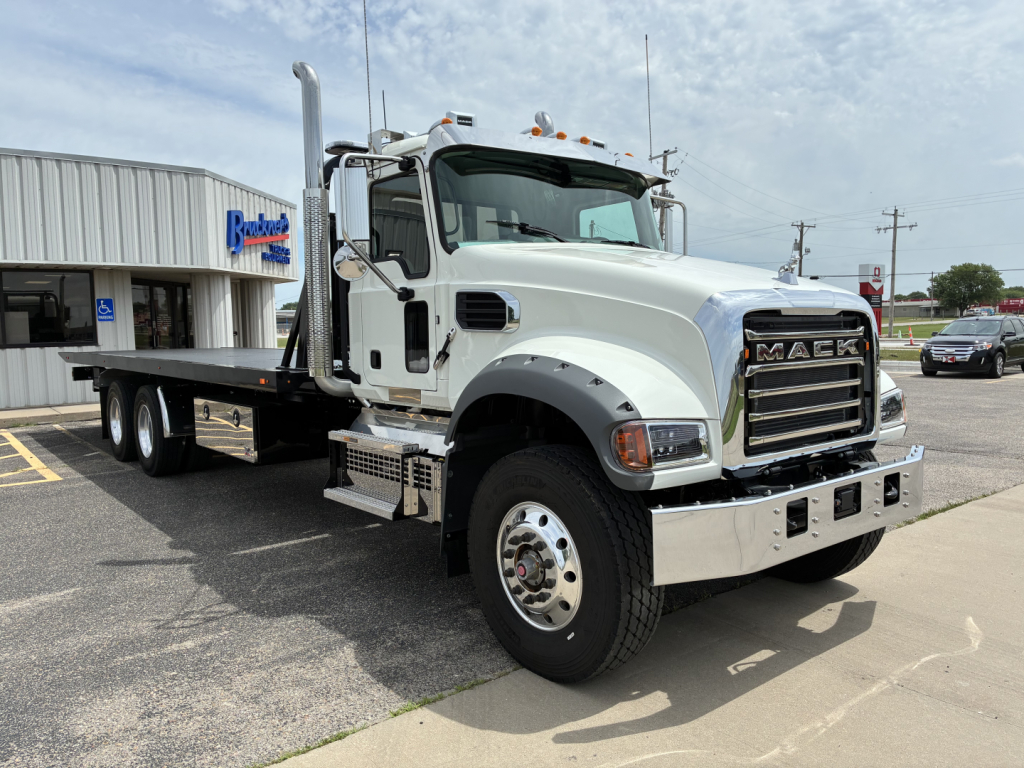
Have mack rollback truck to sell? List it here to reach thousands of buyers.
About Mack Rollback Trucks in Kansas
One of the first things to compare on a Mack rollback is the body and deck setup. Many buyers focus on 21-foot to 28-foot steel or aluminum beds, low center of gravity designs, and 102-inch wide decks for broader vehicle compatibility. Important details include crossmember construction, floor plate thickness, stake pockets, chain locks, subframe design, and anti-tilt or positive lock-down systems. A 20,000 lb planetary winch is a common benchmark on heavier rollback builds, but the full recovery package matters just as much, including free spool function, dual controls, hydraulic stabilizers, safety chains, work lighting, and approach angle at the rear of the bed.
On the chassis side, Mack rollback trucks often stand out for buyers who need more than a light-duty carrier. Specs can include tandem rear axles, high GVWR ratings, diesel power in the 400 to 500-plus horsepower range, and Allison automatic transmissions with PTO provision for smooth operation in urban towing and recovery work. Front axle capacity is especially important on a heavy rollback because it affects how well the truck handles front-loaded vehicles and uneven weight distribution during loading. Suspension choice, rear ratio, wheelbase, and frame layout all influence ride quality, deck placement, and turning radius. Buyers should also confirm how the rollback body integrates with the chassis so hydraulic performance, frame strength, and weight balance all work together.
For a buyer comparing Mack rollback trucks for sale, the key is matching the truck to the job mix instead of shopping by horsepower alone. A carrier doing municipal impounds and dealer moves may prioritize a lower deck height and easier loading angles, while a heavier commercial operation may need tandem axles, higher-capacity winches, and more chassis under the bed. Look closely at axle ratings, GVWR, bed manufacturer, cylinder configuration, PTO and pump setup, lighting, and tie-down hardware. On a Mack, the appeal is usually long-service vocational durability with a platform that can be spec'd for serious towing and transport work rather than basic light-duty carrier use.
Frequently Asked Questions
What makes a Mack rollback truck different from a lighter-duty carrier?
A Mack rollback truck typically starts with a heavier vocational chassis, often with stronger frame rails, higher axle ratings, and more robust suspension options than a light-duty carrier. That matters when the truck is hauling larger pickups, vans, work trucks, or commercial vehicles and needs stable handling under load. Buyers often look to Mack when they need a rollback that can handle tougher daily service, not just occasional vehicle transport.
What deck length is best for a Mack rollback truck?
The right deck length depends on the vehicles being moved and the wheelbase of the chassis. Many heavier rollback builds use beds in the low-20-foot to upper-20-foot range, with 28 feet being common on larger tandem-axle setups. A longer deck improves flexibility for larger vehicles and some equipment moves, but it also affects overall length, weight distribution, and maneuverability. The best choice is the shortest bed that still covers the heaviest and longest units in the normal workload.
Is an Allison automatic transmission a good choice for a rollback truck?
Yes. Allison automatics are widely preferred in rollback applications because they simplify operation during repeated loading, unloading, backing, and tight maneuvering. They also work well with PTO-driven hydraulic systems used for rollback functions and winches. For towing and recovery fleets, an automatic transmission can reduce driver fatigue and improve consistency in stop-and-go service.
How important is winch capacity on a rollback truck?
Winch capacity is critical, but it should be considered with the full body design and chassis rating. A 20,000 lb planetary winch is common on heavier rollback setups and gives the operator enough pulling power for many disabled vehicles and work trucks. Still, buyers should also evaluate cable size, free spool function, hydraulic controls, bed angle, stabilizers, and deck construction. A strong winch on an under-matched body or chassis does not create a balanced towing package.
What should Kansas buyers pay attention to when shopping for a Mack rollback?
Kansas buyers often need a rollback that can cover highway miles, local towing, and occasional rural recovery work without sacrificing stability or payload. That makes axle ratings, suspension, wheelbase, and GVWR especially important. Wind exposure, long-distance service areas, and mixed road conditions can make a heavier Mack chassis attractive for control and durability. Buyers should also verify legal operating weight, deck configuration, and how the truck is spec'd for the types of vehicles commonly hauled in their region.