
New Mack Refrigerated Trucks For Sale
Shop new Mack refrigerated trucks with insulated reefer bodies, medium-duty specs, diesel power, and delivery-ready cold chain capability.
Have new mack refrigerated truck to sell? List it here to reach thousands of buyers.
New Mack Refrigerated Trucks
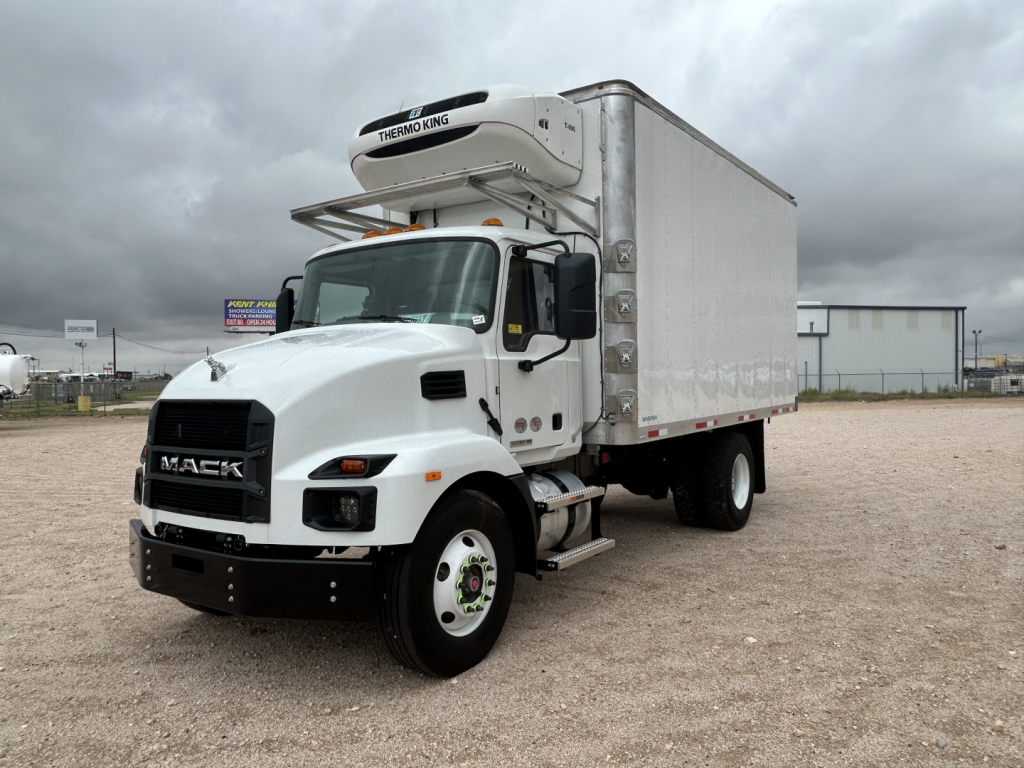
A lot of the buying decision comes down to matching chassis capacity to the body and route profile. Mack MD6 refrigerated trucks are a good example of a Class 6 platform that can be spec'd to stay in non-CDL territory when needed, while still supporting a practical insulated van body, liftgate, and cargo handling equipment. Common specs in this segment include a diesel engine in the 6.7L class, around 300 horsepower, an Allison automatic transmission, single rear axle, and wheelbases set up for a 16-foot reefer body. Rear axle ratings, suspension type, rear ratio, and tire size affect launch feel, stop-and-go efficiency, and how well the truck handles a loaded body with a refrigeration unit hanging off the front wall.
Body details matter just as much as chassis specs on a refrigerated truck. Buyers should pay close attention to insulation package, floor construction, interior width, evaporator layout, and door configuration. Aluminum T-flooring is common in delivery applications because it handles rolling carts and repeated washdown better than lighter-duty floor designs. Liftgates, ramps, backup cameras, cargo track, and bulkheads can all change how efficiently the truck works on a multi-stop route. Reefer unit model matters too. It affects temperature range, fuel use, service network access, and recovery time after frequent door openings. If the truck will haul mixed loads, frozen product, or goods with strict temperature tolerances, it is worth confirming the body and refrigeration spec as a system rather than treating them as separate components.
New Mack refrigerated trucks appeal to fleets that want modern safety features, cleaner packaging, and predictable maintenance intervals from day one. The advantage of buying new is the ability to focus on exact application fit: body length, GVWR target, non-CDL compliance, liftgate capacity, suspension choice, and reefer brand preference. For buyers comparing multiple listings, the smartest approach is to look beyond the model badge and compare payload after body installation, reefer performance, service access in your operating area, and how the truck is equipped for your loading method. A refrigerated truck that looks similar on paper can perform very differently once it is loaded, cycling doors all day, and running a tight urban route in summer heat.
Frequently Asked Questions about New Mack Refrigerated Trucks
What should I look for first when buying a new Mack refrigerated truck?
Start with the full application, not just the chassis. The key questions are target temperature range, body length, payload after the reefer body is installed, number of daily stops, and whether the truck needs to remain under a non-CDL threshold. After that, confirm the refrigeration unit model, liftgate or ramp setup, floor construction, axle ratings, and wheelbase match the work. On a reefer truck, the body and refrigeration system are just as important as the engine and transmission.
Are Mack refrigerated trucks available in non-CDL configurations?
Yes, many medium-duty Mack reefer truck builds can be configured to operate in a non-CDL application when the final GVWR is kept within the legal limit for that use case. That matters for fleets trying to widen the driver pool or simplify hiring. Buyers still need to verify the truck's actual GVWR, body weight, liftgate weight, and expected payload, because a non-CDL target can reduce available cargo capacity if the body is heavily spec'd.
What reefer body features matter most for multi-stop delivery work?
For multi-stop routes, buyers usually prioritize fast temperature recovery, durable flooring, strong rear door seals, and cargo access that reduces dwell time at each stop. Aluminum T-flooring, liftgates, ramps, and interior layouts designed for carts or hand unloads make a noticeable difference in daily efficiency. A backup camera and practical door hardware also help in tight alleys, docks, and urban delivery environments where drivers are constantly repositioning the truck.
Is a Mack MD6 a good fit for refrigerated delivery?
The Mack MD6 is a strong fit for many refrigerated delivery operations because it gives buyers a medium-duty chassis with practical maneuverability, diesel power, and compatibility with common insulated van body lengths. It is especially relevant for local and regional distribution where automatic transmissions, single-axle simplicity, and predictable service access are priorities. The right fit still depends on body size, reefer unit demand, and required payload, so the complete truck spec matters more than the model name alone.
How important is the refrigeration unit brand on a new reefer truck?
It is very important because the refrigeration unit directly affects uptime, temperature control, service support, and operating cost. Major brands such as Thermo King are widely used because of their service network and familiarity across fleets. Buyers should compare unit capacity, maintenance intervals, fuel consumption, control options, and dealer support in the regions where the truck will run. A good chassis with the wrong reefer unit for the application can create avoidable downtime and product risk.