
International Recycling Trucks For Sale
Shop International recycling trucks and compare body size, packer type, axle setup, and PTO specs for municipal and commercial collection work.
Learn more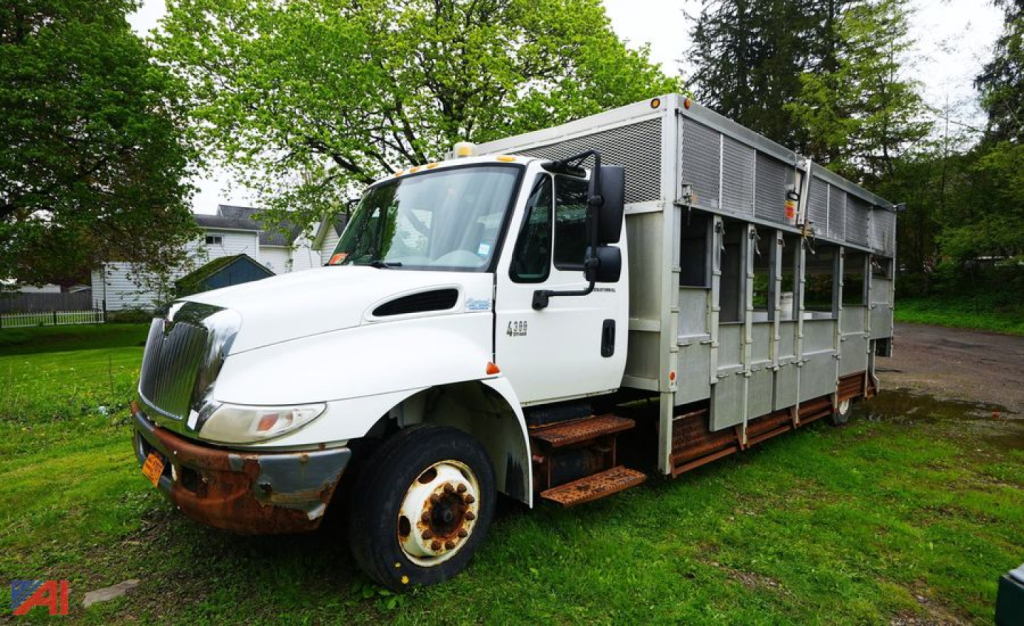
Have international recycling truck to sell? List it here to reach thousands of buyers.
About International Recycling Trucks
The right spec depends on route density and transfer distance. For tight residential streets, wheelbase, cab visibility, and turning radius can matter more than top-end GVWR. International chassis are widely used in municipal fleets because parts support is strong and the platforms are familiar to many public works and sanitation shops. Buyers should pay close attention to engine and transmission pairing, especially on older units. DT466 and other International diesel platforms are common in this class, often matched with Allison automatic transmissions for repetitive stop-start duty. PTO engagement, hydraulic pump condition, cycle times, and packer operation should all be evaluated carefully, since body performance drives productivity more than the chassis badge alone.
Body condition is usually the deciding factor on a used recycling truck. Inspect the floor, sidewalls, tailgate seals, body mounts, hoist cylinders, eject system if equipped, and all hydraulic lines for leaks or structural fatigue. On dumping SAC-style bodies and other high-cube recycling configurations, look for cracking around hinge points, corrosion in the packer area, and excessive wear where glass, metal, and mixed recyclables abrade the interior. Scales, cart tippers, tarping systems, camera systems, and warning lights can add value depending on the route type. If the truck will operate in urban neighborhoods, check overall height, legal axle weights, and loading geometry to make sure the body matches the service area.
A good International recycling truck is one that balances payload, route efficiency, and maintenance simplicity. Buyers comparing listings should focus on cubic yard capacity, front and rear axle ratings, suspension type, brake spec, PTO and hydraulic setup, and the reputation of the body manufacturer. It also helps to confirm how the truck was used previously, since municipal fleet units may have strong service records but high idle hours, while contractor-owned trucks may show different wear patterns. For recycling applications, reliability in repeated collection cycles and clean body operation are usually more important than highway speed or cosmetic condition.
Frequently Asked Questions
What should I look for first when buying a used International recycling truck?
Start with the body and hydraulic system, because that is where most of the application-specific wear occurs. Check packer function, PTO engagement, cylinder condition, tailgate fit, body floor wear, and signs of cracks or corrosion around high-stress points. Then confirm the chassis specs match the route, including GVWR, axle ratings, wheelbase, and engine-transmission combination.
What International models are commonly used as recycling trucks?
International recycling trucks are often built on medium-duty chassis such as the 4300 and 4400, though exact model availability depends on body size and local weight requirements. These chassis are popular for municipal and private collection fleets because they are straightforward to service, offer good visibility, and can be configured for PTO-driven vocational work.
How many cubic yards should a recycling truck body have?
That depends on material density, route length, and loading method. Smaller residential or urban routes may favor more maneuverable bodies, while higher-volume municipal work often uses 30 to 40 cubic yard bodies to reduce trips to the transfer station. Buyers should compare cubic yard capacity with axle ratings and legal loaded weight, since light bulky recyclables and heavier mixed loads behave differently.
Are older International recycling trucks still practical for municipal or private fleet use?
They can be, especially when the chassis has been maintained and the body is structurally sound. Older International units are still found in fleet service because many shops know the platforms well and parts support is generally available. The key is to verify engine condition, transmission behavior, brake system health, and the complete operation of the recycling body under load, not just at idle.