
Mixer Trucks For Sale in Washington
Browse mixer trucks for sale in Washington, including ready-mix configurations, axle setups, drum sizes, PTO options, and jobsite-ready specs.
Learn moreBrowse Mixer Trucks by Make
Have mixer truck to sell? List it here to reach thousands of buyers.
About Mixer Trucks in Washington
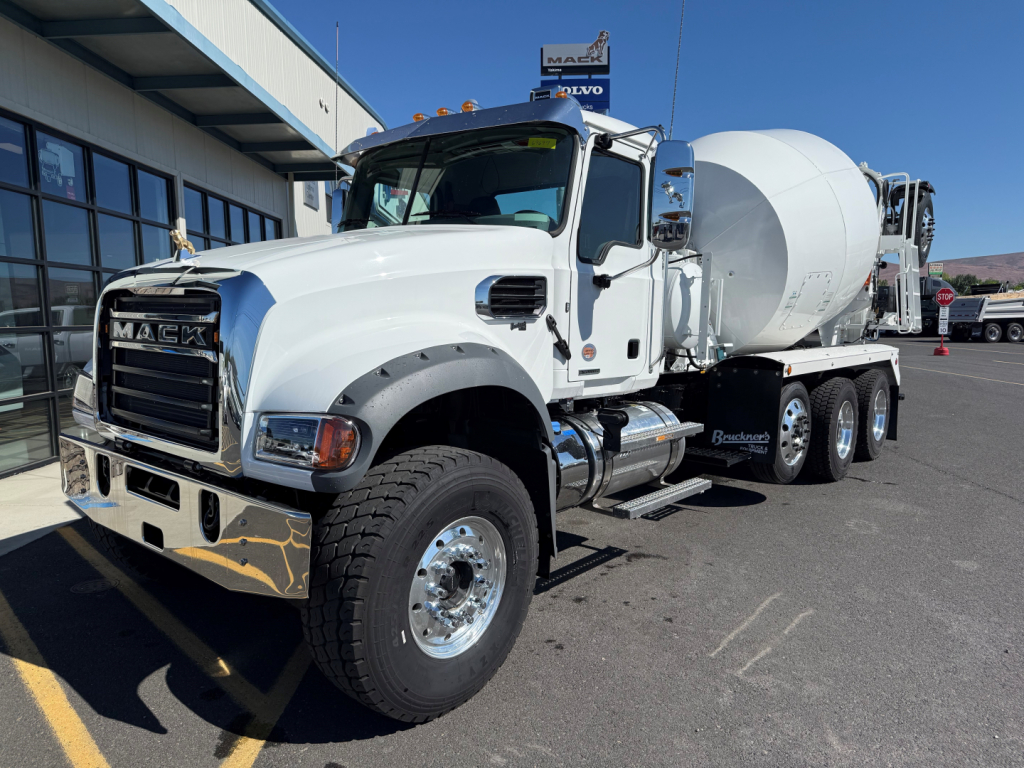
A lot of the buying decision comes down to body and chassis balance. Drum capacities commonly range from around 10 to 11 yards on severe-duty platforms from builders such as Mack, Kenworth, Peterbilt, Western Star, and Freightliner. Front axle ratings around 18,000 to 20,000 pounds and rear ratings in the 40,000 to 46,000 pound range are common, with GVWR depending on local bridge laws and axle configuration. Buyers should look closely at frame strength, suspension type, PTO setup, hydraulic system design, and transmission gearing. Automated manuals are increasingly common in mixer applications because they reduce driver fatigue and offer precise low-speed control, but many fleets still prefer proven severe-service automatic or manual transmissions depending on route profile and maintenance preference.
Concrete delivery is hard on equipment, so durability features matter. Disc or drum brakes, double-frame sections, heavy-duty radiators, high-capacity cooling packages, locking differentials, and severe-service front suspensions all make a difference in stop-and-go operation and muddy access roads. The mixer package itself should be evaluated for drum material, water tank capacity, chute storage, ladder placement, controls, and washout access. If the truck will spend time on tighter residential or commercial pours, pay attention to overall height, cab visibility, and pusher axle placement. If it will spend more time on larger commercial jobs, payload, drum performance, and discharge efficiency tend to carry more weight.
For Washington buyers, corrosion exposure, mountain grades, and wet seasonal conditions can influence spec choices. A good mixer truck should have enough horsepower and low-speed torque to move a full load confidently, plus gearing that supports crawling on site without excessive clutch or driveline wear. Tire selection, traction devices, and brake configuration also matter when trucks transition from pavement to gravel or soft ground. Comparing listings in this category usually comes down to legal payload, mixer body brand, axle ratings, transmission type, and how well the truck is matched to the plant-to-job cycle time your operation runs.
Frequently Asked Questions
What size mixer truck is most common for concrete delivery?
The most common ready-mix truck size is typically in the 10 to 11 yard range, mounted on a severe-duty chassis. Actual legal payload depends on axle spacing, axle ratings, pusher configuration, and state weight laws. Buyers should confirm rated drum capacity and legal carrying capacity separately, because they are not always the same in real-world operation.
What axle configuration is best for a mixer truck in Washington?
Tri-axle mixer trucks are common because they balance payload and maneuverability, especially on mixed highway and urban routes. A steerable or lift pusher axle can help meet bridge requirements while improving tire life and turning characteristics. Operations that need more legal payload may look at quad-axle setups, but the right choice depends on route density, plant access, and jobsite space.
Are automated manual transmissions good for mixer trucks?
Automated manual transmissions work well in mixer service when they are spec'd for severe-duty use and paired with the right gearing. They reduce driver fatigue in stop-and-go traffic and can provide controlled low-speed movement on pour sites. Buyers should still verify creeper gearing, reverse performance, PTO compatibility, and service support, because mixer work puts more demand on low-speed drivability than standard on-road hauling.
What should I inspect first on a used mixer truck?
Start with the drum, hydraulic system, frame, suspension, and axle components because those areas reflect the hardest wear in mixer service. Check for drum cracks, excessive chute wear, hydraulic leaks, corrosion, frame repairs, and uneven tire wear that may point to alignment or axle issues. Engine hours, PTO operation, brake condition, and maintenance records are also critical, especially on trucks that have seen short-route, high-cycle work.
How much horsepower does a mixer truck need?
Many mixer trucks are spec'd in the mid-300 to low-400 horsepower range, with torque and gearing often mattering more than peak horsepower alone. The truck needs enough power to pull a full concrete load through traffic, climb grades, and maintain control at very low speeds on site. Buyers operating in hilly areas or on longer highway routes may prefer a higher horsepower severe-duty engine with strong cooling and engine brake performance.