
Used Terex Mixer Trucks For Sale
Browse used Terex mixer trucks with concrete-ready specs, common drum capacities, axle setups, and chassis features buyers compare most.
Learn more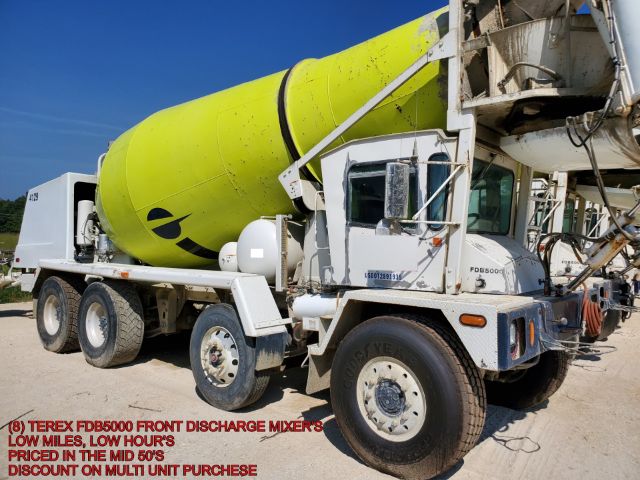
Have used terex mixer truck to sell? List it here to reach thousands of buyers.
About Used Terex Mixer Trucks
On a Terex mixer, the truck and the mixer package need to be evaluated as one working system. Engine choice, transmission setup, suspension, and steering all affect how the unit handles a full load on rough approaches and urban pours. Many used units are equipped with proven diesel platforms from Cummins paired with Allison automatic transmissions, which is a common combination for stop-and-go concrete work. Five-axle configurations are especially important in regions with strict bridge formula requirements because they help spread weight while keeping an 11-yard truck productive. Air ride cab, power steering, and driver comfort options also matter more than they do on many vocational trucks because mixer routes involve constant entry, exit, and tight backing.
The mixer side deserves equal attention. Buyers should inspect drum condition, chute wear, water system operation, roller and drive component condition, and signs of excessive buildup inside the drum. A used concrete mixer truck with a strong chassis can still become expensive if the drum, hydraulic system, or charging hopper has been neglected. Look closely at drum shell thickness, blade wear, gearbox performance, PTO engagement, and any cracks or repairs around the subframe and pedestal. If the truck will run short-haul ready-mix routes, uptime and ease of washout may matter more than highway speed. If it will cover rural distances, engine horsepower, gearing, and brake condition become more important.
Terex mixer trucks are a practical choice for fleets and independent operators that need a vocational truck designed around repetitive loading, hauling, and discharge cycles. They are also known simply as concrete mixer trucks, ready-mix trucks, or cement mixers, although cement mixer is less precise in industry use. The best used Terex mixer truck for a buyer depends on local road weight rules, average haul distance, plant loading practices, and how much remaining life is left in the drum and running gear. Service records, brake and tire percentages, and evidence of regular greasing and washout discipline usually tell more about a used mixer truck than paint or cab trim.
Frequently Asked Questions
What should I look at first on a used Terex mixer truck?
Start with the axle configuration, mixer capacity, engine and transmission combination, and documented condition of the drum. A used mixer truck has to satisfy both road-legal payload requirements and concrete production demands, so a strong chassis alone is not enough. Review brake and tire condition, inspect the frame for cracks or repairs, and pay close attention to drum wear, hydraulic operation, PTO performance, and signs of concrete buildup. Service history is especially valuable on mixer trucks because regular washout and lubrication have a direct effect on longevity.
How many cubic yards does a Terex mixer truck usually carry?
Many used Terex mixer trucks on the market are configured in the 10 to 11 cubic yard range, although exact legal payload depends on the chassis, axle count, and state or local bridge laws. Drum capacity is only part of the equation because gross vehicle weight limits often determine how much concrete can actually be hauled on public roads. Buyers should match rated drum size to local weight compliance and the type of work being done, especially if the truck will run municipal routes or heavier mix designs.
Why is a five-axle setup important on a mixer truck?
A five-axle mixer truck helps distribute loaded weight more effectively, which is critical for bridge-law compliance and maximizing legal payload. In concrete hauling, the difference between a compliant and non-compliant axle setup can affect route access, ticket size, and profitability on every load. Five-axle Terex mixers are common where operators need to carry larger loads while staying within state weight limits and maintaining jobsite stability.
Are automatic transmissions common in used Terex mixer trucks?
Yes, automatic transmissions are very common in mixer applications because they perform well in stop-and-go traffic, crowded plants, and frequent backing situations. Allison automatics are especially common on vocational concrete trucks because they reduce driver fatigue and simplify operation on routes with constant starts, stops, and turns. For many buyers, an automatic is preferred over a manual because it supports more consistent operation across multiple drivers and urban delivery conditions.
What causes the biggest repair costs on an older concrete mixer truck?
The most expensive issues often come from neglected drums, hydraulic components, PTO systems, and structural wear around the mixer mount and rear pedestal. Concrete buildup inside the drum can reduce capacity and strain components, while poor washout habits accelerate wear on blades, chutes, and rollers. On the truck side, suspension wear, steering components, brakes, and frame fatigue are common vocational concerns. A careful inspection of both the chassis and mixer assembly is essential because major repairs in either system can quickly outweigh the purchase savings of a used unit.