
Used Freightliner Landscape Trucks For Sale
Used Freightliner landscape trucks with dump bodies, high sidewalls, PTO hydraulics, and diesel power for mulch, debris, and material hauling.
Learn more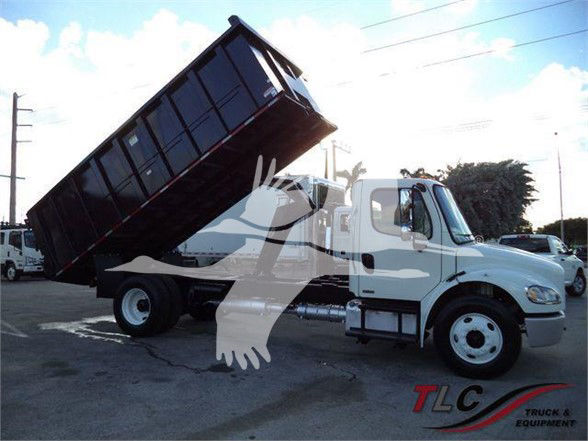
Have used freightliner landscape truck to sell? List it here to reach thousands of buyers.
About Used Freightliner Landscape Trucks
The body matters as much as the chassis. A landscape truck is typically a high-sided dump body, sometimes called a landscape dump or trash dump body, designed to carry mulch, brush, clippings, leaves, soil, and light demolition debris without losing volume. Common features include 16 to 18 foot steel bodies, tall sidewalls, rear barn doors or single-swing rear doors, manual or electric tarps, and PTO-driven hydraulic hoists. If the truck will handle dense material like wet topsoil or stone, body floor thickness, hoist capacity, and overall payload should be checked closely. If the truck is mainly for bulky light material, cubic yard capacity and sidewall height become the more important numbers.
Freightliner is a practical fit for landscaping fleets because the cab layout, visibility, and turning radius work well in residential streets, commercial properties, and municipal routes. Many buyers prefer an automatic transmission for crew-driven trucks, especially where multiple operators use the same unit throughout the week. Hitch equipment and trailer brake wiring can also add value if the truck will tow compact equipment, loaders, or stump grinders. When comparing used units, pay attention to PTO engagement, hoist operation, rear door hardware, tarp condition, frame integrity, and signs of body rust around crossmembers, hinge points, and the lower side panels.
A used Freightliner landscape truck should be evaluated as a complete work package, not just by engine and mileage. The right truck depends on the mix of light-volume debris, bulk mulch delivery, hardscape material, and towing duties it will handle. Buyers should confirm axle rating, brake type, wheelbase, body dimensions, and legal payload in their operating area. For contractors who need one truck to cover delivery, cleanup, and dump runs in the same day, a Freightliner landscape dump truck remains one of the most versatile medium-duty vocational setups on the market.
Frequently Asked Questions
What is a Freightliner landscape truck used for?
A Freightliner landscape truck is typically used for hauling mulch, brush, leaves, grass clippings, soil, and other loose or bulky materials common in landscaping and property maintenance. Most are equipped with a high-sided dump body that allows fast loading and controlled unloading. Many operators also use them for light construction debris, seasonal cleanup, and towing small equipment trailers.
What should I look for on a used Freightliner landscape truck?
Focus on both the chassis and the dump body. On the chassis side, review engine hours, mileage, transmission operation, brake condition, suspension type, and service history. On the body side, inspect the hoist, PTO, hydraulic lines, hinge points, rear door latches, tarp system, floor wear, and corrosion around the body mounts and crossmembers. A clean-running truck with a weak dump body can become expensive quickly, so the vocational equipment needs as much attention as the cab and drivetrain.
Are Freightliner M2 landscape trucks good for local commercial work?
Yes. Freightliner M2-series trucks are widely used in local vocational service because they balance maneuverability, payload, and serviceability well. They are a common choice for landscaping, municipal work, and light construction support. Their medium-duty chassis is well suited for repeated stops, urban driving, and jobs where the truck needs to move from delivery work to dump runs without requiring a larger heavy-duty platform.
How do I choose the right body size for a landscape truck?
Start with the material you haul most often. Light, bulky loads like brush and mulch benefit from a longer body with taller sidewalls because volume matters more than weight. Heavier materials like wet soil, gravel, or broken concrete can overload a truck long before the body is full, so GVWR, axle ratings, and hoist capacity become the limiting factors. The best body size is the one that fits your normal load profile without sacrificing legal payload or maneuverability.
Is an automatic transmission a good choice for a used landscape truck?
For many landscaping operations, yes. Automatic transmissions are popular because they reduce driver fatigue in stop-and-go routes and make the truck easier to operate across a wider crew. That can be especially useful for businesses where more than one employee may drive the truck. A manual can still be a solid option for some fleets, but automatics are often preferred for local vocational applications that involve frequent starts, backing, and tight jobsite access.