
Used Mack Grapple Trucks For Sale
Browse used Mack grapple trucks for debris, storm cleanup, and municipal hauling. Compare boom, body, axle, and chassis specs.
Learn more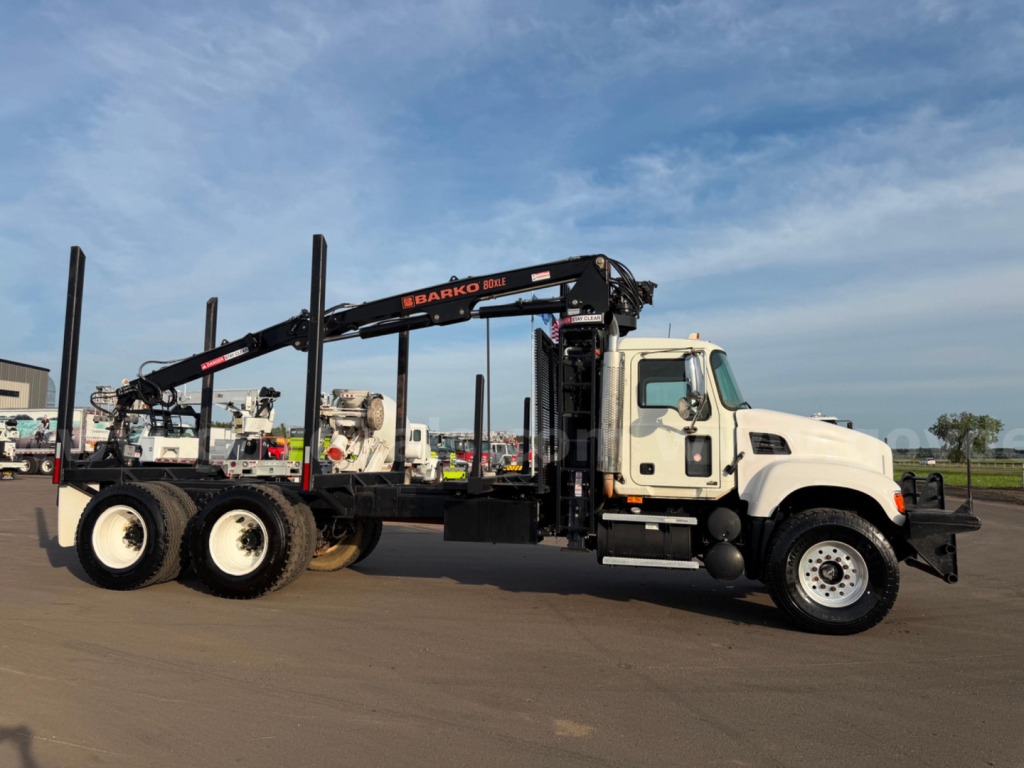
Have used mack grapple truck to sell? List it here to reach thousands of buyers.
About Used Mack Grapple Trucks
The first buying decision is usually the truck configuration, not the crane brand. Pay close attention to axle ratings, wheelbase, cab style, frame reinforcement, and the body length in relation to your material stream. A grapple truck carrying brush and green waste has different weight distribution needs than one loading scrap or mixed demolition debris. Front axle capacity matters because the crane, pedestal, and outriggers can put substantial weight forward of the body. Many used Mack grapple trucks are spec'd with automatic transmissions for stop-and-go municipal service, but engine rating, PTO setup, hydraulic reservoir capacity, and pump performance are what determine how well the truck handles repeated boom cycles through a long workday.
On the crane side, buyers should inspect boom structure, pin and bushing wear, rotator condition, grapple tine wear, cylinder seepage, hose routing, and outrigger operation. A used grapple truck can look serviceable and still need expensive boom work if the main hinge points, wear pads, or control valve sections are loose or damaged. Body condition also matters. Check the floor, sidewalls, tailgate or rear door, and hoist if the unit has a dump body. Scuffing, cracking around the crane mount, and rust at crossmembers can tell you a lot about the kind of material the truck handled. If the truck came from government or utility service, maintenance records may be better than average, but idle hours, PTO hours, and hydraulic wear still deserve close attention.
Mack remains a strong fit for grapple applications because the chassis is generally designed for vocational punishment, tight turning environments, and frequent braking cycles. For buyers comparing used units, the best value is rarely just the newest truck or the lowest miles. It is the combination of a sound Mack chassis, a correctly sized grapple and hydraulic system, legal axle capacities for your route, and a body that matches the volume and density of the material you plan to haul. A truck that is well-matched to brush, storm cleanup, or municipal debris work will usually outperform a heavier or more powerful spec that spends its life overloaded, under-reached, or waiting on slow hydraulics.
Frequently Asked Questions
What should I inspect first on a used Mack grapple truck?
Start with the crane mount area, front frame section, outriggers, and boom pins because these components see the highest stress in grapple service. Then inspect the hydraulic system for leaks, weak cycle times, noisy pumps, and heat buildup, followed by the dump body or debris body for cracks, floor wear, and rust at crossmembers. On the chassis side, verify axle ratings, suspension condition, steering wear, brake life, and PTO operation. A used grapple truck can have a strong engine and transmission but still require major investment if the boom structure or hydraulic system is worn out.
Are Mack grapple trucks good for municipal and tree debris work?
Yes. Mack chassis are widely respected in vocational service because they are built for repetitive stop-and-go operation, tight urban maneuvering, and heavy front-end loads common with crane-equipped trucks. That makes them a solid choice for brush pickup, storm cleanup, right-of-way work, and municipal debris hauling. The key is making sure the body volume, crane reach, and axle capacities fit the density of the material being loaded rather than assuming every grapple truck is interchangeable.
What body and crane setup is common on a grapple truck?
Many grapple trucks use a hydraulic knuckle boom or material handler mounted behind the cab, paired with a dump body, high-side debris body, or other vocational hauling body. Brush and storm debris units often favor larger cubic-yard bodies to maximize volume, while scrap or demolition applications may prioritize heavier body construction and higher payload control. Outriggers, a PTO-driven hydraulic system, and a rotating grapple are standard features to evaluate closely on any used unit.
Does mileage matter as much as hydraulic and PTO hours on a used grapple truck?
Not always. Mileage matters on any used truck, but grapple applications can accumulate relatively modest road miles while putting substantial wear on the crane, pump, valves, cylinders, and PTO system. A municipal truck that ran short routes every day may have more hydraulic wear than its odometer suggests. Buyers should weigh engine hours, service history, and the condition of the boom and body just as heavily as chassis mileage.