
Used Kenworth Grapple Trucks For Sale
Used Kenworth grapple trucks with boom reach, payload and hydraulic specs for debris and forestry. Compare T370, T440, T800, T880 frames and bodies.
Learn more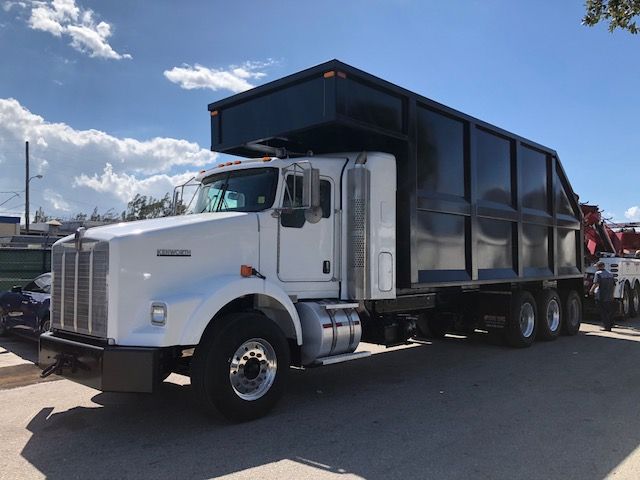
Have used kenworth grapple truck to sell? List it here to reach thousands of buyers.
About Used Kenworth Grapple Trucks
Loader and grapple packages vary widely, so match boom geometry and hydraulic output to your work. Brands such as Palfinger Epsilon, Hiab, Rotobec, Serco, Barko and Petersen are common on Kenworth chassis. Capacity at full extension is the critical figure, not just the short radius rating, and the load chart should be legible on the pedestal. Look for tight slew rings, healthy rotators and cylinders, smooth valve modulation and documented pump or hose service. Open center systems with gear pumps are simpler, load sense piston pumps offer faster cycles and better efficiency. Aim for 30 to 60 gpm at working rpm and 2,500 to 3,500 psi, verify thermal integrity with an oil cooler sized for continuous duty so hydraulic temperatures stay in range under summer loads.
Bodies and subframes take a beating, floor strength and corrosion resistance are central to life cycle cost. Forestry and debris bodies spec AR400 or AR450 floor plate in 3/16 to 1/4 inch with crossmembers on 8 to 12 inch centers, boxed long sills and full length wear strips prevent oil canning and weld fatigue. Scuff liners protect sidewalls from grapple strikes, sealed wiring and galvanized or epoxy coated subframes slow rust, and Kenworth aluminum cabs add another layer of corrosion resistance. Tare weight is the other side of the equation, larger loaders, double frames and heavy bodies add weight quickly, so consider aluminum hubs and wheels, high tensile steel bodies and optimized outrigger packages to keep payload up while staying legal on axle groups.
For used units, evaluate both the chassis and the loader as separate assets. Check for scaling or pitting near outrigger mounts, pedestal bases and suspension hangers, inspect the frame flanges for twist or ripple, and look for hairline cracks around welded gussets. Cycle the loader to temperature and listen for pump whine, verify control response, check slew backlash and pin or bushing wear at the grapple and dipper. Review engine hour to loader hour ratios, confirm PTO engagement is clean on Allison 3000 or 4000 Series or manual and automated transmissions with side or rear PTOs, and scan the aftertreatment system for active codes, forced regen frequency and DEF dosing performance on PACCAR MX or Cummins engines. Solid records, clean hydraulics with recent filter and oil service, straight rails and a tight loader translate into fewer surprises and more uptime on a used Kenworth grapple truck.
Frequently Asked Questions
Which Kenworth chassis models are best suited for grapple work?
T370 or T380 chassis handle lighter municipal or light debris routes, while T440, T470, T800 and T880 platforms are common for heavy debris and forestry work. Larger loaders benefit from 16k to 20k front axles, 40k to 46k tandems and, when needed, pusher or tag axles to meet bridge and payload requirements. High RBM frames and double frame sections around the loader pedestals improve durability.
How do I evaluate boom capacity and reach on a used grapple truck?
Review the loader’s load chart, focusing on capacity at full extension, not only at short radius. Inspect the slew ring for play, the rotator and grapple pins for ovaling, and the cylinders for leaks. Confirm hydraulic flow and pressure meet the loader’s spec, check outrigger spread and locking, and test cycle times when the hydraulic oil is hot to ensure consistent performance under load.
What drives tare weight and payload on a grapple truck?
Tare weight is influenced by loader size, body material and thickness, frame configuration, outrigger type and wheel or hub choices. AR400 or AR450 floors and closely spaced crossmembers add strength but increase weight, double frames and larger stabilizers do as well. Weight saving options include high tensile bodies, aluminum hubs and wheels and optimized outrigger packages. Final payload depends on curb weight and legal axle limits, so scale the truck and verify bridge compliance.
How important are hydraulic cooling and filtration for reliability?
Thermal integrity in the hydraulic system is critical, overheated oil shortens seal life and slows cycle times. Look for a properly sized oil cooler, clean return and pressure filtration, and verify hot oil temperatures stay in the recommended range during continuous operation. Maintain oil cleanliness with scheduled filter changes and sampling, and match PTO speed to pump displacement so flow is achieved without excessive heat generation.
What body and frame features improve durability and corrosion resistance?
Bodies with AR400 or AR450 floors in 3/16 to 1/4 inch, crossmembers on 8 to 12 inch centers, boxed long sills and scuff liners resist impact and abrasion. Galvanized or epoxy coated subframes and sealed electrical connectors reduce corrosion, and Kenworth aluminum cabs resist rust compared to steel cabs. Inspect frame rails near outrigger mounts and pedestals for rust scale or cracking, and confirm paint or undercoating coverage in high spray zones.