
Hino Grapple Trucks For Sale in New Mexico
Shop Hino grapple trucks for sale in New Mexico. Compare GVWR, loader reach, body size, axle ratings, and PTO-driven refuse specs.
Learn more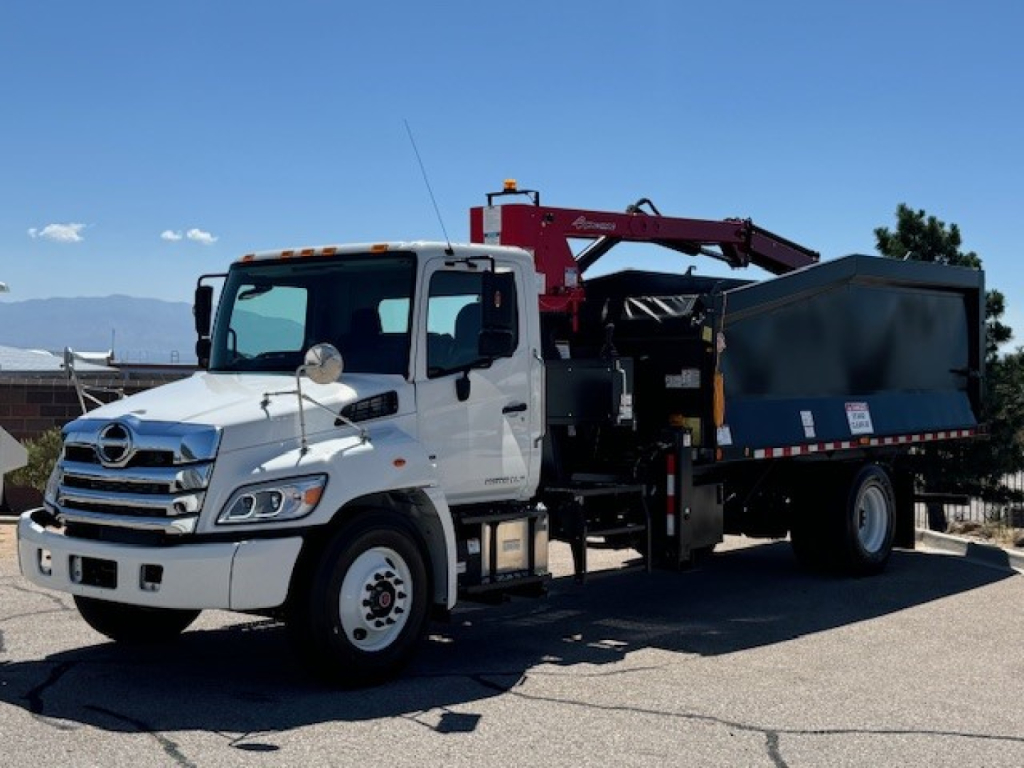
Have hino grapple truck to sell? List it here to reach thousands of buyers.
About Hino Grapple Trucks in New Mexico
Powertrain choice matters because grapple trucks spend a lot of time off the highway, idling at jobsites, and working through PTO-driven hydraulic functions. Hino grapple trucks commonly pair a medium-duty diesel with an Allison automatic, which is a practical combination for start-stop collection routes and operators with varying experience levels. Buyers should compare horsepower, rear axle ratio, and transmission model against the truck's intended terrain and payload. In New Mexico, grades, heat, and long drives between pickups can make cooling capacity, gearing, and service access more important than headline horsepower alone. Locking differentials, spring suspension, and axle ratings also deserve attention if the truck will leave pavement for transfer sites, rights-of-way, or storm cleanup work.
The loader itself is where productivity is won or lost. Many Hino grapple trucks are equipped with PAC-MAC or similar hydraulic loaders featuring joystick controls, clam-shell grapples, and boom reaches around 20 feet. That spec works well for brush, limbs, furniture, construction debris, and other irregular material that would be slow to load by hand. Buyers should look closely at boom geometry, lift capacity at reach, outriggers, subframe design, and how the loader is positioned relative to the body. H-style outriggers are common because they add stability during side loading, but they also affect setup space on tight urban streets. Hardox or other abrasion-resistant body material can be a real advantage if the truck will see repeated contact with concrete, metal, or heavy storm debris.
A good Hino grapple truck spec is one that keeps payload, legal axle weight, and hydraulic performance in balance. Too much body and loader for the chassis can leave little usable payload, while an undersized grapple slows every stop. Buyers comparing listings should pay attention to front axle capacity, rear axle rating, wheelbase, body length, loader model, and whether the truck is set up more for municipal refuse, vegetation management, or general debris hauling. Also known as a grapple loader truck or grapple dump truck, this equipment category is prized because it reduces labor at the point of pickup and keeps a crew moving with one operator-controlled machine.
Frequently Asked Questions
What is a Hino grapple truck typically used for?
A Hino grapple truck is typically used for loading and hauling brush, storm debris, bulk waste, limbs, logs, scrap, and oversized cleanup material. It combines a dump body with a hydraulic grapple loader, so the truck can pick up material without a separate excavator or front-end loader. That makes it a common choice for municipalities, tree service contractors, right-of-way crews, and waste operations handling irregular or bulky loads.
What specs matter most when comparing Hino grapple trucks?
The most important specs are GVWR, front and rear axle ratings, wheelbase, body length and cubic-yard capacity, loader make and model, boom reach, grapple type, and transmission setup. Buyers should also review outrigger style, rear axle ratio, PTO and hydraulic configuration, and body material such as Hardox if abrasion resistance matters. These details determine how much material the truck can legally carry, how stable it is while loading, and how efficiently it performs on route.
Is a single-axle Hino grapple truck enough for debris and refuse work?
A single-axle Hino grapple truck is often enough for municipal brush pickup, tree debris, and lighter bulk collection, especially where maneuverability matters. It is a practical fit for residential streets, alleys, and tighter urban routes. The tradeoff is payload and axle capacity compared with a tandem-axle unit, so buyers handling dense material, long haul distances, or heavier demolition debris may need to watch legal weight more closely.
Why are Allison automatic transmissions common in grapple trucks?
Allison automatic transmissions are common because grapple truck work involves constant starts, stops, repositioning, and PTO-driven hydraulic operation. An automatic reduces driver fatigue, helps with smooth low-speed control, and is easier to run in municipal or multi-operator fleets. It also tends to be a good match for vocational duty cycles where the truck spends as much time loading and maneuvering as it does driving.
What should buyers in New Mexico consider when shopping for a Hino grapple truck?
In New Mexico, buyers should consider heat, elevation, route distance, and mixed on-road and off-road use. Cooling system performance, axle gearing, tire selection, and differential lock spec can all matter when the truck works in high temperatures or on uneven access roads. Loader stability is also important on sloped or unprepared ground, so outrigger design and overall chassis balance should be reviewed carefully before purchase.