
New Ford Grapple Trucks For Sale
Shop new Ford grapple trucks built for debris, waste, and storm cleanup. Compare chassis, boom reach, body size, and hydraulic specs.
Learn more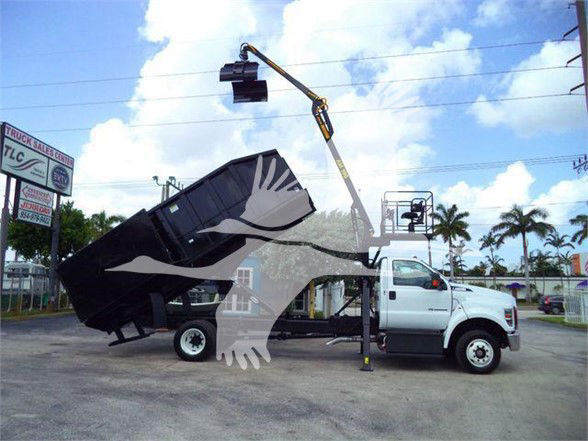
Have new ford grapple truck to sell? List it here to reach thousands of buyers.
About New Ford Grapple Trucks
A grapple truck purchase usually comes down to three decisions: body size, crane performance, and chassis rating. Many new Ford grapple trucks in this class are spec'd around a 26,000 lb GVWR for CDL flexibility in some operations, though exact licensing requirements depend on local and state rules and the truck's registered weight. Common body lengths include around 16 to 18 feet, with capacities often in the 20 to 25 yard range for brush, limbs, and bulky debris. Buyers should compare boom reach, lift capacity at mid-reach and full extension, grapple opening width, and control layout. A truck that works well on residential tree routes may need tighter overall dimensions and faster cycle times, while municipal debris crews may prioritize body volume and stable lifting geometry.
On Ford grapple truck builds, the upfit matters as much as the cab and chassis. Key components include the hoist, PTO, hydraulic reservoir, subframe design, boom pedestal, outrigger setup if equipped, and the body floor and side construction. Steel dump bodies are common for durability, and operators should pay close attention to tailgate design, packing ability, and how easily the body sheds wet green waste. Suspension choice, brake system, tire size, wheelbase, and axle placement all affect turning radius, legal payload, and boom stability. In many new Ford units, buyers will also see diesel power, automatic transmissions, spring suspension, and hydraulic brake systems, all of which can be a good fit for stop-and-go vocational routes.
The best Ford grapple truck is the one matched to the material stream and daily route. Brush and storm cleanup operations usually need maximum cubic capacity and enough boom reach to load from the curb without constant repositioning. Scrap, construction debris, and mixed waste work may demand heavier body construction and more lift at shorter radiuses. If the truck will spend time in neighborhoods, cab visibility, control ergonomics, and overall truck length become more important. If uptime is the priority, look closely at the integration between the Ford chassis and the grapple body manufacturer, because hose routing, control placement, pump sizing, and access for maintenance will affect long-term productivity as much as the published lift chart.
Frequently Asked Questions
What should I look for first when comparing new Ford grapple trucks?
Start with GVWR, body size, and boom specification. Those three items determine legal operating weight, how much loose material the truck can carry, and how effectively it can load itself. After that, compare boom reach, lift capacity at different extensions, grapple size, control station type, wheelbase, and hydraulic system design. A well-matched spec will outperform a larger truck that is poorly suited to the route or material.
Are Ford grapple trucks typically CDL trucks?
Some are, and some are not. Many medium-duty Ford grapple trucks are built at or around 26,000 lb GVWR, which can help certain fleets operate without crossing into CDL-required territory, but licensing depends on the truck's actual rating, registration, load, and the laws in the state where it operates. Buyers should confirm compliance before purchase, especially if the truck will haul dense debris or cross state lines.
What jobs are new Ford grapple trucks best suited for?
They are commonly used for tree and brush removal, storm debris cleanup, municipal waste collection, bulk trash service, recycling pickup, and some scrap or C&D applications. A Ford medium-duty chassis is especially well suited to routes that require frequent stops, urban maneuverability, and easier service access than a larger heavy-duty truck. The exact job fit depends on body construction, boom rating, and how the upfit is configured.
How much boom reach and lifting capacity do I need on a grapple truck?
That depends on where the material sits relative to the truck and how heavy the picks will be. Longer reach helps on curbside loading and storm cleanup, but lift capacity drops as the boom extends. Buyers should read the lift chart carefully and compare capacity at mid-reach and maximum reach, not just the highest advertised number. For dense wood, root balls, or scrap, usable lifting power at working radius matters more than peak spec language.
Why does the upfit matter so much on a Ford grapple truck?
The body and hydraulic package determine how the truck performs in real work. Two Ford chassis with similar cab specs can feel very different once fitted with different booms, dump bodies, hoists, controls, and hydraulic components. Upfit quality affects stability, cycle speed, maintenance access, durability, and operator fatigue. Buyers should inspect the integration of the subframe, hose routing, control station, and body construction just as closely as they inspect the engine and transmission.