
Used Kenworth Flatbed Trucks For Sale in Texas
Browse used Kenworth flatbed trucks in Texas. Compare deck lengths, GVWR, axle setups, and specs for delivery, construction, and equipment hauling.
Learn more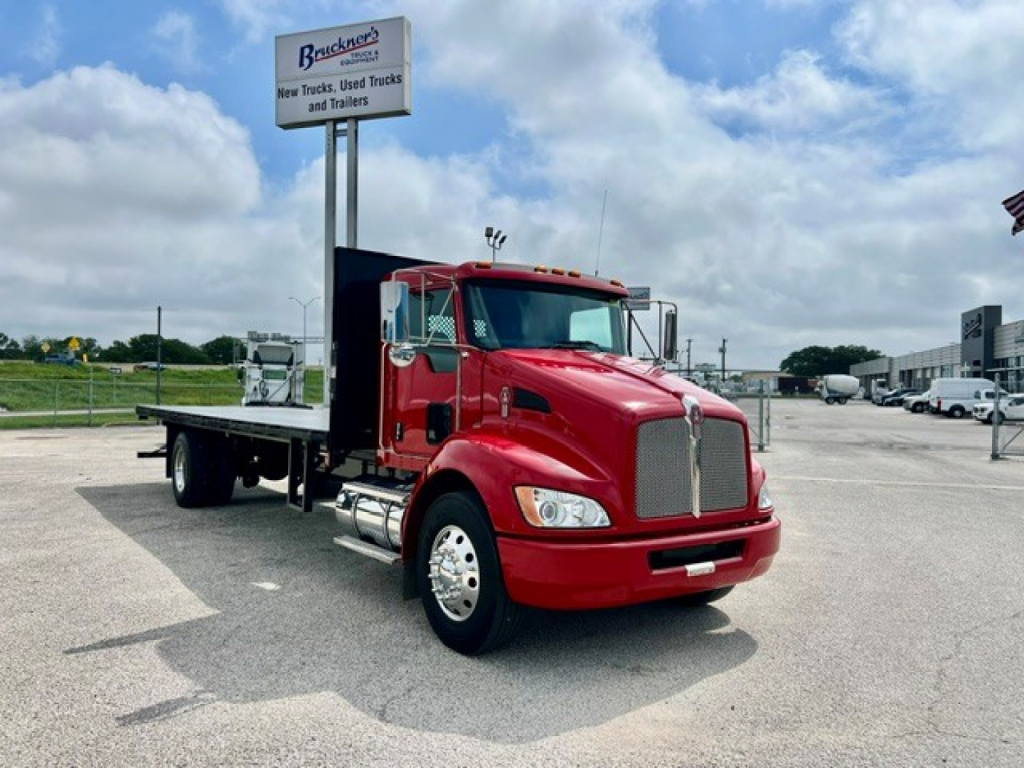
Have used kenworth flatbed truck to sell? List it here to reach thousands of buyers.
About Used Kenworth Flatbed Trucks in Texas
The key buying decisions start with GVWR, deck length, and axle configuration. Many used Kenworth flatbed trucks fall into Class 6 or Class 7 applications, with under-CDL setups common on certain 26-foot bodies, while heavier specifications move into CDL territory for more payload and towing capacity. Buyers should confirm bed length, frame rating, wheelbase, suspension type, and whether the truck has a dovetail, liftgate, headache rack, stake pockets, rub rail, or toolboxes. Deck material also matters. Steel beds tend to favor durability and concentrated loads, while wood decking can be easier to repair and offers good traction for certain cargo. Tie-down layout, winch track, and overall deck height affect daily usability more than many first-time buyers expect.
Powertrain choice on a used Kenworth flatbed truck should match the route and the load profile. Common considerations include diesel engine rating, transmission type, rear axle ratio, and brake setup, especially if the truck will spend time in stop-and-go delivery work or pull equipment trailers. Kenworth trucks are known for driver-friendly cabs, good visibility, and straightforward vocational spec options, which makes them a strong fit for fleets that want a durable chassis with broad service support. On used units, pay close attention to PTO provisions, upfit quality, frame modifications, and signs of bed abuse such as cracked crossmembers, uneven deck wear, or damaged rub rails.
Texas buyers should also think about operating environment and legal configuration. Heat, long idle periods, and mixed highway-to-jobsite use put extra importance on cooling system condition, tire age, and suspension wear. Measure the body carefully and verify bridge law, axle weights, and registration class before buying, especially if the truck may cross from local delivery into heavier hauling work. A properly spec'd used Kenworth flatbed can cover a wide range of freight with less loading restriction than a van body, but the best value comes from matching the truck's deck, payload rating, and securement features to the cargo you move every week.
Frequently Asked Questions
What should I check first on a used Kenworth flatbed truck?
Start with the truck's GVWR, actual payload capacity, deck length, and axle configuration. Those four items determine whether the truck fits your freight and whether it stays in an under-CDL or CDL operating range. After that, inspect the bed itself for cracked welds, bent rails, damaged crossmembers, worn decking, and missing or weak tie-down points. A flatbed truck can look clean and still have expensive structural wear in the body and frame interface.
Are Kenworth flatbed trucks good for local delivery and construction work?
Yes. Kenworth flatbed trucks are commonly used for building materials, palletized freight, pipe, steel, equipment, and jobsite support because the chassis can be spec'd for medium-duty or heavier vocational work. Their value is in easy side loading, flexible cargo securement, and broad body configurations. For local delivery, buyers often prefer manageable wheelbases, automatic transmissions, and under-CDL setups where legal payload allows.
What deck features matter most on a flatbed truck?
The most important deck features are stake pockets, rub rails, tie-down points, winch compatibility, deck height, and overall bed material. A headache rack is important when hauling taller or shifting freight near the cab. Toolboxes, liftgates, and dovetails can also change how useful the truck is in day-to-day work. The right configuration depends on whether the truck handles forklifts, bundled material, machinery, or mixed delivery freight.
How do I know if a used flatbed truck is under CDL?
An under-CDL flatbed truck is typically rated at 26,000 pounds GVWR or less, but the exact legal requirements depend on the full operating combination, trailer use, cargo, and state and federal rules. Do not rely only on body length or a seller's shorthand description. Verify the door sticker, registration class, axle ratings, and how the truck will actually be used. A 26-foot flatbed can be under CDL, but legality depends on the truck's official weight rating and operating setup.
What matters most for a used flatbed truck in Texas?
Cooling system condition, tire condition, suspension wear, and overall durability matter more in Texas because many trucks see heat, long distances, rough surfaces, and heavy vocational use. Buyers should also consider whether the truck needs to handle highway miles between cities or tighter local routes in metro areas. A Texas flatbed truck should be evaluated for AC performance, brake condition, steering wear, and signs of sun and heat exposure on hoses, seals, wiring, and decking.