
Hino Flatbed Trucks For Sale in New York
Browse Hino flatbed trucks with medium-duty diesel power, strong payload ratings, and versatile deck setups for delivery, construction, and equipment haul.
Learn more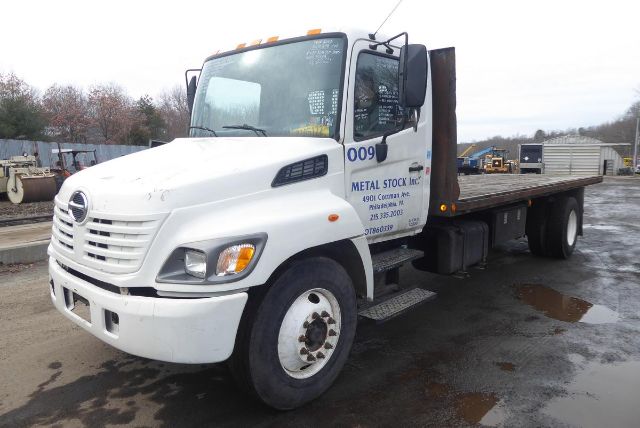
Have hino flatbed truck to sell? List it here to reach thousands of buyers.
About Hino Flatbed Trucks in New York
A buyer should pay close attention to body dimensions and usable deck configuration before anything else. Flatbed length often ranges from roughly 18 to 26 feet on these trucks, with stake pockets, rub rails, tie-down points, and headache racks being key functional details. Wood floors are common and easy to repair, while steel and combo floors may make more sense for tougher loading cycles. If the truck will carry forklifts, bundled material, or compact equipment, axle ratings, spring capacity, and frame condition matter as much as listed payload. Air brakes, 22.5-inch rubber, and single-axle 4x2 layouts are typical on many Hino flatbeds in this class.
Hino diesel engines are known for durability in regional service, and many buyers look for the J-series engines paired with proven manual gearboxes or medium-duty automatics. A 6-speed manual can still be a good fit for fleets that want lower complexity and direct control under load, while an automatic often makes more sense for stop-and-go delivery work. Gear ratio, rear axle rating, and suspension setup affect launch with weight on the deck, highway cruise speed, and long-term operating cost. On used Hino flatbed trucks, it is smart to inspect the frame rails for corrosion, confirm cab-to-axle measurements against the body, and look closely at the condition of the bed, crossmembers, tie-down hardware, brakes, and tires.
The biggest advantage of a Hino flatbed is versatility. One truck can handle lumber one day, palletized freight the next, and equipment or fabricated material after that, especially when the body is set up with the right securement points. Buyers comparing listings should think beyond engine horsepower and focus on the full working spec: deck length, body builder, GVWR, wheelbase, brake type, suspension, and how the truck was actually used. A properly spec'd Hino flatbed truck can be a strong fit for contractors, rental yards, supply houses, landscape operations, and local delivery fleets that need open-deck access without stepping up to a CDL-required tractor and trailer combination in every case.
Frequently Asked Questions
What are Hino flatbed trucks commonly used for?
Hino flatbed trucks are commonly used for local and regional delivery of building materials, palletized freight, pipe, steel, landscape products, crated equipment, and jobsite supplies. Their open deck makes side loading and crane or forklift loading much easier than a van body. In medium-duty applications, they are especially useful for contractors, supply houses, municipalities, and service fleets that need a straight truck with flexible cargo access.
What specs matter most when buying a used Hino flatbed truck?
The most important specs are GVWR, front and rear axle ratings, wheelbase, cab-to-axle measurement, deck length, brake type, and suspension capacity. Those numbers determine legal payload, body fit, turning radius, and how well the truck handles under load. Buyers should also inspect the flatbed itself for floor wear, bent crossmembers, damaged rub rails, missing tie-down points, and any frame corrosion or previous repairs, especially on trucks that have worked in Northeast conditions.
Are Hino flatbed trucks good for city and regional routes in New York?
Hino flatbed trucks are generally well suited for New York city and regional work because they offer a good balance of payload, visibility, and maneuverability. Compared with larger tandem setups, a single-axle Hino is easier to place in traffic, tighter yards, and urban delivery points. The right wheelbase and body length are important, because a truck that is too long for the route can become difficult to operate efficiently in dense areas.
What is the difference between a flatbed truck and a stake body truck?
A flatbed truck has an open platform body designed for top, rear, and side loading, while a stake body adds removable side panels or stakes to help contain loose or stacked cargo. Many medium-duty Hino trucks can be configured either way depending on the body. Buyers hauling mixed freight should consider whether they need the loading flexibility of a true flatbed or the extra cargo retention of a stake-style setup.
Should I choose a manual or automatic transmission in a Hino flatbed?
That depends on the route and driver mix. A manual transmission can offer simple operation, solid durability, and good control when hauling heavier loads or working in vocational settings. An automatic transmission usually makes more sense for frequent stop-and-go service, multi-driver fleets, and urban delivery work where driver fatigue and ease of operation matter more. The better choice is the one that matches the truck's daily duty cycle, load profile, and driver availability.