
Freightliner Flatbed Trucks For Sale in Pennsylvania
Shop Freightliner flatbed trucks in Pennsylvania. Compare M2 and medium-duty specs, bed setups, GVWR, powertrain options, and work-ready features.
Learn more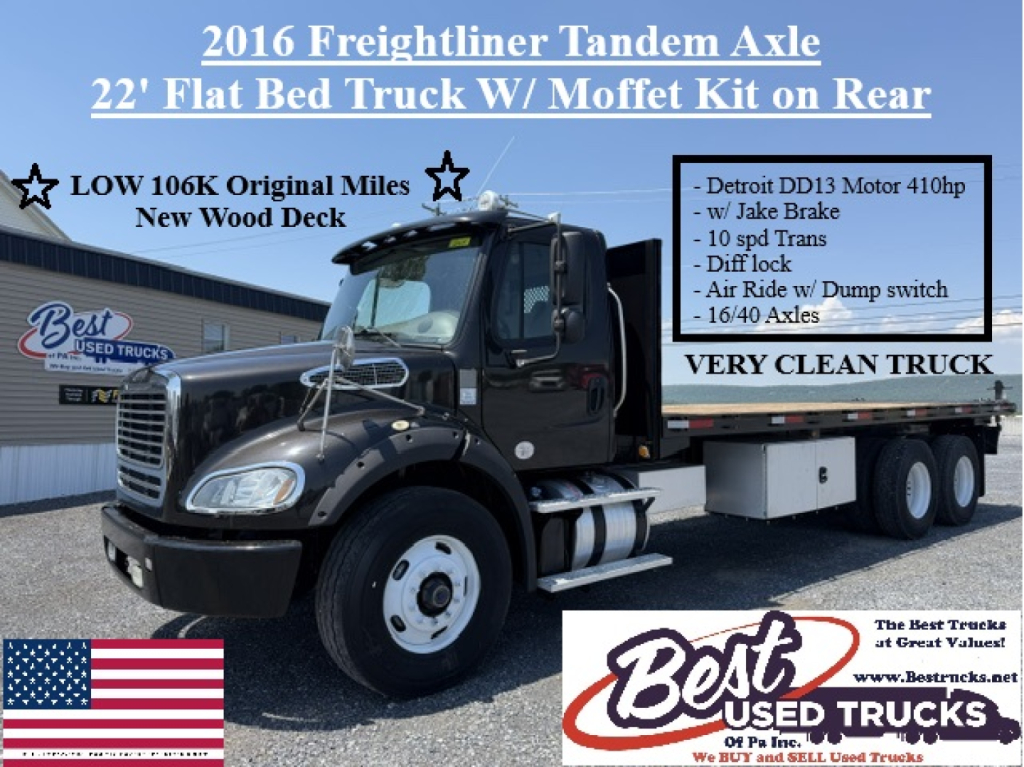
Have freightliner flatbed truck to sell? List it here to reach thousands of buyers.
About Freightliner Flatbed Trucks in Pennsylvania
The right spec depends on the freight. A flatbed used for palletized deliveries around Pittsburgh or Philadelphia may need a liftgate, air ride suspension, and automatic transmission for stop-and-go work. A truck carrying pipe, lumber, or jobsite materials often benefits from stakes, side kits, a durable floor, and a rear ratio that favors pulling power over highway speed. Pennsylvania buyers should pay attention to corrosion on the bed, crossmembers, and underbody, especially on trucks that have seen winter road salt. It also pays to inspect frame condition, deck wear, hoist or gate operation if equipped, and the condition of tie-down hardware, because these components directly affect daily usability and load securement.
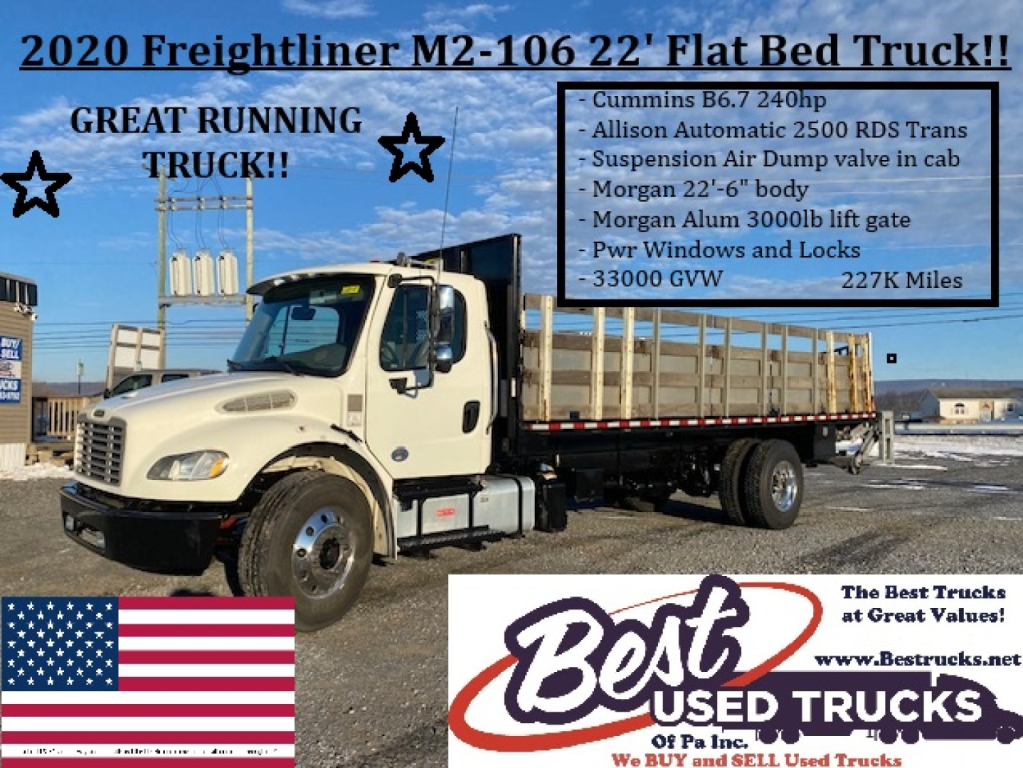
Freightliner flatbeds are commonly powered by medium-duty diesel engines such as the Cummins B6.7, paired with Allison automatic transmissions in many delivery and vocational specs. Single-axle 4x2 configurations are typical, with front axle ratings often around 10,000 to 12,000 pounds and rear axles in the 19,000 to 21,000 pound range, depending on the build. Air brakes, air ride rear suspension, and outside aluminum wheels are frequently seen on higher-spec trucks. Buyers comparing listings should look beyond mileage and focus on how the truck was upfitted and maintained. A correctly spec'd wheelbase, axle ratio, suspension, and body configuration usually matter more to productivity than cosmetic condition alone.
A Freightliner flatbed can also be a practical alternative to a box truck when freight is oversized, irregular, or needs forklift access from the side. The category covers everything from basic contractor platforms to stake bodies set up for multi-stop delivery routes. For buyers who need a CDL-capable truck, many Freightliner flatbeds are built in the Class 6 and Class 7 range, though exact registration and licensing requirements depend on GVWR and local use. The best unit is the one whose deck, payload capacity, and securement setup match the actual work, not just the engine badge or model year.
Frequently Asked Questions
What are the most important specs to compare on a Freightliner flatbed truck?
The most important specs are GVWR, front and rear axle ratings, bed length, wheelbase, axle ratio, suspension type, and the body configuration itself. A buyer should also confirm deck material, stake pockets, rub rails, tie-down points, headache rack design, and whether the truck has a liftgate or side kits. These details determine payload, loading method, turning radius, and how well the truck fits the intended route and freight type.
Is a Freightliner M2 a good platform for a flatbed truck?
The Freightliner M2 is widely used in flatbed service because it is easy to upfit, has broad parts support, and is available in many medium-duty configurations. It works well for local and regional delivery, contractor use, and vocational hauling where a straight truck with an open deck is more practical than a van body. The platform is especially popular when paired with a Cummins diesel and Allison automatic transmission for reliable stop-and-go operation.
What should Pennsylvania buyers inspect on a used flatbed truck?
Pennsylvania buyers should closely inspect rust and corrosion on the frame, bed structure, crossmembers, fasteners, and underbody because winter road treatment can accelerate deterioration. The deck surface, stake sides, liftgate, tie-down hardware, brake system, suspension components, and wiring should all be checked for wear or damage. Service records matter, but so does evidence of how the truck was loaded and used, since repeated overloading or rough jobsite work can shorten body and chassis life.
Do I need a liftgate on a flatbed truck?
A liftgate is useful when the truck handles palletized freight at locations without docks or forklifts. It can make a flatbed more versatile for building supply, equipment delivery, and multi-stop urban work. If the truck is mainly loaded from the side by forklift or crane, the added weight and maintenance of a liftgate may not be necessary, so the decision should be based on loading conditions and payload priorities.
What is the difference between a flatbed truck and a stake body truck?
A flatbed truck generally refers to an open platform body designed for loading from the sides, rear, or overhead. A stake body is a type of flatbed that adds removable or fixed side panels supported by stakes, which helps contain loose or stacked materials while still allowing flexible loading. Many Freightliner trucks in this category are effectively flatbeds with stake sides, so the listing details should be read closely to understand the exact body style.