
New Freightliner Flatbed Trucks For Sale
Shop new Freightliner flatbed trucks with specs for hauling building materials, machinery, steel, and palletized freight across local or regional routes.
Learn more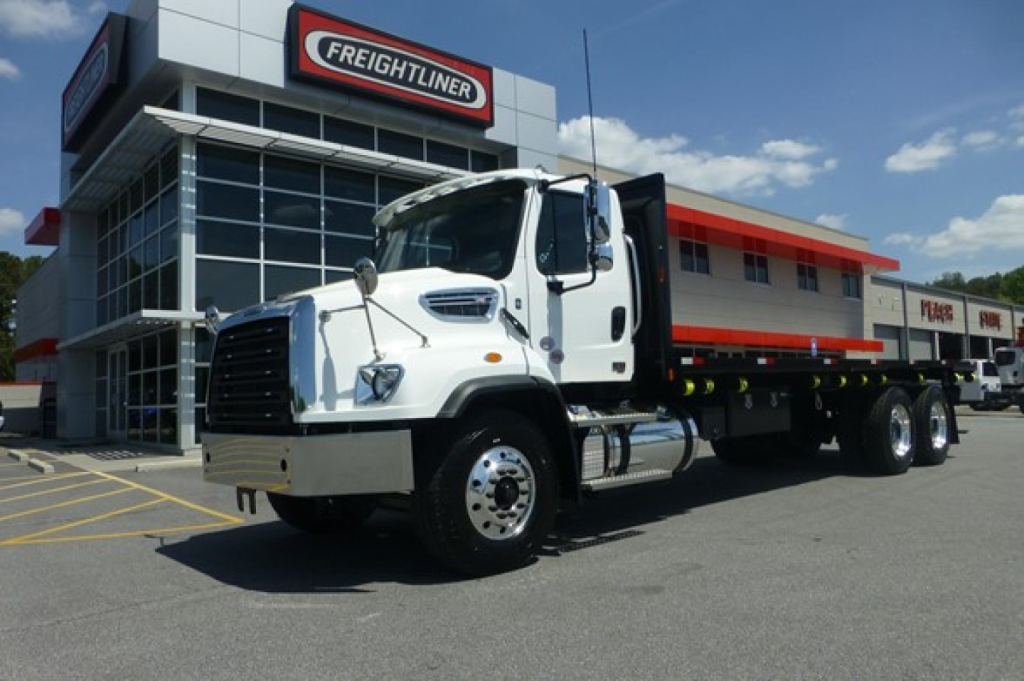
Have new freightliner flatbed truck to sell? List it here to reach thousands of buyers.
About New Freightliner Flatbed Trucks
A flatbed truck, also known as a stake bed or straight flatbed depending on body style, is designed to carry freight that does not require enclosure. That makes securement and deck setup a major part of the buying decision. Common body details include wood or steel flooring, rub rails, stake pockets, tie-down points, headache racks, and toolboxes. Buyers hauling steel, pipe, lumber, concrete forms, generators, or palletized jobsite materials should pay close attention to deck length, bed height, rear overhang, and the available space for forklifts or cranes to load from the side. If the truck will carry mounted equipment such as a knuckleboom or small articulating crane, frame reinforcement, axle ratings, and wheelbase become even more important.
On new Freightliner builds, the powertrain is often centered around Detroit diesel engines and Allison automatic transmissions, especially in stop-and-go vocational service where ease of operation and low-speed control matter. A tandem axle Class 8 setup is common for higher payload applications, while suspension choice affects ride, durability, and body stability under load. Spring suspension remains popular in tougher jobsite conditions because it is simple and durable. Buyers should also review front axle capacity, brake configuration, fuel tank placement, and cab style. A standard cab can maximize usable body space on a given wheelbase, while the final spec should still leave room for headache racks, underbody storage, and any required hydraulic or electrical equipment.
The best new Freightliner flatbed truck is the one matched to freight profile, loading method, and route conditions. A truck hauling building products on paved regional lanes may need a different setup than one delivering rebar, equipment, or aggregate-related materials into rough jobsites. Look closely at GVWR, body dimensions, frame section, engine torque, transmission programming, and the upfit details that affect day-to-day use. Small spec differences can change payload distribution, legal bridge compliance, maneuverability, and long-term maintenance costs in a meaningful way.
Frequently Asked Questions
What are the most important specs to compare on a new Freightliner flatbed truck?
The most important specs are axle configuration, wheelbase, GVWR, front and rear axle ratings, frame strength, suspension, engine torque, transmission type, and body length. On a flatbed, those chassis specs directly affect payload distribution, turning radius, bridge compliance, and how well the truck supports the body and securement equipment. Buyers should also confirm bed height, tie-down layout, rub rails, stake pockets, headache rack design, and space for toolboxes or crane installation.
Is a tandem axle Freightliner flatbed better than a single axle?
A tandem axle Freightliner flatbed is usually the better choice for heavier payloads, longer decks, and more demanding vocational work. Tandem setups generally provide better weight distribution and higher capacity, which matters when hauling dense materials such as steel, lumber packs, machinery, or palletized construction products. A single axle flatbed can still be a smart option for lighter local delivery work where lower acquisition cost, tighter maneuverability, and reduced empty weight are more important than maximum payload.
Why do many new Freightliner flatbed trucks use Allison automatic transmissions?
Allison automatic transmissions are popular in flatbed applications because they perform well in stop-and-go service, improve low-speed control, and reduce driver fatigue. They are especially useful when the truck operates in urban delivery, construction supply routes, or jobsites where frequent starts, backing, and precise positioning are part of the workday. For fleets with multiple drivers, an automatic transmission can also help with driver onboarding and consistency.
Can a new Freightliner flatbed be configured for crane or equipment hauling work?
Yes, many new Freightliner flatbed trucks can be spec'd for crane service or equipment-related hauling, but the chassis must be ordered with that application in mind. Buyers should verify frame reinforcement, PTO provisions, axle ratings, wheelbase, suspension, and available mounting space before adding a knuckleboom, articulating crane, winch, or other hydraulic equipment. The truck also needs the right body layout so the mounted equipment does not compromise load securement, legal weight distribution, or usable deck space.
What freight is commonly hauled on a Freightliner flatbed truck?
Freightliner flatbed trucks are commonly used for building materials, lumber, steel, pipe, machinery, palletized products, concrete forms, generators, and general jobsite supplies. The open deck allows side loading and easier loading of oversized or irregular cargo that does not fit well in an enclosed body. That flexibility is the main advantage of a flatbed, but it also means buyers need to prioritize securement features and choose a spec that matches the density and dimensions of the cargo they expect to haul.