
Dump Trucks For Sale in Oregon
Browse dump trucks for sale in Oregon, including vocational and municipal specs for hauling aggregate, debris, asphalt, and road materials.
Learn moreBrowse Dump Trucks by Make
Have dump truck to sell? List it here to reach thousands of buyers.
About Dump Trucks in Oregon
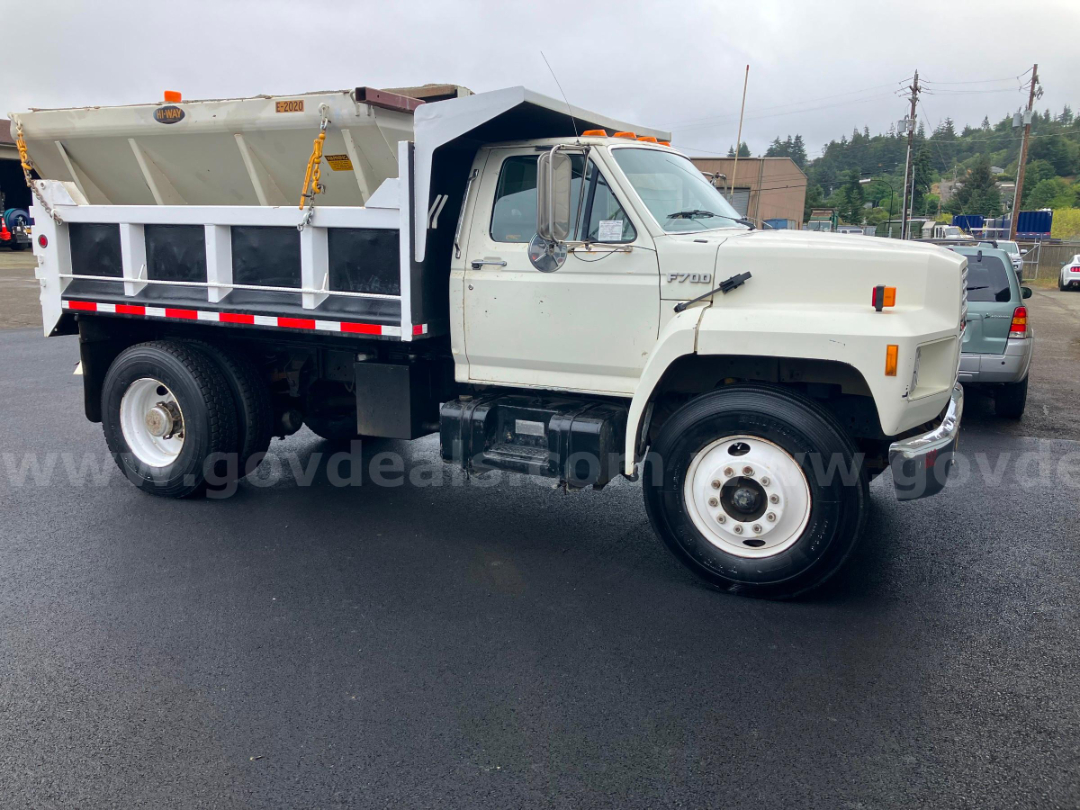
Body length, side height, and hoist capacity are key specs to compare. A shorter wheelbase generally helps on tighter jobsites and municipal routes, while a longer wheelbase can improve stability and body capacity. Double-frame construction, body floor thickness, crossmember spacing, and tailgate design all affect durability when hauling abrasive material. Many dump trucks are equipped with PTO-driven hydraulic systems, locking rear differentials, lift axles, tarp systems, pintle hitches, and automatic tire chains. In Oregon, trucks used for winter maintenance may also carry sanders, plows, or combination bodies for year-round service. Buyers looking at older vocational units should pay close attention to hoist condition, frame repairs, hinge wear, corrosion in the body, and signs of hard off-road use.
Engine and driveline specs should match the truck's actual duty cycle. Dump trucks commonly use diesel engines paired with manual, automated manual, or automatic transmissions, depending on operator preference and stop-and-go frequency. Lower rear axle ratios can help with gradeability and loaded starts, especially on uneven ground or steep approaches, while suspension choice affects both payload support and ride quality. Hendrickson walking beam, air ride, and heavy spring suspensions all show up in this category. Front axle capacity, brake type, and tire size also deserve a close look because vocational trucks often spend their lives near gross weight. If the truck will spend time on public roads between jobs, buyers should also compare bridge-law considerations, local permit requirements, and body capacity versus legal payload.
Used dump trucks can range from basic farm and municipal units to heavy-spec contractor trucks with severe-duty frames and specialized equipment. Some are set up for asphalt and paving work with insulated bodies and air-operated tailgates, while others are configured for rock, dirt, mulch, or snow and ice control. A good dump truck should balance legal payload, structural durability, and uptime. The most important buying decision is not simply engine size or body volume, but how well the complete chassis, body, hydraulics, and axle package match the material being hauled and the conditions the truck will face in Oregon.
Frequently Asked Questions
What should I look for first when buying a used dump truck?
Start with the truck's intended application, then check axle configuration, body construction, hoist condition, and overall frame integrity. A dump truck used for gravel, asphalt, demolition debris, or municipal snow work can have very different specifications. Pay close attention to the body floor, sidewalls, tailgate hinges, hydraulic cylinders, PTO operation, suspension wear, and any frame plating or repair history. A strong engine does not make up for a worn body or a tired hoist system.
Is a single-axle or tandem-axle dump truck better for Oregon work?
It depends on payload targets, jobsite access, and local road use. Single-axle dump trucks are easier to maneuver, often cost less to operate, and fit well in city work, landscaping, and lighter municipal service. Tandem-axle dump trucks generally offer higher legal payload capacity, better weight distribution, and more versatility for aggregate, excavation, and contractor work. In Oregon, route restrictions, steep grades, and rural job access can make axle configuration a major buying factor.
What dump body material is better, steel or aluminum?
Steel dump bodies are usually preferred for heavier and more abrasive materials such as rock, demolition debris, and asphalt because they resist impact damage better. Aluminum bodies reduce tare weight and can improve payload for lighter bulk materials, but they are typically less suited to severe impact loading. The right choice depends on what the truck will haul most of the time, not just the advertised body capacity.
How important is the hydraulic system on a dump truck?
The hydraulic system is central to the truck's working value because it powers the hoist and directly affects dumping speed, stability, and reliability. Buyers should inspect the PTO engagement, pump operation, cylinder seals, hose condition, control valves, and any signs of leakage or slow lift performance. A dump truck with a solid chassis and engine can still become expensive downtime if the hydraulic system is weak or poorly maintained.
Are older dump trucks still a practical option?
Older dump trucks can still be practical if the chassis, body, and hydraulics have been maintained for vocational use. Many older units remain useful in municipal fleets, farms, private yards, and seasonal work because they are mechanically simpler and easier to service. The key is to inspect structural condition closely, especially the frame rails, cab mounts, spring hangers, hoist mounts, body hinges, and corrosion-prone areas. Age matters less than maintenance history and how the truck was worked.