
Ford Dump Trucks For Sale in Oregon
Browse Ford dump trucks for sale in Oregon. Compare common specs, PTO setups, axle ratings, body sizes, and vocational applications.
Learn more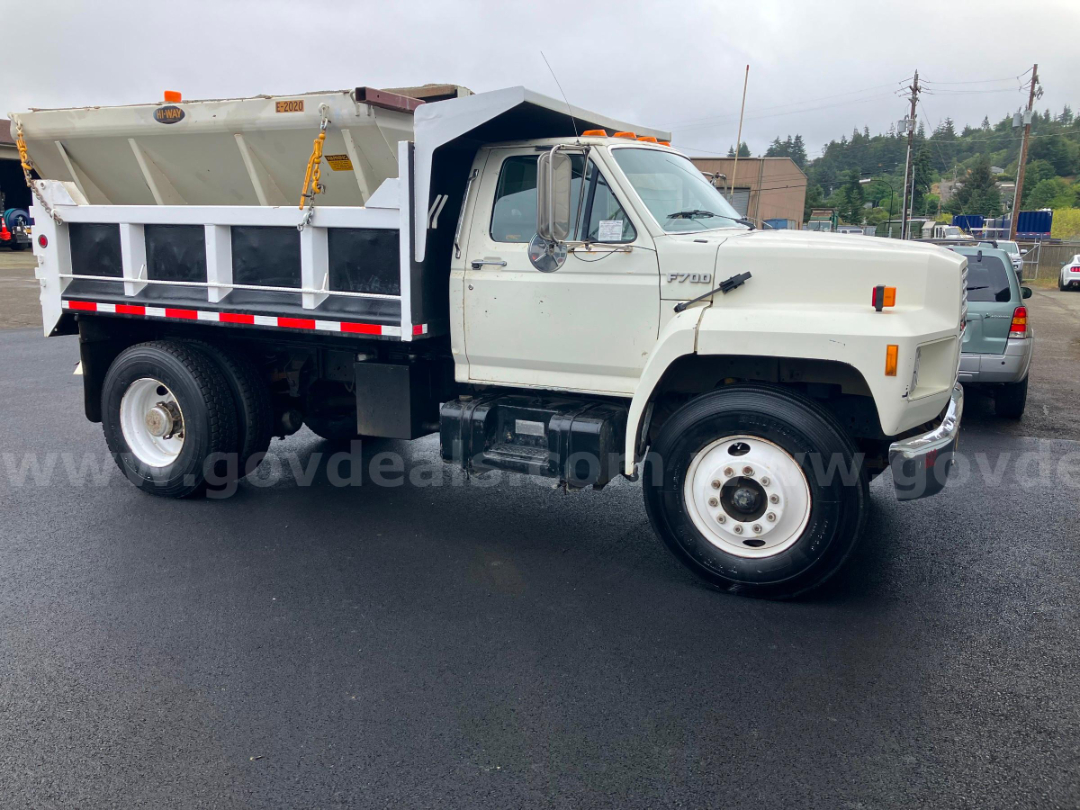
Have ford dump truck to sell? List it here to reach thousands of buyers.
About Ford Dump Trucks in Oregon
A buyer should start with the working end of the truck, not the badge on the hood. Body length, side height, hoist type, tailgate design, and apron condition matter as much as engine and transmission. Common dump body setups in this class include 10 to 14 foot bodies for aggregate, bark dust, debris, and patch material. Many older Ford dump trucks use underbody or telescopic hoists, and PTO operation should be checked for smooth engagement, lift speed, cylinder leakage, and frame integrity around hoist mounts. If the truck has spreader or sanding equipment, hydraulic controls, chain systems, and rear delivery components should be inspected closely because municipal-spec units often see seasonal use that can hide corrosion or deferred maintenance.
On the chassis side, expect a range of diesel and gas power depending on year and model, with older vocational examples often built around simple drivetrains and mechanical systems. Key specs to compare include GVWR, front and rear axle ratings, spring capacity, wheelbase, brake type, tire size, and transmission type. A single-axle Ford dump truck can be easier to maneuver on tighter Oregon jobsites and in urban delivery routes, but payload is limited by axle ratings, body weight, and local bridge law. Rust around cab mounts, floor pans, door bottoms, dump body crossmembers, and frame kick-up areas deserves close attention, especially on trucks that have handled wet aggregate, deicing material, or road maintenance work.
For buyers comparing Ford dump trucks for sale, the best fit usually comes down to application and service history. A truck used for topsoil, mulch, and light debris can be a very different machine from a former municipal unit equipped for sanding, plowing, or road service. Look for clear signs of regular hydraulic maintenance, brake work, steering component upkeep, and PTO service. If the truck will spend time off pavement, traction aids, locking rear axles, tire condition, and suspension wear become more important. An older Ford dump truck can still be a productive vocational truck when the hoist, body, frame, and axle package match the job.
Frequently Asked Questions
What should I check first on a used Ford dump truck?
Start with the dump body, hoist, and frame. A used Ford dump truck can have a decent engine and still need major body or hydraulic work. Check for cracked frame rails near hoist mounts, worn hinge pins, floor patches, rusted crossmembers, leaking cylinders, and PTO engagement problems. Tailgate operation, bed alignment, and signs of hard overloading also tell you a lot about the truck's prior use.
Are older Ford dump trucks good for construction and landscape work?
Older Ford dump trucks can still work well for light to medium-duty hauling if the chassis and body are correctly matched to the application. They are commonly used for gravel, bark, topsoil, asphalt patch, and debris. Many buyers like them for simpler mechanical systems and lower purchase cost. The limiting factors are usually payload, brake system condition, hydraulic health, and overall structural wear rather than basic engine power alone.
What body size is common on a Ford single-axle dump truck?
Many Ford single-axle dump trucks are equipped with bodies in the 10 to 14 foot range, though exact size depends on wheelbase and intended use. Shorter bodies tend to suit dense materials like rock or sand, while taller sides may be better for mulch, brush, or lighter bulk material. The body dimensions should always be evaluated against axle ratings and legal payload, because more cubic capacity does not automatically mean more usable carrying capacity.
Why do municipal Ford dump trucks need extra inspection?
Municipal-spec dump trucks often come with useful equipment such as sanders, plows, auxiliary hydraulics, or automatic tire chains, but those same trucks can have hidden wear from seasonal duty. Road salt, abrasive material, cold-weather starts, and long idle periods can accelerate corrosion and hydraulic issues. Inspect the wiring, spreader drive components, chain systems, underbody rust, and any added hydraulic circuits to make sure the truck is still practical to operate and maintain.
Is a single-axle Ford dump truck a good fit for Oregon work?
A single-axle Ford dump truck often fits Oregon applications well when maneuverability matters more than maximum payload. These trucks are useful for county maintenance, landscaping, paving support, farm use, and material delivery on tighter roads or smaller jobsites. Buyers should still verify axle ratings, brake condition, tire type, and traction setup, especially if the truck will operate on soft ground, grades, or wet jobsite surfaces.