
Used Mack Dump Trucks For Sale in Texas
Shop used Mack dump trucks in Texas, including Granite tandem and tri-axle models with MP engines, heavy suspensions, and vocational specs.
Learn more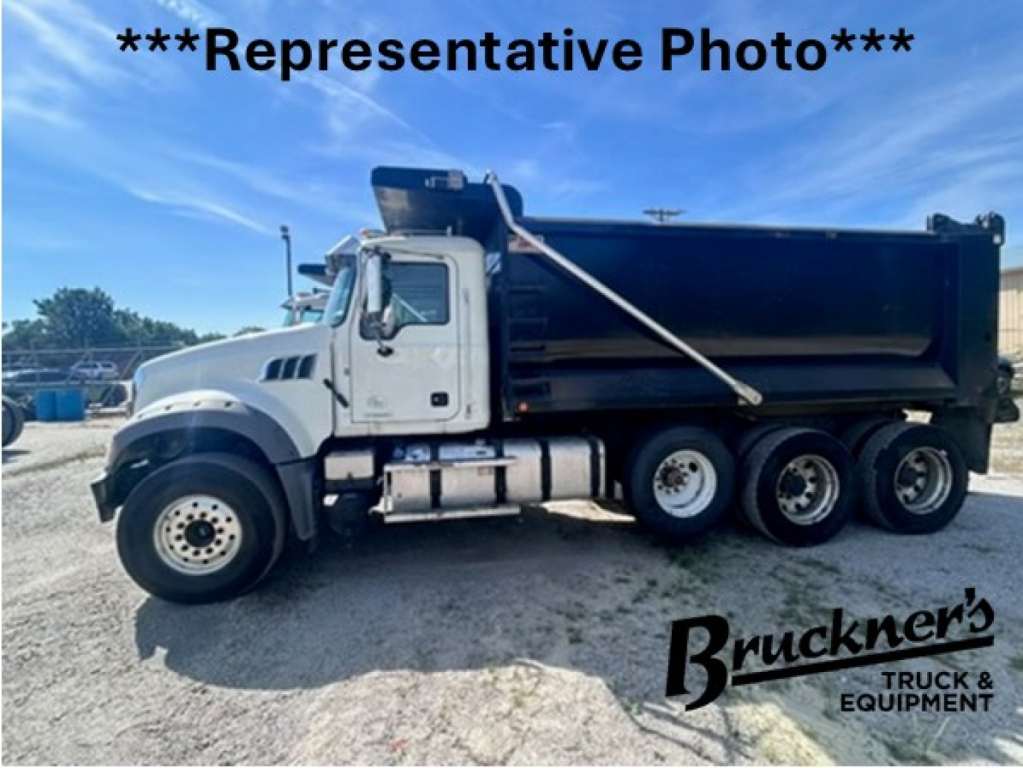
Showing 13 to 13 of 13 results
Have used mack dump truck to sell? List it here to reach thousands of buyers.
About Used Mack Dump Trucks in Texas
The first buying decision is usually axle configuration and suspension. Tandem axle trucks are common for general construction and material delivery, while tri-axle configurations can make sense for buyers chasing higher payload within local bridge and axle laws. Many Mack dump trucks in Texas are equipped with Camelback or other severe-service rear suspensions, which are valued for durability in off-road and mixed-duty conditions. Front axle ratings can vary significantly, and that matters if the truck will carry a long wheelbase body, heavy apron, or front-loaded material. Body size, hoist type, side height, liner condition, tailgate style, and PTO setup all deserve close attention because the truck's earning potential depends as much on the dump package as the cab and chassis.
Powertrain specs on used Mack dump trucks often center on Mack MP-series diesel engines, frequently in the 400 to 500 horsepower range, paired with either an Allison automatic, Mack mDRIVE automated manual, or a traditional manual transmission depending on application. Allison automatics are popular in urban and municipal work where constant shifting and driver turnover are factors. The mDRIVE can be attractive for fleets looking for efficiency and driver consistency, especially on newer vocational specs. Buyers should also look at rear axle ratio, locking differentials, engine brake performance, and cooling system capacity, since a dump truck that spends time in Texas heat, soft ground, and low-speed hauling works under very different conditions than a road tractor. Frame condition, crossmember integrity, brake type, and evidence of prior body or hoist repairs are all worth checking closely on a used unit.
For Texas buyers, the right used Mack dump truck is usually the one that matches local hauling law, material type, and route profile rather than simply the newest truck on the page. A truck hauling caliche, base, or asphalt around Dallas-Fort Worth may need a different suspension, body, and transmission setup than one working in oilfield support, municipal street projects, or South Texas pit hauling. Mack's vocational reputation is tied to stout components and jobsite-ready packaging, but the best value still comes from matching wheelbase, axle ratings, body spec, and drivetrain to the exact work. A clean used Mack dump truck with the right spec can be a very productive truck for contractors, owner-operators, and public works fleets that need durability, straightforward serviceability, and strong vocational performance.
Frequently Asked Questions
What is the most common Mack dump truck model on the used market?
The Mack Granite is the most common Mack dump truck platform on the used market. It is a purpose-built vocational truck widely used for construction, aggregate, paving, and municipal hauling. Buyers will commonly find Granite models spec'd as tandem axle and tri-axle trucks with heavy front axles, severe-duty rear suspensions, and dump bodies sized for regional payload and bridge-law requirements.
Is an Allison automatic or Mack mDRIVE better for a used Mack dump truck?
It depends on the job cycle. Allison automatic transmissions are often preferred for city work, municipal routes, and applications with frequent stops, backing, and driver turnover because they are simple to operate and well suited to low-speed vocational work. Mack mDRIVE automated transmissions can be a strong fit for fleets that want driver consistency and efficient operation, especially on newer trucks that split time between jobsite and road travel. The better choice is the one that matches route profile, terrain, and driver experience.
What should I inspect first on a used Mack dump truck?
Start with the frame, suspension, body, and hoist system because those components see the hardest vocational abuse. Check for frame cracks, welded repairs, worn spring packs or suspension components, hoist leaks, body floor wear, tailgate damage, and signs of hard loading impacts. After that, review axle ratings, transmission operation, differential function, engine brake performance, and maintenance records. On a dump truck, body condition and chassis integrity are just as important as engine hours or mileage.
Are tandem or tri-axle Mack dump trucks better for Texas work?
Both can be right, depending on legal payload and job type. Tandem axle dump trucks are common for general construction, paving support, and short-haul material delivery where maneuverability and lower operating cost matter. Tri-axle trucks can offer better payload potential in applications where axle distribution and local regulations support the extra capacity. Texas buyers should match the axle setup to the material being hauled, the roads being traveled, and the weight laws in the operating area.
What engine and horsepower range is typical in a used Mack dump truck?
Many used Mack dump trucks are powered by Mack MP-series diesel engines, often in the 405 to 445 horsepower range, though higher horsepower specs are also available in some severe-duty applications. That range is common because it gives enough torque for loaded starts, jobsite movement, and short regional hauling without overspec'ing the truck. The right horsepower depends on gross weight, terrain, transmission type, and how much time the truck spends on-road versus off-road.