
Used Western Star Day Cab Trucks For Sale
Shop used Western Star day cab trucks built for regional haul, vocational work, and terminal duty with durable specs, strong drivetrains, and 6x4 options.
Learn more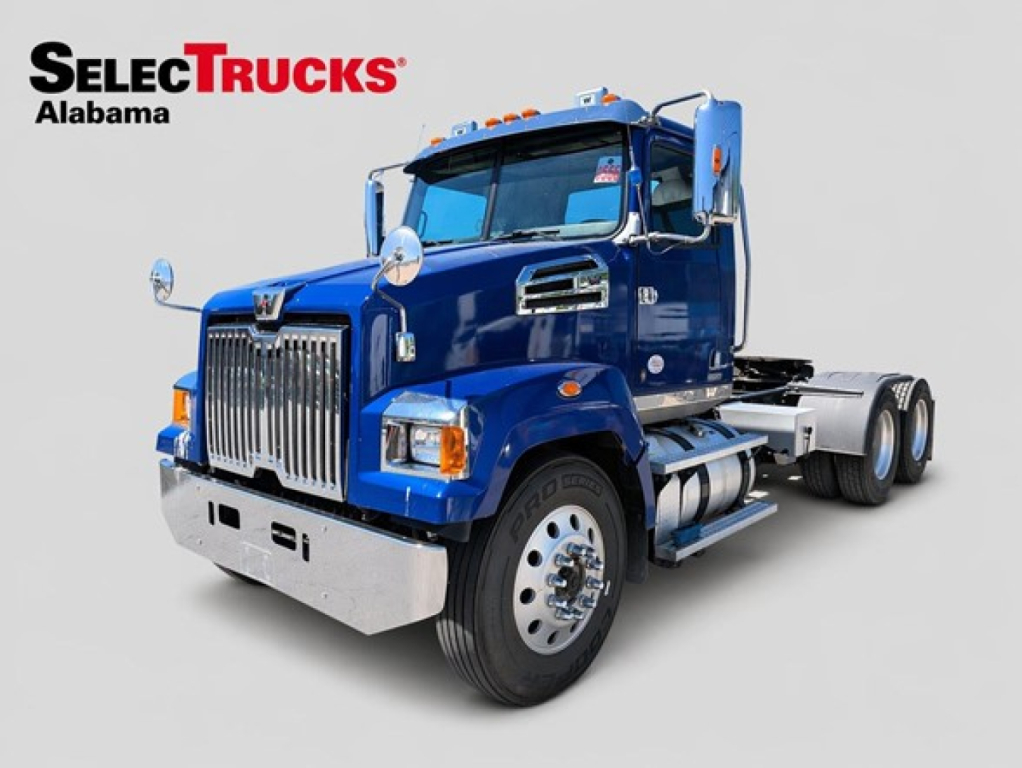
Have used western star day cab truck to sell? List it here to reach thousands of buyers.
About Used Western Star Day Cab Trucks
A lot of the value in a used Western Star day cab comes down to how it was spec'd. Common models include the Western Star 4700, often configured as a tandem axle 6x4 with Detroit diesel power, manual or automated transmissions, air ride suspension, and sliding fifth wheels. Buyers should pay close attention to horsepower, torque, rear axle ratio, wheelbase, and axle ratings because those choices determine how well the truck will handle regional freight, dump, equipment moves, tanker work, or PTO-driven applications. It is common to see DD13 engines in the 450 to 470 horsepower range, 10-speed Eaton transmissions, 40,000-pound rear axles, and fuel capacity sized for longer regional runs.
Western Star day cabs are especially relevant when uptime and chassis strength matter. Many are ordered with heavier frame rails, vocational gearing, aluminum or steel wheels, larger fuel tanks, PTO provisions, and suspension packages suited for mixed on-road and jobsite use. If the truck will spend most of its time on short highway runs, a lighter and more fuel-conscious spec may make more sense. If it will pull heavy loads, operate in construction support, or run in severe service, buyers should look closely at rear suspension type, locking differentials, tire size, and whether the frame and drivetrain were built for that duty cycle.
When comparing used Western Star day cab trucks for sale, condition and service history matter as much as the badge on the hood. A clean DOT record, documented maintenance, remaining warranty coverage if available, and signs of proper drivetrain care can be more important than model year alone. It also helps to confirm the fifth wheel setup, wheelbase, cab configuration, and emissions system history so the truck matches the trailer and route profile. A well-spec'd Western Star day cab can be a strong fit for heavy regional hauling, terminal work, municipal service, and vocational tractor applications where toughness and driver-friendly visibility are priorities.
Frequently Asked Questions
What are Western Star day cab trucks typically used for?
Western Star day cab trucks are commonly used for regional hauling, local freight, port drayage, dedicated fleet routes, municipal work, and vocational tractor applications. Because they do not have a sleeper, they are best suited for operations where the driver returns the same day. Many buyers also choose them for heavy-duty work because Western Star often builds these trucks with vocational chassis options, strong axle ratings, and PTO capability.
Which Western Star model is most common as a used day cab?
The Western Star 4700 is one of the most common used day cab models on the market. It is frequently spec'd as a Class 8 tandem axle tractor with a Detroit DD13 engine, Eaton transmission, air ride suspension, and a sliding fifth wheel. Exact configurations vary widely, so the right truck depends on the weight, terrain, trailer type, and daily mileage in your operation.
What specs matter most when buying a used Western Star day cab?
The most important specs are engine model, horsepower and torque rating, transmission type, rear axle ratio, wheelbase, suspension, and axle capacity. Buyers should also verify fuel capacity, tire size, fifth wheel type, and whether the truck is PTO-ready. These details directly affect startability, cruise RPM, maneuverability, payload suitability, and compatibility with the trailers or equipment the truck will pull.
Is a Western Star day cab a good choice for vocational or severe-duty work?
Yes, many Western Star day cabs are well suited for vocational and severe-duty service because the brand is known for rugged chassis design and heavy-duty component specs. A properly configured unit can handle construction support, tanker work, equipment hauling, and other demanding applications. The key is to confirm that the frame, axle ratings, suspension, gearing, and drivetrain were ordered for that job rather than for lighter highway use.
Should I choose a manual or automated transmission in a used Western Star day cab?
That decision depends on route, driver preference, and maintenance strategy. A manual transmission, such as a 10-speed Eaton, can be a strong fit for buyers who want simplicity, direct control, and broad service familiarity. An automated manual can improve driver consistency and reduce fatigue in stop-and-go operation, but the truck's software, clutch history, and calibration should be checked carefully before purchase.