
Peterbilt Conventional Daycab Trucks For Sale in New York
Shop Peterbilt conventional daycab trucks for regional haul, local delivery, and port work with specs on wheelbase, axle setup, engine, and transmission.
Learn more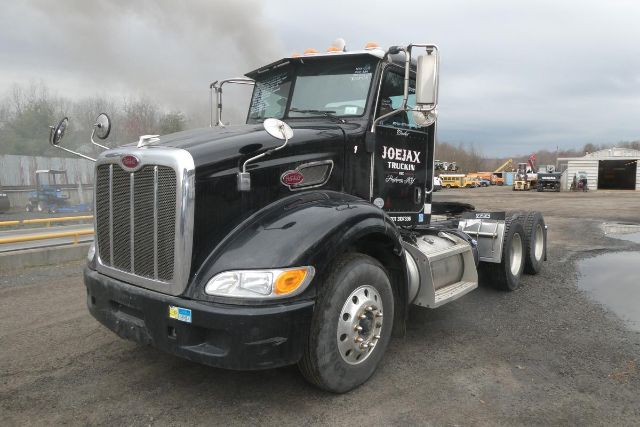
Have peterbilt conventional daycab truck to sell? List it here to reach thousands of buyers.
About Peterbilt Conventional Daycab Trucks in New York
The spec decisions that matter most usually start with axle layout and wheelbase. A tandem axle 6x4 Peterbilt daycab is common for heavier regional and highway work, while a single axle 4x2 or a single drive with tag axle can make sense for lighter freight, tighter turning requirements, or weight-sensitive operations. Wheelbases in this category often run from the mid-150-inch range into the 180-inch range, depending on fifth wheel placement, fuel capacity, and bridge law considerations. Buyers should also pay close attention to front axle rating, rear suspension design, and whether the truck has a sliding or stationary fifth wheel, especially if it will handle mixed trailer lengths or frequent trailer swaps.
On the powertrain side, many Peterbilt daycabs are equipped with PACCAR MX-13 engines in the 405 to 455 horsepower range, often paired with 10-speed manuals or 12-speed automated transmissions. Rear axle ratios such as 2.80, 2.93, 3.21, and 3.36 show how differently these trucks can be spec'd. Lower numerical ratios tend to favor fuel economy and linehaul-style cruising, while deeper ratios can help with starts, heavier loads, and more demanding city or regional work. Buyers shopping used emissions-era trucks should review the condition of the DEF system, aftertreatment history, engine brake operation, and fault codes, since downtime related to emissions components can affect total operating cost as much as engine or transmission wear.
Cab and chassis details also separate one Peterbilt conventional daycab from another. Air ride suspension, air ride cab mounts, aluminum wheels, low-profile tires, super singles, disc wheels, and interior comfort features can all change how the truck performs over a full workday. Some units are spec'd with pintle hooks for converter dolly or vocational use, while others are set up strictly as fifth wheel tractors. Peterbilt daycabs generally appeal to buyers who want a driver-friendly cab, straightforward service access, and strong resale demand, but the right truck still comes down to matching frame layout, axle ratings, gearing, and transmission type to the route structure and trailer set the truck will actually pull.
Frequently Asked Questions
What is a Peterbilt conventional daycab truck best suited for?
A Peterbilt conventional daycab is best suited for local and regional hauling where the truck returns to base daily and does not need sleeper accommodations. Common uses include dry van, reefer, flatbed, port drayage, LTL, and dedicated route work. The daycab layout reduces overall length and weight compared with a sleeper tractor, which can improve maneuverability, payload flexibility, and ease of operation in congested areas.
Should I choose a tandem axle or single axle Peterbilt daycab?
A tandem axle daycab is usually the better choice for heavier freight, broader trailer compatibility, and highway tractor duty with higher gross combination weights. A single axle or single drive configuration can be a better fit for lighter loads, specialized regional routes, and operations focused on lower tare weight or tighter turning radius. The right choice depends on loaded trailer weight, bridge compliance, axle laws, and how often the truck will operate in urban versus highway conditions.
What engine and transmission setups are common in Peterbilt daycabs?
Many Peterbilt conventional daycabs are powered by PACCAR MX-13 engines, commonly rated around 405 to 455 horsepower. Transmission choices often include 10-speed manual gearboxes and 12-speed automated manuals, with some fleets preferring automatics for driver recruitment and stop-and-go efficiency. Rear axle ratio is just as important as horsepower because it affects launch performance, cruise rpm, fuel economy, and how well the truck matches the trailer and terrain.
What should I inspect on a used Peterbilt daycab in New York?
Pay close attention to emissions-system condition, including DEF components, aftertreatment service records, active fault codes, and any history of limp mode or derate events. You should also inspect frame condition for corrosion, suspension wear, fifth wheel operation, steer axle and drive tire wear patterns, brake life, and signs of excessive idle hours. In New York and the Northeast, road salt exposure makes rust, wiring condition, and air system integrity especially important on used daycabs.
How does wheelbase affect a Peterbilt daycab tractor?
Wheelbase affects turning radius, ride quality, bridge spacing, trailer gap, and how the truck carries weight across the axles. A shorter wheelbase is easier to maneuver in tight yards, city streets, and terminal work, while a longer wheelbase can improve stability and fuel tank capacity. The correct wheelbase should match the trailer lengths, kingpin settings, fifth wheel position, and route environment the truck will see every day.