
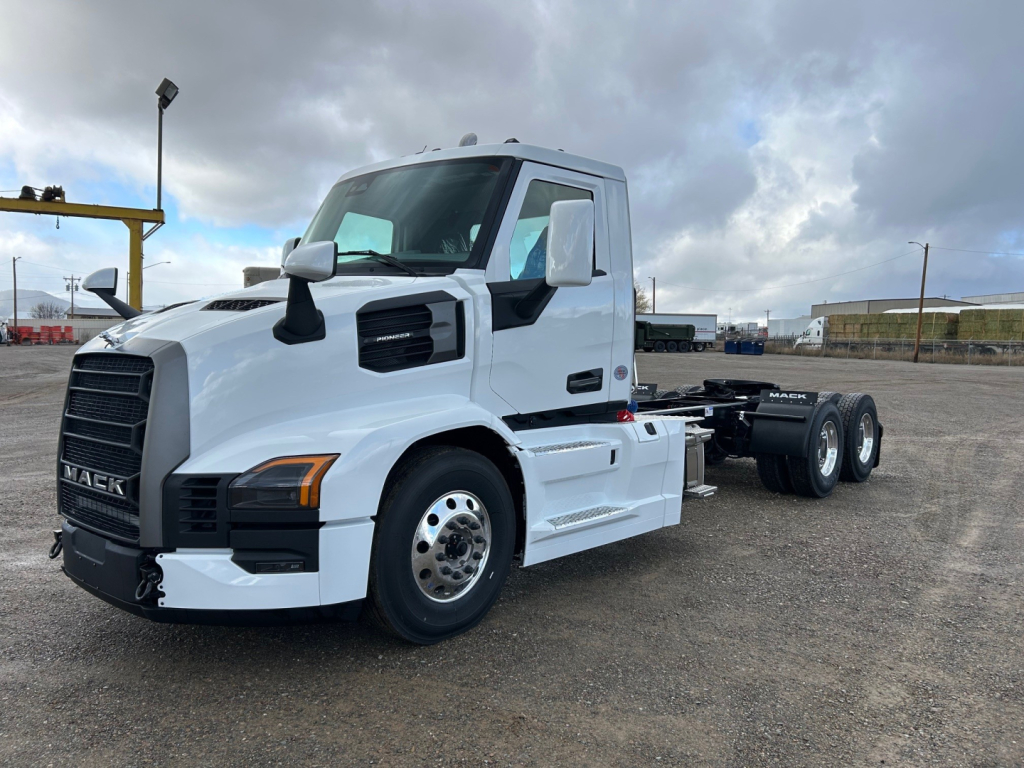
Conventional Daycab Trucks For Sale in Montana
Browse conventional daycab trucks in Montana built for regional haul, tanker, bulk, and local freight with efficient powertrains and spec options.
Learn moreBrowse Conventional Daycab Trucks by Make
Have conventional daycab truck to sell? List it here to reach thousands of buyers.
About Conventional Daycab Trucks in Montana
The spec decisions that matter most usually start with wheelbase, axle layout, and rear ratio. Tandem axle daycabs are common for general highway and regional service, while tri-axle configurations can make sense for heavier applications or specific bridge and weight requirements. Montana buyers often look closely at horsepower in the mid-400 to 500 range, paired with automated manual transmissions such as Volvo I-Shift or Mack mDRIVE for fuel economy and driver consistency. Wheelbases can vary widely depending on trailer type and fifth wheel placement, so it is worth matching kingpin setting, sliding fifth wheel travel, and frame length to the trailers you expect to pull. A shorter wheelbase improves maneuverability, while a longer wheelbase can better suit tanker, bulk, or specialized highway specs.
Modern conventional daycabs also bring more driver-assist and safety technology than older fleet buyers may expect. Common features include engine brakes, hill start assist, collision mitigation systems, disc brakes, backup alarms, air-ride seats, and integrated telematics. On the chassis side, buyers should compare front axle ratings, rear suspension design, axle spacing, fuel capacity, and brake type. Air-ride suspensions are popular for ride quality and trailer protection, while higher-capacity front axles and specific suspension packages can be important for heavier steer loads or PTO-related applications. Fuel tank sizing matters too, especially in a large state like Montana where route density and weather can affect fueling strategy.
A good conventional daycab should be matched to the route profile, trailer mix, and operating weights, not just the badge on the hood. For long stretches of interstate and mountain grades, engine brake performance, gearing, and transmission calibration deserve close attention. For city and plant work, visibility, turning radius, and cab entry can be just as important. Buyers comparing late-model daycabs should look at total operating cost across fuel economy, service access, emissions warranty coverage, and expected resale strength. When the spec is right, a conventional daycab is one of the most efficient and versatile tractor choices for fleets and owner-operators running Montana freight.
Frequently Asked Questions
What is a conventional daycab truck used for?
A conventional daycab truck is primarily used for local and regional hauling where the driver returns home or to a terminal instead of needing a sleeper berth. Common applications include dry van, reefer, tanker, bulk, flatbed, and dedicated route work. Because the truck does not carry a sleeper, it is typically lighter and more compact than a sleeper tractor, which can improve payload potential and maneuverability.
How do I choose the right wheelbase for a conventional daycab?
The right wheelbase depends on the trailers you plan to pull, the kingpin settings involved, desired fifth wheel position, and the type of work the truck will do. Shorter wheelbases are generally better for maneuverability in city service, yards, and tighter customer locations. Longer wheelbases are often preferred for tanker, bulk, or highway applications where trailer compatibility, ride quality, and axle loading are bigger concerns. Matching wheelbase to the trailer mix is one of the most important spec decisions on a daycab.
Are conventional daycab trucks good for Montana routes?
Yes. Conventional daycab trucks are a strong fit for many Montana operations, especially regional freight, agricultural hauling, bulk work, and terminal-based highway service. Buyers in Montana should pay close attention to horsepower, engine brake performance, axle ratings, fuel capacity, and gearing because long distances, mountain grades, winter weather, and variable payloads can all affect how the truck performs. A properly spec'd daycab can handle demanding routes efficiently.
What engine and transmission specs are common in a conventional daycab?
Many late-model conventional daycabs are spec'd with diesel engines in the 425 to 500 horsepower range and automated manual transmissions in 12- or 13-speed configurations. Popular combinations include powertrains such as the Volvo D13 with I-Shift or the Mack MP series with mDRIVE. The best choice depends on gross combination weight, terrain, cruising speed, and startability requirements. Rear axle ratio and transmission programming are just as important as peak horsepower when evaluating performance and fuel economy.
What should I inspect first on a used conventional daycab?
Start with the truck's application history and chassis spec, then inspect engine hours, transmission operation, axle ratings, suspension condition, brake type and wear, tire condition, and any signs of frame modification. On emissions-equipped trucks, service records for the aftertreatment system are important. Buyers should also verify wheelbase, fifth wheel type, and sliding range to make sure the tractor will work with their trailers. A daycab can look clean and still be poorly matched to the intended job, so the inspection should focus on both condition and spec compatibility.