
New Mack Conventional Daycab Trucks For Sale in Montana
Shop new Mack conventional daycab trucks built for regional haul, tanker, bulk, and vocational use with strong powertrain and chassis options.
Learn more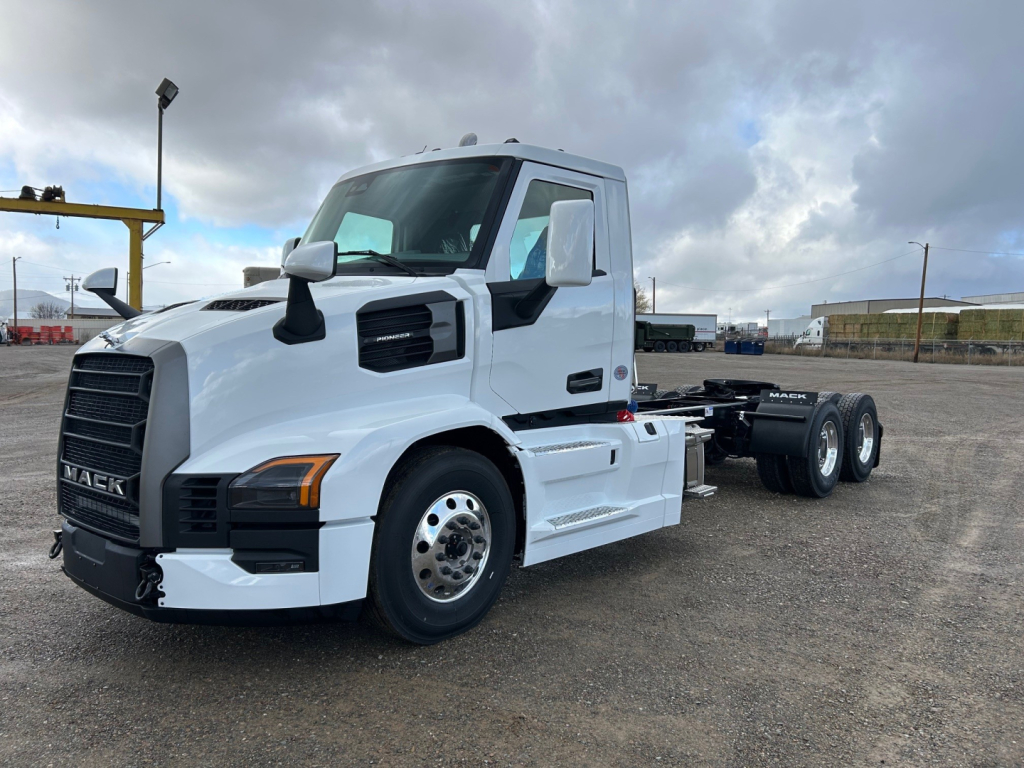
Have new mack conventional daycab truck to sell? List it here to reach thousands of buyers.
About New Mack Conventional Daycab Trucks in Montana
Mack daycab buyers usually focus on engine and transmission pairing early in the process. Current Mack highway and regional specs commonly center on the MP series engines, with horsepower and torque selections chosen for tanker, bulk, flatbed, dry van, or heavy vocational pull. Many new units are ordered with the mDRIVE automated manual transmission, a popular choice for fuel economy, driver consistency, and reduced clutch wear in stop-and-go or mixed-route service. Wheelbase is another major decision because it affects trailer swing clearance, bridge law positioning, ride quality, and how easily the truck can be adapted to different trailer types. Air-ride suspension, sliding fifth wheels, aluminum wheels, and disc brake configurations are all common features on higher-spec regional trucks.
A Mack conventional daycab can be set up for highway service or for more demanding vocational applications, and the right spec depends on where the truck will spend most of its time. Regional haul units may emphasize aero performance, fuel efficiency, and driver-assist systems. Tanker and bulk applications often need a well-balanced wheelbase, predictable backing characteristics, and stable suspension behavior under varying load conditions. Vocational or severe-service daycabs may lean toward heavier front axles, double frame sections, PTO provisions, locking differentials, and more aggressive tire choices. In a market like Montana, buyers also tend to pay close attention to cold-weather starting, cab insulation, brake performance on grades, and durability on rough secondary roads.
The advantage of buying new is being able to compare listings by intended application rather than just by price. On this class of truck, details like rear axle ratio, suspension rating, fifth wheel travel, brake type, fuel capacity, and frame dimensions can matter more than the badge on the hood. Mack has a strong reputation for integrated powertrains, durable chassis components, and straightforward vocational adaptability, which makes the conventional daycab a practical choice for fleets and owner-operators that need a tractor built around a specific route or body-and-trailer combination. Also known simply as a day cab tractor, this category is best evaluated by looking closely at axle ratings, wheelbase, engine rating, and the exact job the truck is expected to handle every day.
Frequently Asked Questions
What is a Mack conventional daycab truck best suited for?
A Mack conventional daycab is best suited for operations where the truck returns to base the same day and does not need sleeper accommodations. Common applications include regional freight, tanker, bulk haul, flatbed, local dedicated routes, and many vocational jobs. The daycab layout cuts weight, improves maneuverability, and usually lowers acquisition cost compared with a sleeper tractor, which makes it a strong fit for fleets focused on efficiency and route-specific spec decisions.
What specs matter most when comparing new Mack daycab trucks?
The most important specs are wheelbase, engine rating, transmission, axle ratings, rear axle ratio, suspension type, and fifth wheel setup. Those details determine how the truck performs with a loaded trailer, how it rides, how it handles grades, and whether it fits the intended application. Buyers should also look at brake type, fuel tank capacity, frame configuration, and PTO readiness if the truck may be used for tanker, bulk, or vocational work.
Is the Mack mDRIVE a good choice for a daycab tractor?
For many regional and mixed-service applications, the mDRIVE is a strong choice because it improves shift consistency, helps reduce driver fatigue, and can support better fuel economy than a manual transmission in comparable use. It is especially attractive for fleets that want easier driver onboarding and reduced clutch-related maintenance. The right transmission still depends on terrain, driver preference, startability requirements, and the exact load profile, but mDRIVE is a common and proven spec in modern Mack daycab tractors.
Why does wheelbase matter on a conventional daycab?
Wheelbase affects trailer compatibility, bridge law positioning, turning radius, ride quality, and chassis balance. A longer wheelbase may improve stability and fit certain tanker or bulk setups better, while a shorter wheelbase can help maneuverability in tighter yards or urban delivery points. On a daycab tractor, wheelbase is one of the most important spec decisions because it directly affects how the truck performs in real-world loading, backing, and highway conditions.
Are new Mack daycab trucks a good fit for Montana operations?
They can be an excellent fit when the truck is properly spec'd for terrain, weather, and route length. Montana operators often need a combination of strong grade performance, stable braking, reliable cold-weather operation, and durable chassis components for rougher roads and long highway stretches. A new Mack daycab with the right horsepower, axle ratio, suspension, and brake package can be configured for both regional highway service and demanding vocational work in the state.