
Used Volvo Cab and Chassis Trucks For Sale in Georgia
Used Volvo cab and chassis trucks in Georgia. Compare VNL/VNR specs, wheelbase and CA/CT, D11/D13 engines and I-Shift options to match your upfit.
Learn more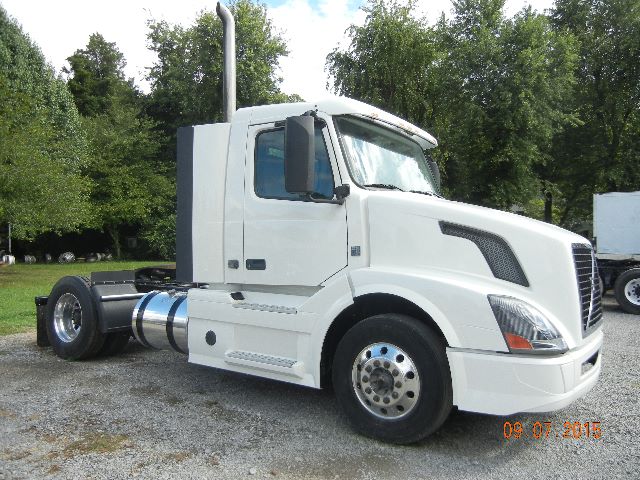
Have used volvo cab and chassis truck to sell? List it here to reach thousands of buyers.
About Used Volvo Cab and Chassis Trucks in Georgia
Volvo cab and chassis platforms are known for driver comfort and safety with quiet cabs, excellent visibility and available collision mitigation and stability control. Powertrains typically center on the Volvo D11 and D13 from roughly 355 to 500 hp with 1250 to 1850 lb-ft, backed by the I-Shift automated manual, Allison automatic on some vocational specs, or a traditional manual on older units. I-Shift shines on regional routes with smart shift logic and optional creeper gears, while Allison’s torque converter is smooth in constant stop-start or heavy PTO work. Look for PTO provisions, dual power-takeoff openings, in-cab upfitter switches and the Volvo Body Builder Module if you plan to run hydraulics or complex lighting.
Chassis choices drive capability and ride. Single-frame 120 to 140 ksi rails are common for box and service bodies; double-frame or high-RBM rails are preferred for dumps, hooklifts and severe duty. Typical steer axles range 12k to 14.6k, tandems 40k to 46k, with factory lift axles or room to add a pusher if state routes and permits demand more legal payload. T-Ride or steel spring suspensions handle rough jobs; air ride protects cargo and improves driver fatigue on paved routes. Match axle ratios to work: 3.08 to 3.36 for regional speed and fuel economy, 3.55 to 4.10 for slow sites and frequent starts. Air disc brakes reduce fade and speed pad changes, but parts costs can be higher than S-cam drums. Check aftertreatment packaging and tailpipe routing so body mounts, PTO shafts and hoists clear the DPF-SCR system without modification.
Georgia adds a few practical considerations. Heat and humidity make a strong cooling package, tight A/C and good cab insulation worth prioritizing. Frames from the Southeast typically show less corrosion than rust-belt units, which helps with drilling and body mounting. Interstate legal gross is 80,000 on five axles, so a tandem with an optional lift axle can improve bridge-law positioning for certain state routes under permit. Metro-Atlanta deliveries favor shorter wheelbases and set-back axles for tight turns, while timber and construction work in South and North Georgia may call for lockers, higher ride height and more robust suspension. If you plan to cross into California ports later, verify the engine’s EPA year and any CARB compliance needs before you buy.
Frequently Asked Questions
How do I choose the right wheelbase and CA or CT for my body?
Start with the body length and use the rule of thumb that single-axle body length equals CA plus about 3 feet, and tandem body length equals CT plus about 3 feet. As a rough guide, 120 inch CA often fits an 18 foot body, 138 inch CA a 20 foot, and about 162 inch CT a 24 foot. Confirm the body builder’s chart for your exact frame height, axle spacing and overhang, and verify that fuel, DEF and aftertreatment components will not interfere with crossmembers, hoists or outriggers.
Is Volvo’s I-Shift a good choice for stop-and-go or vocational work?
I-Shift is efficient and durable for regional and mixed service, with smart shift mapping and available creeper gears for low-speed control. For constant stop-start, frequent backing to docks or heavy PTO work like refuse and mixers, an Allison automatic can deliver smoother launches and heat management via the torque converter. Either works well when matched to axle ratios, tire size and intended duty cycle.
Should I pick the D11 or the D13 engine for a cab and chassis build?
Choose the D11 for lighter weight, better maneuverability and regional GVWRs where 355 to 425 hp and up to about 1550 lb-ft are sufficient. Select the D13 for heavier tandem-axle builds, longer routes, higher PTO demand and grades where 425 to 500 hp and up to 1850 lb-ft help maintain speed. Consider rear ratio, tire size and typical load so the engine operates in its most efficient rpm band.
What GVWR and axle configuration works best under Georgia weight and bridge rules?
Interstate legal gross is 80,000 lb on five axles. Single-axle chassis commonly run 25,999 to 33,000 GVWR, while tandems range 52,000 to 66,000 and higher. For maximum legal payload on state routes, some applications benefit from a steerable pusher axle and careful axle spacing to satisfy bridge formulas. Match steer axle ratings to front equipment weight, and spec lockers and suspension type for your job sites.
What should I inspect on a used cab and chassis before upfitting?
Measure the wheelbase, CA or CT and rear overhang to confirm body fit. Check frame straightness, RBM rating, and avoid non-factory holes near high-stress areas. Verify PTO prep, upfitter wiring, battery and air-tank locations, and ensure aftertreatment, DEF and fuel tank placements will not conflict with body mounts or hoist gear. Review DPF ash load, SCR performance history, brake and suspension wear, and budget for wheelbase or driveshaft changes if needed.