
Sterling Cab and Chassis Trucks For Sale in New York
Browse Sterling cab and chassis trucks with common specs, wheelbase options, PTO setups, and upfit considerations for vocational work.
Learn more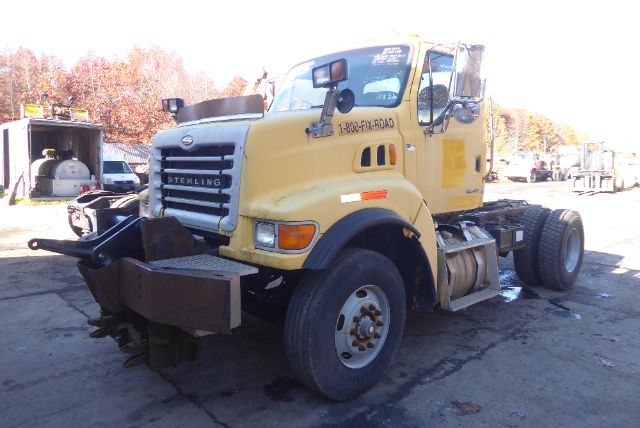
Have sterling cab and chassis truck to sell? List it here to reach thousands of buyers.
About Sterling Cab and Chassis Trucks in New York
For most buyers, the key decisions start with wheelbase, cab-to-axle measurement, and gross vehicle weight rating. Those dimensions determine what body can be mounted and how the finished truck will balance under load. On used Sterling cab and chassis trucks, it is also important to look at frame condition, any evidence of prior upfitting, and whether the truck has a single frame or double frame in the section where the body will mount. Common specs in this class include diesel engines from Caterpillar or Mercedes-Benz, automatic or manual transmissions, air brakes, and rear axle ratios chosen for low-speed pulling power rather than highway fuel economy.
A buyer comparing Sterling cab and chassis trucks should also pay close attention to vocational features that are expensive to add later. PTO capability, wetline hydraulics, suspension type, front and rear axle ratings, and tire size all matter if the truck will run a dump hoist, plow, spreader, crane, or compressor. In New York and other snow-belt markets, many trucks in this category have already spent time in winter service, so corrosion on the frame, crossmembers, brake lines, spring hangers, and electrical connections deserves a close inspection. If the truck is intended for municipal or severe-service work, a heavier front axle, spring suspension, and low rear ratio can be more valuable than cosmetic condition.
Sterling trucks remain relevant in the used market because they were built as straightforward work platforms with components that are familiar to fleet shops and independent truck repair operations. Buyers who know their required body length, payload target, and hydraulic needs can often narrow the search quickly by focusing on wheelbase, cab-to-axle, GVWR, and driveline specs first. That approach makes it easier to match the chassis to the intended upfit and avoid costly frame modifications, driveline changes, or axle-capacity limitations after purchase.
Frequently Asked Questions
What is a Sterling cab and chassis truck used for?
A Sterling cab and chassis truck is used as a base platform for installing a vocational body. Common applications include dump trucks, flatbeds, landscape bodies, service trucks, utility bodies, box bodies, snowplow and spreader setups, and other hydraulic or equipment-carrying configurations. The main advantage is that the chassis can be matched to the body length, payload, and equipment needs of the operation.
What measurements matter most when buying a cab and chassis truck?
The most important measurements are wheelbase, cab-to-axle, and cab-to-end-of-frame. These dimensions determine what body length will fit and where the rear axle will sit under the finished truck. Buyers should also verify GVWR, front and rear axle ratings, frame height, and clear space for PTO or hydraulic components, because those specs affect both legal payload and upfit compatibility.
Are Sterling cab and chassis trucks good for dump bodies and snow equipment?
Yes, many Sterling cab and chassis trucks were spec'd for dump and snow applications. Trucks in this class often have vocational features such as air brakes, heavier front axles, spring suspension, PTO provisions, and wetline hydraulics. For plow and spreader use, buyers should confirm front axle capacity, hydraulic setup, electrical condition, and signs of frame or cab corrosion caused by road salt exposure.
What should I inspect on a used Sterling cab and chassis truck in New York?
In New York, rust and corrosion are major concerns on any vocational chassis. Inspect the frame rails, crossmembers, brake components, fuel tank mounts, spring hangers, wiring, cab corners, and any areas where previous bodies or attachments were mounted. It is also smart to check for inactive PTOs, damaged hydraulic lines, patched wiring for plow equipment, and evidence that the truck has seen municipal or winter service.
How do I know if a Sterling cab and chassis truck can handle my upfit?
Start by matching the intended body and equipment to the truck's cab-to-axle dimension, wheelbase, and axle ratings. Then confirm the frame is suitable for the body mounts, the transmission supports the needed PTO setup, and the engine and rear ratio fit the operating conditions. A truck may look correct at a glance but still require expensive modifications if the body length, hydraulic demand, or payload target exceeds the original chassis specification.