
Used Oshkosh Cab and Chassis Trucks For Sale
Browse used Oshkosh cab and chassis trucks built for severe-duty service, upfitting, municipal work, plow applications, and specialty bodies.
Learn more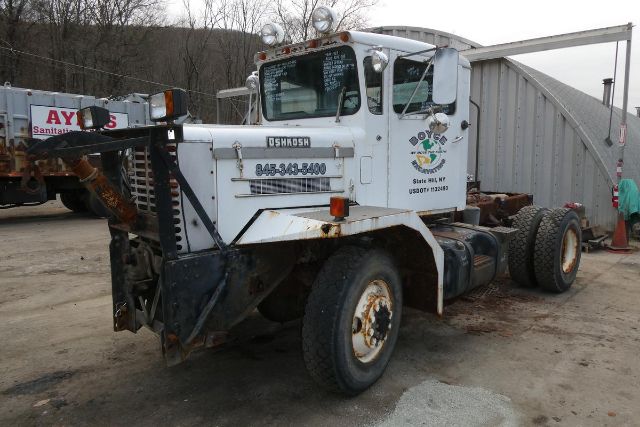
Have used oshkosh cab and chassis truck to sell? List it here to reach thousands of buyers.
About Used Oshkosh Cab and Chassis Trucks
Frequently Asked Questions
What are Oshkosh cab and chassis trucks commonly used for?
Oshkosh cab and chassis trucks are commonly used in severe-duty municipal and vocational roles where a standard medium-duty or highway chassis is not enough. Typical applications include snow plow and spreader work, airport snow removal, utility service, tanker builds, fire apparatus, and other specialty body installations. Buyers usually choose them for traction, frame strength, and the ability to support front-mounted hydraulic equipment or body-driven PTO functions.
What should I inspect first on a used Oshkosh cab and chassis truck?
Start with the frame, drivetrain, and hydraulic systems because these trucks are often purchased for demanding work and body integration. Check for frame corrosion, repairs, and any evidence of plow or body mounting stress around the front frame horns, crossmembers, and rear chassis. Verify transfer case operation on 4x4 or all-wheel-drive models, inspect axles and suspension for leaks or excessive wear, and confirm PTO and wetline function if the truck was used with plows, spreaders, pumps, or other hydraulic attachments. On older mechanical-engine units, cold-start behavior, blow-by, oil condition, and transmission engagement are especially important.
Are older Oshkosh cab and chassis trucks good for upfitting?
They can be, but the best fit depends on the body you plan to install and how much adaptation work is required. Older Oshkosh chassis are attractive because of their heavy-duty construction, straightforward mechanical systems, and strong vocational foundations. The key measurements are cab-to-axle, cab-to-end, wheelbase, frame height, and axle ratings. A buyer also needs to confirm PTO compatibility, hydraulic pump setup, electrical capacity, and whether the frame layout allows the intended body, hoist, tank, or spreader system to mount without major fabrication.
How important is axle configuration on an Oshkosh cab and chassis truck?
Axle configuration is one of the first decisions because it directly affects traction, maneuverability, legal payload, and the type of work the truck can handle. Single-axle 4x4 Oshkosh trucks are often favored for plow and municipal service where traction and tight turning matter more than maximum payload. Tandem and more specialized configurations are better suited for heavier bodies, higher gross vehicle weight ratings, and more demanding off-road or severe-service applications. Front axle capacity is especially important on trucks carrying plows, pumps, or other front-mounted equipment.
Why do many buyers look for hydraulic and PTO equipment on a used Oshkosh chassis?
Hydraulic capability often determines whether the truck can go straight to work in a vocational role. Many Oshkosh cab and chassis trucks were set up with front-engine hydraulic pumps, wetlines, or PTO-driven systems to power plows, spreaders, dump bodies, pumps, and specialty attachments. A buyer should confirm not just that the components are present, but that the controls, reservoirs, lines, valves, and pump drive are complete and operational. Replacing or reengineering hydraulic systems on a severe-duty chassis can add significant cost compared with buying a truck that already has the correct setup.