
Ford Bus Trucks For Sale in Missouri
Browse Ford bus trucks for sale in Missouri, including shuttle and cutaway bus models with passenger, ADA, and church transport options.
Learn more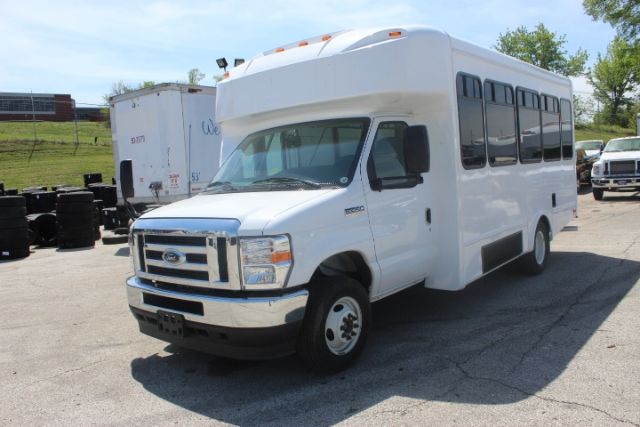
Have ford bus truck to sell? List it here to reach thousands of buyers.
About Ford Bus Trucks in Missouri
One of the first decisions is chassis and powertrain. Ford E-Series bus chassis are commonly paired with an automatic transmission and a gasoline V8 such as the 7.3L gas engine. For many fleets, gas power makes sense in stop-and-go service because acquisition cost and routine service can be simpler than on older diesel platforms. Buyers should still verify GVWR, axle ratings, brake spec, alternator output, fuel capacity, and body manufacturer, since the completed bus depends on both the Ford chassis and the upfitter's body. On passenger units, seating count, wheelchair positions, lift brand, door configuration, and HVAC performance matter as much as engine choice.
Body layout drives day-to-day usability. A Ford shuttle bus can be configured for fixed-route community service, hotel transport, church groups, airport parking, adult day care, or campus circulation. Important details include standee room, aisle width, rear luggage area, entry door height, grab rails, and ADA equipment. If wheelchair service is part of the job, inspect lift cycle history, securement tracks, interlock systems, and how many ambulatory seats remain when mobility positions are in use. For Missouri operators dealing with mixed urban and rural routes, turning radius, suspension feel, and heater output in winter service can have a big impact on driver acceptance and passenger comfort.
Condition and support are just as important as floorplan. Buyers comparing Ford bus trucks should look closely at body integrity, roof seams, sidewall construction, rust around step wells, and the condition of passenger doors and window hardware. On used units, hours of idle time, shuttle-duty wear, and maintenance records often tell more than miles alone. It also helps to confirm parts availability for the body builder, not just the Ford chassis, since doors, glass, lift components, and interior trim come from the coach manufacturer. A well-matched Ford bus can be a practical people-mover for fleets that need easy service access, non-CDL flexibility, and a chassis most technicians already know.
Frequently Asked Questions
What is the most common Ford bus chassis for shuttle bus applications?
The Ford E-450 cutaway chassis is one of the most common foundations for shuttle buses and small passenger buses. It is widely used because it supports a range of body lengths and seating layouts, offers broad service network coverage, and is familiar to technicians. Many church, senior transport, hotel, and community fleet buyers start with the E-450 because it is versatile and relatively straightforward to maintain.
Are Ford shuttle buses non-CDL?
Many Ford shuttle buses are configured to qualify for non-CDL operation, but that depends on seating capacity, passenger count, GVWR, and how the bus is used. A common non-CDL setup keeps total passenger capacity below the threshold that triggers CDL requirements. Buyers should verify the exact seating layout and applicable Missouri and federal rules before purchase, especially if the bus includes wheelchair positions or commercial passenger service.
What should I inspect on a used Ford bus truck?
Focus on both the chassis and the bus body. On the chassis side, review engine and transmission service history, cooling system condition, brake wear, front-end components, and idle hours if available. On the body side, inspect wheelchair lift operation, securement systems, entry door function, roof seams, window seals, HVAC performance, step well rust, and signs of water intrusion. A bus body can be expensive to repair even when the underlying chassis is sound.
Is a gas Ford bus a good choice for shuttle service?
A gas-powered Ford bus can be a strong fit for light to medium shuttle duty, especially for fleets that want lower upfront cost and simpler routine service. The Ford 7.3L gas engine is commonly seen in newer applications and is well suited to stop-and-go routes, church use, and community transport. Buyers should match engine choice to route length, payload, terrain, and annual mileage rather than assuming one fuel type is best for every operation.
What body features matter most on a Ford shuttle bus?
Passenger capacity is only part of the equation. Buyers should also look at wheelchair lift layout, door configuration, aisle width, HVAC capacity, luggage storage, headroom, grab rails, and seat spacing. These features directly affect loading speed, passenger comfort, and how efficiently the bus can handle its intended route. The right body spec often matters more to daily satisfaction than small differences in chassis options.