
Bucket Trucks For Sale in Tennessee
Shop bucket trucks for sale in Tennessee. Compare working height, boom type, GVWR, insulation, and utility body specs for fleet use.
Learn more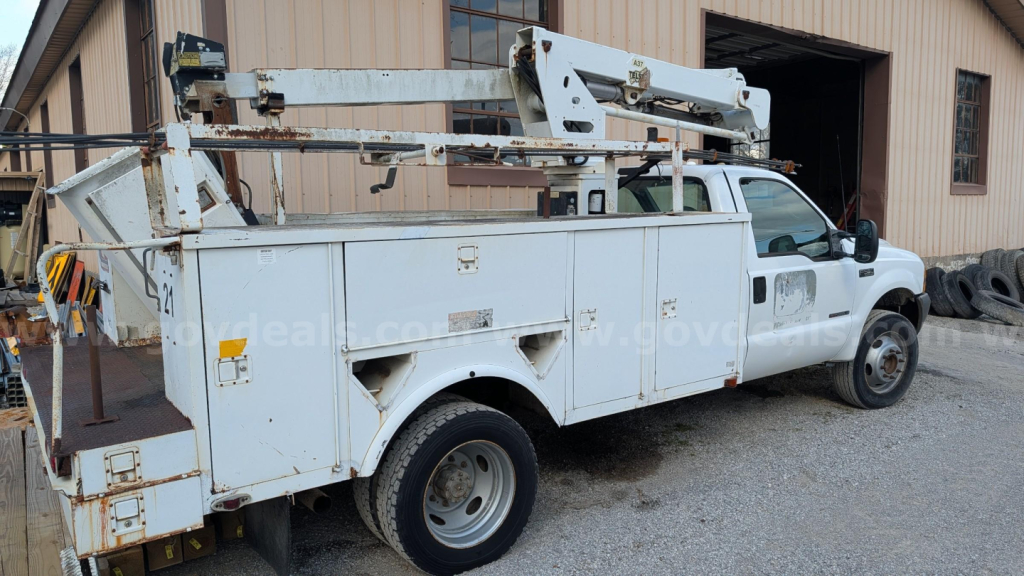

Have bucket truck to sell? List it here to reach thousands of buyers.
About Bucket Trucks in Tennessee
The most important lift decisions are boom configuration and rating. Material handling bucket trucks add a jib and winch for setting transformers, lifting hardware, or handling poles and reels, while personnel-only units focus on reach and maneuverability. Articulating booms help operators work around limbs, conductors, and obstructions, while telescopic sections can improve straight reach and setup efficiency on some jobs. Platform capacity is often in the 300 to 400 lb range for one-operator buckets, but exact capacity, maximum hydraulic pressure, boom articulation range, and continuous rotation capability all affect how the truck performs in the field. If the work includes energized lines, confirm the boom and bucket insulation category, dielectric test status, and maintenance records rather than assuming any utility-spec truck is currently compliant.
On the chassis side, Tennessee buyers should pay close attention to GVWR, axle ratings, wheelbase, and overall travel height. Many bucket trucks fall into Class 6 or Class 7, and a utility body with outriggers, hydraulic systems, and a taller boom package can put real weight on the rear axle before tools and crew gear are added. Diesel engines paired with automatic transmissions are the norm, and 4x2 is common for road-based utility work, while 4x4 can make sense for rural electric co-ops, storm response, and off-pavement access in hilly or soft-ground areas. Service body condition matters too. Check compartment floors, door seals, latch wear, rust in the body and subframe, outrigger pad storage, pintle or towing provisions, and signs of frame or body stress near the pedestal.
Used bucket truck buyers should inspect both the truck and the aerial device as separate systems. Engine hours, PTO hours, and aerial hours can tell a different story than odometer mileage alone. Look for annual inspection records, boom lubrication history, hydraulic leaks, hose age, turntable wear, lower and upper controls function, outrigger interlocks, and level gauge operation. In Tennessee's mix of municipal, contractor, and utility applications, a well-matched bucket truck is less about brand name and more about getting the right working height, insulation, storage, and chassis capacity for the exact job cycle.
Frequently Asked Questions
What working height is common for a bucket truck?
Bucket trucks are available in a wide range of heights, but many utility and municipal units land roughly in the 35 to 65 foot working-height range. The right choice depends on the actual task, not just the maximum number on the decal. Tree trimming near distribution lines, streetlight service, and telecom work often require different side reach, articulation, and stowed travel height. Buyers should compare working height, platform height, horizontal reach, and boom articulation together because a truck with more advertised height is not always the better fit in tight roadside or residential work.
What is the difference between an insulated and a non-insulated bucket truck?
An insulated bucket truck is designed for work near energized lines and uses boom and bucket components built to meet specific dielectric standards when properly tested and maintained. A non-insulated truck may still be useful for signs, lighting, forestry, and general overhead maintenance, but it is not intended to provide the same electrical protection. Buyers should verify insulation class, recent dielectric test documentation, and any repair history on the aerial device. The presence of a utility body or electric-coop paint scheme does not confirm current insulated status.
Should I focus more on mileage or hours when buying a used bucket truck?
Hours usually matter as much as mileage, and in many cases they matter more. A bucket truck can show modest road miles while accumulating heavy engine idle time, PTO time, and aerial operating hours during utility or municipal service. High idle and PTO use affect the engine, hydraulic system, and aerial components differently than highway miles do. The best evaluation combines odometer reading, engine hours, PTO hours, service records, and the condition of the boom, outriggers, controls, hoses, and pedestal.
Do I need a material handling bucket truck?
A material handling bucket truck is worth considering if the job regularly includes lifting transformers, hardware, small poles, or other components with a jib and winch. It can reduce the need for a second piece of equipment on utility and line-construction work. If the truck is only carrying personnel for inspection, telecom, sign service, or light maintenance, a non-material-handling aerial may be simpler, lighter, and easier to spec. The decision comes down to lifting requirements, available crew support equipment, and how often the jib function will actually be used.
What should I inspect first on a used bucket truck in Tennessee?
Start with the aerial inspection records, dielectric test status if applicable, and overall chassis weight ratings. After that, check outrigger operation, lower and upper controls, boom wear points, hydraulic leaks, rotation function, and body condition around the pedestal and compartments. Tennessee terrain and mixed urban-rural use also make tire condition, brake performance, and suspension condition important, especially on trucks that may travel between paved streets and utility easements. A truck that runs well but lacks current aerial documentation can still create major downtime and compliance costs.