
Ford Bucket Trucks For Sale in Tennessee
Browse Ford bucket trucks for utility, telecom, and tree work. Compare chassis, lift heights, PTO setups, and service body configurations.
Learn more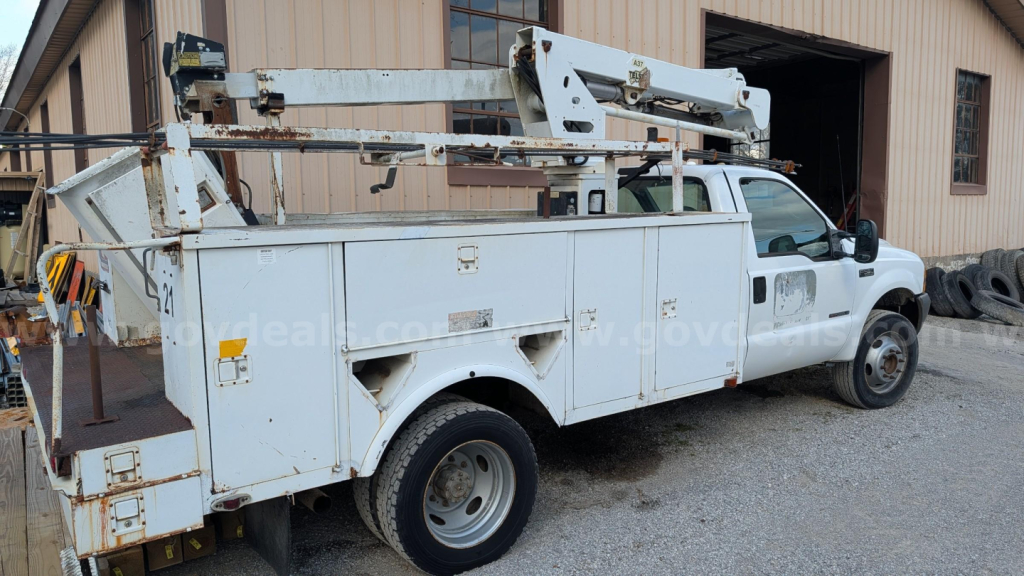
Have ford bucket truck to sell? List it here to reach thousands of buyers.
About Ford Bucket Trucks in Tennessee
A Ford F-550 bucket truck is often the sweet spot for mixed municipal and contractor use because it can carry a useful service body and boom without moving into a much larger chassis class. Buyers should verify whether the unit has a telescopic boom, articulating boom, or material handling setup with jib and winch. Working height, side reach, and stowed travel height affect real jobsite flexibility, especially around trees, power lines, parking lots, and tight urban streets. If the truck will be used for energized line work, confirm dielectric certification, liner condition, lower and upper controls, and the inspection history of the aerial device.
In Tennessee, terrain, weather exposure, and road conditions can make chassis and body condition especially important. Check the frame, outriggers, bed mounts, hydraulic lines, and service body compartments for corrosion, prior repairs, and hard use. Power take-off operation, idle management, and hour meter readings often tell more about wear than odometer mileage alone. Ford bucket trucks are also known as aerial lift trucks, cherry pickers, or boom trucks depending on the body and lift style, but buyers should separate true material handling booms from personnel-only bucket configurations before comparing listings.
A good category comparison starts with axle rating, wheelbase, engine and transmission combination, brake type, PTO performance, and the make of the aerial device itself. Common upfit brands can vary widely in parts support and inspection requirements. Look closely at outrigger deployment, bucket rotation, lower control functionality, harness attachment points, and whether the service body includes inverter systems, compressor provisions, ladder racks, or tow capability. For many buyers, the right Ford bucket truck is the one that balances lift performance, roadability, and service access without carrying more boom or body than the work actually requires.
Frequently Asked Questions
What should I check first on a used Ford bucket truck?
Start with the aerial device rather than the cab. Confirm the boom make and model, working height, platform capacity, insulation rating if applicable, and the most recent inspection records. Then check hydraulic leaks, PTO engagement, outrigger operation, lower and upper controls, and structural condition around the subframe and bed mounts. A sound Ford chassis is important, but the lift system usually drives repair cost and jobsite value.
What Ford chassis is most common for bucket trucks?
The Ford F-550 is one of the most common chassis in this category because it offers a practical balance of GVWR, maneuverability, and upfit capacity. Depending on the boom and body, buyers may also see F-450 and heavier Ford chassis. The right choice depends on required working height, payload, storage needs, and whether the truck must handle material lifting equipment in addition to personnel access.
Are all Ford bucket trucks insulated for electrical work?
No. Many bucket trucks are built for general maintenance, sign work, lighting, or tree trimming and are not configured or certified for energized utility applications. If electrical line work is part of the job, verify the boom's dielectric rating, current certification status, liner condition, and maintenance documentation. Do not assume a fiberglass bucket alone means the truck is suitable for live-line work.
How important are boom hours compared with truck mileage?
Boom hours are often as important as, and sometimes more important than, chassis mileage. A bucket truck may have moderate road miles but heavy stationary PTO and boom use. Hour meter readings, hydraulic performance, and service records provide a better picture of aerial device wear. Buyers should compare both mileage and operating hours to understand how the truck was actually used.
What is the difference between a bucket truck and a material handling boom truck?
A standard bucket truck is designed primarily to lift personnel in a platform for overhead access. A material handling boom truck includes additional lifting capability, often with a jib and winch, so it can raise equipment or materials along with supporting aerial work tasks. That difference affects chassis requirements, boom design, inspection needs, and legal operating limits, so buyers should match the configuration to the work they perform most often.