
Hino Box Trucks For Sale in New Mexico
Browse Hino box trucks for sale, including dry van and delivery specs, GVWR, body lengths, liftgates, and route-ready features.
Learn more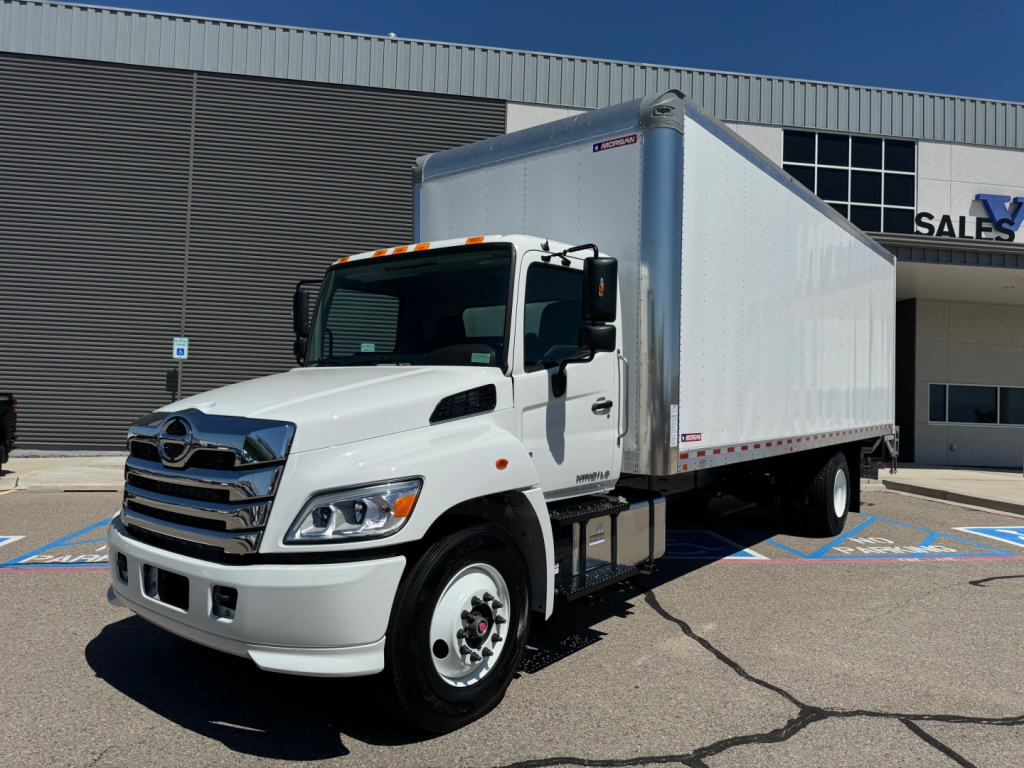
Have hino box truck to sell? List it here to reach thousands of buyers.
About Hino Box Trucks in New Mexico
A typical Hino box truck setup includes a diesel engine in the mid-horsepower range, an automatic transmission, and either spring or air ride rear suspension depending on cargo sensitivity and route demands. Many late-model units are built around Cummins power paired with Allison automatics, a combination fleet managers know well for serviceability and driver acceptance. Useful body features often include hardwood or composite floors, scuff liners, slat lining, E-track, translucent roofs, roll-up rear doors, and tuckunder or rail liftgates. If the truck will see forklift loading, look closely for floor reinforcement, threshold plating, and forklift package upgrades. Rear axle rating, gear ratio, and suspension spec also matter if the truck will spend time fully loaded in stop-and-go urban service or on higher-speed regional routes.
In New Mexico, route profile and climate should shape the spec. Albuquerque, Santa Fe, Las Cruces, and oilfield-adjacent markets can put very different demands on a box truck. High elevation and heat make cooling system condition, engine calibration, and A/C performance more important than many buyers expect. Longer rural runs may favor a taller rear ratio balance for road speed and fuel economy, while city delivery work often benefits from a tighter turning setup, lower step-in height, and liftgate capacity matched to pallet weight. If the truck will handle mixed freight, interior cargo control matters just as much as chassis condition because improper securement leads to body damage, claim exposure, and premature wear.
A good Hino box truck listing should be evaluated as a complete package, not just a cab and chassis with a box attached. Confirm body manufacturer, inside dimensions, door opening height, liftgate brand and capacity, fuel tank size, wheelbase, and front and rear axle ratings. Check for CDL versus non-CDL implications around the 26,000-pound threshold, especially if driver availability is a factor. For buyers comparing multiple Hino box trucks for sale, the best value usually comes from the unit with the most appropriate body and route spec, not simply the newest model year or highest horsepower rating.
Frequently Asked Questions
What GVWR range is common for a Hino box truck?
Hino box trucks are commonly found in medium-duty Class 6 and Class 7 configurations, often around 25,950 pounds to 29,000 pounds GVWR depending on the chassis and body spec. That range supports many 24-foot to 26-foot dry van applications. The exact GVWR matters for payload, CDL requirements, and body selection, so it should be reviewed alongside wheelbase, axle ratings, and liftgate weight.
What body features should buyers look for on a Hino box truck?
The right body spec depends on the freight. Common features include scuff liners, slat lining, E-track, hardwood or composite flooring, translucent roof panels, roll-up rear doors, and liftgates. Buyers moving palletized freight should pay close attention to interior width, door opening dimensions, floor condition, and cargo securement layout. If forklifts will enter the body, reinforcement packages and threshold protection are important wear items.
Is a Hino box truck good for city delivery routes?
A Hino box truck is often a strong fit for city and regional delivery because the chassis is designed for medium-duty commercial use and can be paired with automatic transmissions and route-friendly body lengths. Maneuverability depends heavily on wheelbase, front axle set, and body length, not just the badge on the grille. For tight urban work, buyers typically prioritize turning radius, cab visibility, step-in height, and liftgate usability over maximum body size.
What should buyers in New Mexico consider when choosing a Hino box truck?
New Mexico buyers should factor in heat, elevation, and route distance. Cooling system performance, air conditioning, tire condition, and brake condition are especially important in hot-weather service. Trucks running longer interstate or rural routes may need a different rear axle ratio and fuel capacity than units used for local delivery in town. Dust exposure and sun load can also accelerate wear on door seals, body components, and interior materials.
How important is the liftgate on a Hino box truck?
The liftgate is critical if the truck delivers to sites without docks. Buyers should match liftgate platform size and rated capacity to the heaviest and most awkward loads they handle, not just average freight. Brand reputation, parts availability, platform dimensions, and cycle condition all matter. An underspecified liftgate creates delays and safety issues, while an oversized unit can add unnecessary weight and reduce payload.