
Used International Asphalt - Hot Oil Trucks For Sale
Used International hot oil distributor trucks, with focus on tank insulation, heating, pumps, tare weight, frame strength, and corrosion control info.
Learn more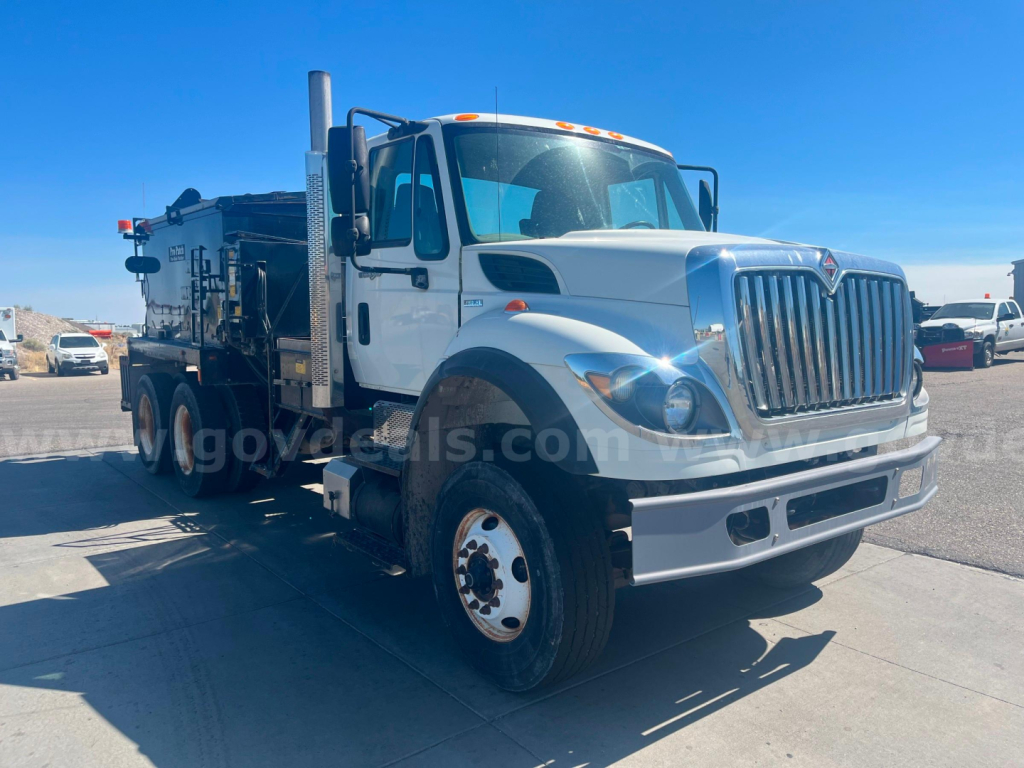

Have used international asphalt - hot oil truck to sell? List it here to reach thousands of buyers.
About Used International Asphalt - Hot Oil Trucks
Used International hot oil, or asphalt distributor, trucks pair a heavy-duty International chassis with an insulated, jacketed tank and a burner-fired heat transfer oil system. Capacity typically runs 1,000 to 5,000 gallons, and burner packages in the 300,000 to 700,000 BTU range determine warm-up and recovery times. Thermal integrity depends on insulation thickness and fit, common builds use 3 to 4 inches of foam or mineral wool with a vapor barrier, tight manway seals, and fully jacketed lines, valves, and spray bars, which keeps AC at 300 to 400 F or emulsion near 150 to 180 F without excessive fuel burn.
Chassis choice drives tare weight, payload, and stability. International 4300 to HV series in 4x2 handle smaller tanks, WorkStar or 7000 series in 6x4 support 3,000 to 5,000 gallon builds. Look for frame section modulus and RBM that match tank saddles, many spec a double-frame or insert rails with stout crossmembers. Deck and floor strength on the rear platform and catwalk matters for safe service, 3/16 to 1/4 inch tread plate with closely spaced supports resists warping. Balance tare weight against legal payload, asphalt cement runs about 8.6 to 9.2 lb per gallon, so a 3,000 gallon load can weigh 26,000 to 28,000 lb before adding tank and hardware, axle ratings, suspension, and wheelbase must line up with bridge limits.
The distributor package centers on a positive displacement asphalt pump, commonly Viking or Blackmer, driven hydraulically off a PTO, with heated suction and return, strainers, and a flush circuit. Computerized rate control ties pump output to ground speed for consistent gallons per square yard, radar or GPS based systems reduce streaking and material waste, manual valves work but require more operator finesse. Spray bars with triple nozzles on 4 inch centers, folding wings, and air blow-off improve pattern quality, a hand wand with heated hose covers edges and patch work. High-quality temperature control with redundant sensors and a high-temp cutout protects the coil and preserves thermal integrity during long idle periods.
Corrosion resistance is a long-term cost driver. Carbon steel tanks are common for strength and price, but benefit from epoxy or phenolic linings when spraying emulsions, stainless plumbing, fasteners, and spray bars resist brine and solvents, stainless tanks add durability but increase tare weight and can slow heat-up. Aluminum toolboxes and fendering reduce rust, sealed wiring and NEMA enclosures protect controls. Inspect insulation for water intrusion that adds hidden weight and degrades heat retention, check coil condition for coking, verify burner light-off and recovery rate, examine frame flanges and saddle areas for corrosion, and confirm deck and floor strength under the work platform. A clean flush system and intact jackets keep valves free, improve pattern quality, and extend component life.
Chassis choice drives tare weight, payload, and stability. International 4300 to HV series in 4x2 handle smaller tanks, WorkStar or 7000 series in 6x4 support 3,000 to 5,000 gallon builds. Look for frame section modulus and RBM that match tank saddles, many spec a double-frame or insert rails with stout crossmembers. Deck and floor strength on the rear platform and catwalk matters for safe service, 3/16 to 1/4 inch tread plate with closely spaced supports resists warping. Balance tare weight against legal payload, asphalt cement runs about 8.6 to 9.2 lb per gallon, so a 3,000 gallon load can weigh 26,000 to 28,000 lb before adding tank and hardware, axle ratings, suspension, and wheelbase must line up with bridge limits.
The distributor package centers on a positive displacement asphalt pump, commonly Viking or Blackmer, driven hydraulically off a PTO, with heated suction and return, strainers, and a flush circuit. Computerized rate control ties pump output to ground speed for consistent gallons per square yard, radar or GPS based systems reduce streaking and material waste, manual valves work but require more operator finesse. Spray bars with triple nozzles on 4 inch centers, folding wings, and air blow-off improve pattern quality, a hand wand with heated hose covers edges and patch work. High-quality temperature control with redundant sensors and a high-temp cutout protects the coil and preserves thermal integrity during long idle periods.
Corrosion resistance is a long-term cost driver. Carbon steel tanks are common for strength and price, but benefit from epoxy or phenolic linings when spraying emulsions, stainless plumbing, fasteners, and spray bars resist brine and solvents, stainless tanks add durability but increase tare weight and can slow heat-up. Aluminum toolboxes and fendering reduce rust, sealed wiring and NEMA enclosures protect controls. Inspect insulation for water intrusion that adds hidden weight and degrades heat retention, check coil condition for coking, verify burner light-off and recovery rate, examine frame flanges and saddle areas for corrosion, and confirm deck and floor strength under the work platform. A clean flush system and intact jackets keep valves free, improve pattern quality, and extend component life.