
Unicarriers Trucking Equipment For Sale
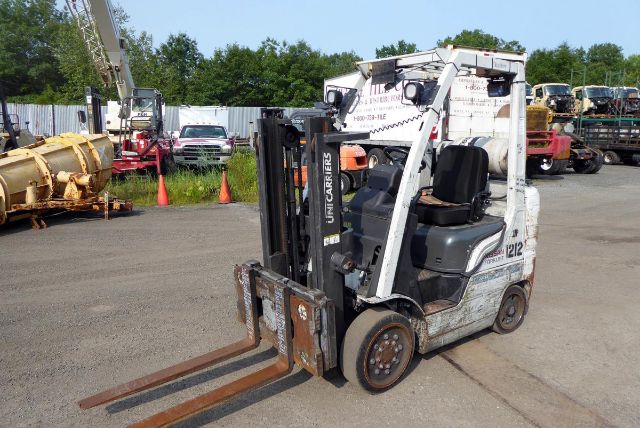
Shop Unicarriers trucking equipment for sale, including forklifts and material handling units known for solid lift capacity and warehouse durability.
Learn moreBrowse Unicarriers Trucking Equipment by Category
Have unicarriers trucking equipment to sell? List it here to reach thousands of buyers.
About Unicarriers Trucking Equipment
A common decision point is lift capacity. Many Unicarriers forklifts in the market fall into the 3,000 to 6,000 pound class, with 5,000 pound units being especially common for general warehouse and dock work. Buyers should match the rated capacity to the real load center, attachment weight, and maximum lift height, since actual usable capacity drops as fork length, mast height, or attachments increase. Two-stage and three-stage mast designs are both common, and the right choice depends on overhead clearance, trailer entry height, and stacking requirements. Fork length, side shift, tilt function, carriage type, and any onboard scale system can also affect productivity in day-to-day freight handling.
Powertrain choice is another major factor with Unicarriers equipment. LP gas forklifts are popular because they balance indoor-outdoor flexibility, quick refueling, and solid run time for multi-shift use. Electric models can make sense where emissions, noise, and indoor air quality are top priorities, while diesel units are generally better suited to heavier outdoor use. Tire type also deserves attention. Cushion tires are typically preferred on smooth warehouse floors, while pneumatic tires or solid pneumatic setups work better on rough pavement, yards, and mixed surfaces around loading areas. On used units, experienced buyers will look closely at hour meter readings, mast wear, hydraulic response, steer axle play, chain condition, leaks, brake performance, and tire wear before making a decision.
For buyers comparing Unicarriers equipment listings, the most important questions are usually about application fit and long-term serviceability. Check the serial plate for rated lift capacity, load center, and mast specs, and confirm the machine’s overall lowered height will clear your doors and trailer openings. Review engine type, transmission operation, fork and carriage dimensions, and the availability of replacement parts in your region. A well-matched Unicarriers forklift can be a cost-effective choice for freight terminals, warehouses, lumber yards, distribution centers, and any operation that needs reliable material handling around trucks and trailers.
Frequently Asked Questions
What type of trucking equipment is Unicarriers best known for?
Unicarriers is best known for forklifts and related material handling equipment used in warehouses, freight terminals, loading docks, and industrial yards. In trucking-related operations, these machines are commonly used to load and unload trailers, move palletized freight, handle building materials, and support cross-dock activity. Many buyers searching this category are specifically looking for Unicarriers fork lifts because of their reputation for practical capacity ranges and dependable day-to-day operation.
What lift capacity is most common on a Unicarriers forklift?
A 5,000 pound capacity is one of the most common configurations seen on general-purpose Unicarriers forklifts, although smaller and larger units are also available. That capacity works well for standard pallet freight, many bundled materials, and routine dock work. Buyers should still verify the actual rated capacity on the data plate because load center, mast height, fork length, and any attachment can reduce the effective lifting capability.
Should I choose LP gas, electric, or diesel on a Unicarriers forklift?
The best power source depends on where and how the forklift will be used. LP gas is a common choice for mixed indoor-outdoor work because it offers fast refueling and steady run time. Electric forklifts are often preferred for indoor operations where lower noise and zero tailpipe emissions are important. Diesel units are generally better for outdoor applications and heavier-duty environments. The right choice comes down to ventilation, fueling infrastructure, runtime needs, and surface conditions.
What should I inspect first on a used Unicarriers forklift?
Start with the hour meter, serial plate, mast operation, and hydraulic performance. Then inspect lift chains, carriage rollers, fork wear, tilt cylinders, steer axle movement, brakes, tires, and any visible leaks. A buyer should also confirm the machine starts easily, shifts properly, lifts smoothly under load, and has a lowered mast height that fits the intended building or trailer clearance. On LP models, the fuel system and regulator should be checked carefully as part of the inspection.
What mast setup is best for loading trailers and warehouse stacking?
A two-stage mast is often a good fit for general trailer loading and lower stacking heights, especially where simplicity and visibility matter. A three-stage mast is usually better when higher lift reach is needed while still maintaining a compact lowered height for door clearance. The right mast depends on your rack height, trailer access, overhead restrictions, and the machine’s rated capacity at full lift. Buyers should compare both maximum fork height and collapsed mast height before choosing a unit.