
Nissan Trucking Equipment For Sale
Shop Nissan trucking equipment including forklifts and warehouse units. Compare capacities, fuel types, lift specs, condition, and application fit.
Learn moreBrowse Nissan Trucking Equipment by Category
Have nissan trucking equipment to sell? List it here to reach thousands of buyers.
About Nissan Trucking Equipment
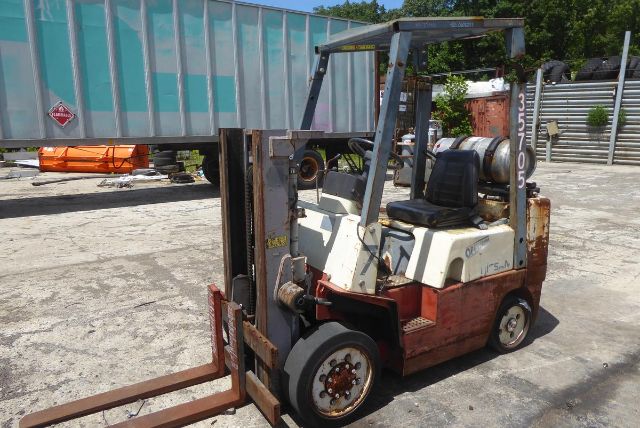
A practical buying decision starts with the environment the machine will work in. Cushion-tire Nissan forklifts are common for smooth indoor floors and tighter warehouse aisles, while pneumatic-tire models are better suited for rougher outdoor surfaces, gravel, or mixed yard conditions. Capacity ranges vary by model, but many common units fall into the 3,000 to 6,000 pound class, with heavier models available. Mast type is just as important as rated lift. Buyers should check lowered height for trailer and door clearance, maximum lift height for racking or dock use, and whether the truck has a two-stage or three-stage mast. Side shift, fork position, back tilt, and fork length all affect how efficiently the unit handles different freight.
Powertrain and service history deserve close attention on used Nissan equipment. LP gas models are valued for quick refueling and steady performance in multi-shift use, while electric units can be a strong fit for indoor operations that need lower noise and no engine exhaust. On engine-powered forklifts, inspect cold-start behavior, transmission engagement in forward and reverse, hydraulic response under load, cooling system condition, and signs of blow-by or fluid contamination. On electric units, battery age, charger compatibility, and run time between charges are major cost factors. Tire type and wear also matter because solid tires, cushion tires, and pneumatic tires each affect ride quality, traction, and replacement cost differently.
For a buyer comparing Nissan trucking equipment listings, the real value is in matching the machine to the job instead of buying on capacity alone. Forklift weight, turning radius, attachment setup, overhead guard condition, operator controls, and parts support all influence long-term usability. Older Nissan forklifts remain in service across fleets, warehouses, and manufacturing sites because the core designs are straightforward and familiar to technicians. A good unit should have a clear data plate, stable mast operation, smooth steering and braking, and no structural issues around the carriage, forks, overhead guard, or chassis. When the intended application is clear, Nissan material-handling equipment can be a dependable and cost-effective fit for freight handling and facility support.
Frequently Asked Questions
What types of Nissan trucking equipment are most common on the used market?
The most common Nissan trucking equipment listings are forklifts and other material-handling units rather than highway tractors or trailers. Buyers will typically find LP gas forklifts, electric forklifts, warehouse lift trucks, and units configured for indoor dock work or outdoor yard handling. Tire type, mast style, and lift capacity usually define the machine’s best application more than model name alone.
What should I check first on a used Nissan forklift?
Start with rated capacity, mast height, lowered overall height, and the machine’s fuel or power system. After that, inspect hydraulic lift and tilt performance, transmission engagement, steering response, brake function, tire condition, and any visible structural repairs on the mast, carriage, frame, or overhead guard. If it is an electric unit, battery age and charger condition are critical because battery replacement can be one of the largest ownership costs.
Are Nissan forklifts better for indoor or outdoor use?
That depends on the tire and power configuration. Cushion-tire Nissan forklifts are typically better for indoor warehouse floors and tight turning environments. Pneumatic-tire models are more appropriate for outdoor use, uneven pavement, and yard conditions. LP gas units are common in mixed-use operations, while electric models are often preferred indoors where lower noise and zero tailpipe emissions matter.
How much lift capacity do most Nissan forklifts have?
Many commonly traded Nissan forklifts fall in the 3,000 to 6,000 pound range, which covers a large share of palletized freight and general warehouse work. Actual capacity depends on the specific model, mast height, load center, and any installed attachments. Buyers should always verify the data plate because capacity can change when fork length, carriage setup, or mast configuration differs from the base specification.
Why does mast configuration matter when buying Nissan material-handling equipment?
Mast configuration affects both clearance and usable lift. A buyer needs to know the lowered mast height to make sure the unit can enter trailers, pass through dock doors, or work inside the building. Maximum lift height matters for stacking and racking, and a three-stage mast can provide more lift while keeping collapsed height lower than some two-stage setups. This is one of the most important factors in daily usability.