
Lifts - Fork For Sale in Pennsylvania
Browse lift and fork trucking equipment for sale in Pennsylvania, including forklifts and material handlers for dock, yard, warehouse, and jobsite use.
Learn more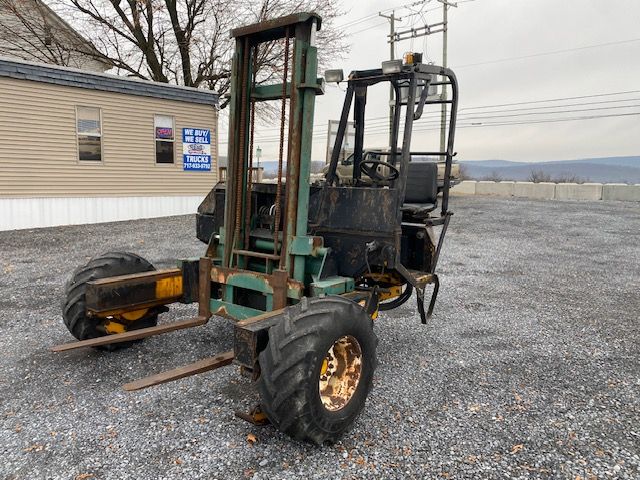
Have lifts - fork trucking equipment to sell? List it here to reach thousands of buyers.
About Lifts - Fork in Pennsylvania
For Pennsylvania buyers, application and environment matter as much as rated capacity. Indoor warehouse use often favors electric forklifts for lower noise, zero tailpipe emissions, and predictable duty cycles. Outdoor yards, lumber operations, and construction support work often lean toward diesel, LP, or rough-terrain lift equipment with larger tires and better ground clearance. Cold weather operation, wet surfaces, and freeze-thaw conditions can affect tire choice, traction, battery performance, and hydraulic response, so it pays to match the machine to the season as well as the surface.
Key specs worth checking include lift capacity at the stated load center, maximum fork height, lowered mast height, side-shift, fork length, carriage class, and turning radius. Buyers should also pay attention to mast style, such as two-stage or three-stage, especially if the machine must clear low door openings while still reaching high rack positions. On higher-hour units, inspect the mast channels, lift chains, rollers, forks, steer axle, hydraulic cylinders, and transmission behavior under load. If the equipment will support trucking operations, verify trailer-loading stability, dock approach clearance, and visibility through the mast when handling standard pallets or heavier concentrated loads.
A good lift or fork machine should fit the freight profile, the building, and the operator schedule without wasting capacity or adding avoidable maintenance cost. Overspec'd units can be harder on floors and less efficient in tight spaces, while undersized machines create safety and productivity problems. Buyers comparing used lift equipment should weigh service history, parts support, tire condition, battery age or engine hours, and attachment compatibility, especially if clamps, fork positioners, or specialty forks are required for the work.
Frequently Asked Questions
What is the most important spec to compare on lift and fork equipment?
The most important starting point is rated lift capacity at the machine's stated load center. A forklift or fork-equipped lift may advertise a high capacity, but that rating changes with load placement, attachment use, mast height, and operating surface. Buyers should compare the actual load weights, pallet dimensions, lift heights, and duty cycle against the capacity data plate rather than relying on a general class description alone.
Should I choose electric, diesel, or LP lift equipment?
Electric lift equipment is typically preferred for indoor warehouse and dock work because it is quieter, produces no exhaust emissions, and often has lower routine maintenance needs. Diesel units are common in heavy outdoor applications where longer run time and higher torque are important. LP forklifts sit in the middle and are often used in mixed indoor-outdoor operations when refueling speed matters. The right choice depends on ventilation, shift length, fuel availability, and the surface conditions where the machine will work.
How do mast height and collapsed height affect forklift selection?
Maximum lift height determines whether the machine can place loads at the top rack or onto elevated storage positions. Collapsed mast height matters just as much because the unit still has to pass through doors, trailer openings, and low-clearance areas. A three-stage mast can provide more lift while staying compact when lowered, but buyers should still confirm clearances, visibility, and capacity changes at full height.
What should I inspect on a used forklift or fork-equipped lift?
Focus on wear points that directly affect safety, lifting performance, and repair cost. Check the forks for heel wear and straightness, examine mast rails and rollers, inspect lift chains and hydraulic cylinders, and test steering, brakes, tilt, and transmission response under load. On electric units, battery age, charging history, and connector condition are critical. On engine-powered units, look closely at cold starts, exhaust condition, leaks, and hour-meter consistency with the machine's overall wear.
Are rough-terrain lifts and warehouse forklifts interchangeable?
They are not interchangeable in most operations. Rough-terrain lifts are built for uneven ground, larger tires, and outdoor handling, but they are often too large or heavy for finished warehouse floors and tight aisles. Warehouse forklifts are more compact and maneuverable on smooth surfaces, but they can struggle with mud, gravel, and uneven yard conditions. The best match depends on where the machine will spend most of its working hours.