
Nissan Lifts - Fork For Sale in New York
Shop Nissan fork lifts for sale, including propane warehouse forklifts with common lift capacities, solid tires, and dependable parts support.
Learn more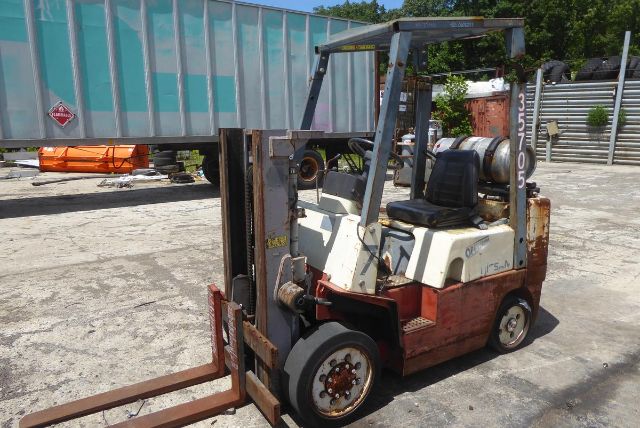
Have nissan lifts - fork trucking equipment to sell? List it here to reach thousands of buyers.
About Nissan Lifts - Fork in New York
For many buyers, the main decision is matching the truck to the floor surface and load profile. Cushion-tire Nissan forklifts are typical for smooth concrete floors and tighter indoor turning, while pneumatic-tire versions are better suited to rougher yards or mixed indoor-outdoor use. Mast configuration matters just as much as capacity. A lower collapsed mast height can be critical for trailer entry and door clearance, while a higher lift height may be needed for racking. Side shift, fork position, tilt function, and carriage class should all be checked against the loads you actually move, especially if handling standard pallets one day and heavier, uneven freight the next.
On older Nissan units, propane engines are especially common and remain popular because they refuel quickly and perform well in multi-shift work. Buyers should pay close attention to engine condition, cooling system health, transmission response in forward and reverse, steer axle wear, brake performance, mast chain condition, and hydraulic leaks at the lift and tilt cylinders. Tire type also affects operating cost and ride quality. Solid cushion or solid pneumatic tires hold up well in puncture-prone environments, but worn tires can reduce stability and change effective lift geometry. Hour meter readings are useful, but maintenance history, carriage wear, mast rail condition, and evidence of structural repair often tell you more than the meter alone.
In New York, many used fork trucks spend their lives in distribution buildings, equipment yards, manufacturing facilities, and municipal fleets, so it is worth checking for cold-weather starting behavior, corrosion, and wear tied to stop-and-go use. Buyers comparing Nissan fork truck equipment should also confirm data plate legibility, overhead guard condition, operator compartment safety items, and availability of replacement forks, seals, ignition components, and service parts. A well-matched Nissan forklift can be a cost-effective machine for pallet handling, trailer loading, warehouse stocking, and general material movement if the capacity, mast, and tire setup align with the job.
Frequently Asked Questions
What lift capacity is common on a used Nissan fork lift?
Many used Nissan forklifts on the market fall into the 4,000 to 6,000 lb capacity range, which covers a large share of warehouse and dock work. The correct capacity depends on actual load center, attachment weight, and lift height, not just the base number on the data plate. If the truck has a side shift, longer forks, or a different mast than standard, effective capacity can be reduced, so buyers should verify the data plate and compare it to the loads they plan to handle.
Are Nissan propane forklifts a good fit for warehouse use?
Nissan propane forklifts are often a strong fit for warehouse operations because LPG units refuel quickly, run consistently in multi-shift service, and are common enough that many technicians are familiar with them. They are especially practical where electric charging infrastructure is limited or where the truck moves between indoor and outdoor work. Buyers should still confirm local ventilation requirements, engine condition, cooling system health, and fuel system integrity before purchase.
What should I inspect first on an older Nissan forklift?
Start with the mast, hydraulics, engine, transmission, and structure. Check mast rails, lift chains, carriage rollers, tilt cylinders, and any visible leaks or scoring. Then confirm that forward and reverse engagement is smooth, steering is responsive, brakes hold properly, and the overhead guard and chassis do not show poor-quality repairs. Cosmetic wear is common on used fork trucks, but structural cracks, cooling issues, and hydraulic problems can turn an inexpensive unit into a costly one quickly.
How do I choose between cushion tires and pneumatic tires on a Nissan fork truck?
Cushion tires are generally better for smooth warehouse floors, tighter aisles, and lower overall ride height, while pneumatic tires are better for uneven pavement, gravel, or mixed indoor-outdoor work. The tire choice affects traction, turning behavior, and operator comfort. Buyers should match tire style to the actual surface conditions because a forklift that performs well on polished concrete may be a poor choice in a rough yard, and the reverse is also true.
Why does mast height matter as much as lift capacity?
Mast height affects where the truck can physically operate and what it can service. A forklift with the right capacity can still be a poor fit if the collapsed height is too tall for trailer doors, low clearances, or warehouse entry points. Lift height also determines whether the truck can reach your racking safely. Buyers should compare lowered mast height, free lift, and maximum lift height to their building and trailer dimensions before making a decision.