
Mitsubishi Lifts - Fork For Sale
Shop Mitsubishi fork lifts for material handling, loading docks, and warehouse work. Compare lift capacity, mast height, fuel type, and attachments.
Learn more
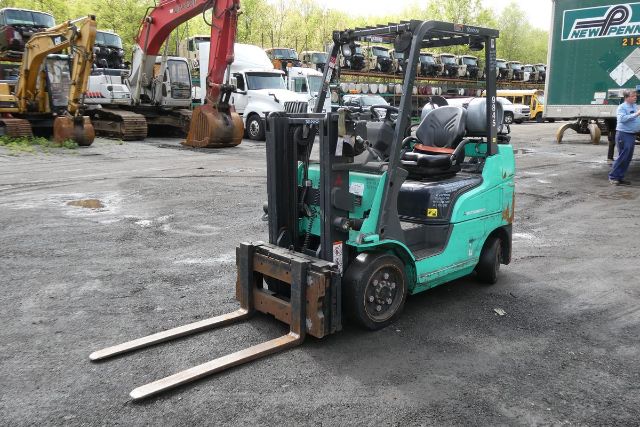
Have mitsubishi lifts - fork trucking equipment to sell? List it here to reach thousands of buyers.
About Mitsubishi Lifts - Fork
For many buyers, the real decision starts with the operating environment. Cushion-tire Mitsubishi forklifts are typically chosen for smooth concrete floors and tighter indoor aisles, while pneumatic-tire versions are better suited for rougher yards, lumber handling, or mixed indoor-outdoor use. LPG models are widely used because they refuel quickly and handle multi-shift operation better than many battery units in high-throughput settings. Check overall lowered mast height against door openings and trailer clearance, then compare maximum lift height, free lift, and fork length to the loads you actually move. A truck that fits the building but cannot stack at the required rack level is the wrong truck.
On used Mitsubishi fork trucks, hours matter, but condition matters more. Pay close attention to mast channels, carriage rollers, lift chains, steer axle play, hydraulic cylinder seepage, and side shift function under load. Solid cushion tires should be checked for chunking and remaining tread profile, even though they do not wear like pneumatic tires. On LPG units, inspect the fuel system, regulator, and cold-start behavior. A buyer should also confirm data plate capacity at the actual load center and attachment setup, because adding side shift, longer forks, or a different mast can change rated capacity. If the truck will spend time loading vans or spotted trailers, stability, backtilt, and visibility through the mast are worth close scrutiny.
Mitsubishi forklifts are also known as fork trucks, lift trucks, or warehouse forklifts depending on the application. The brand is well regarded in fleet service because parts support, operator familiarity, and straightforward controls tend to make ownership easier across mixed crews. Common specs in this category include automatic directional control, propane or electric power, solid tires, 41-inch to 48-inch forks, and mast options matched to dock and rack work. The best buy is usually the truck sized to your heaviest routine load, your tightest operating space, and your actual duty cycle, not simply the highest-capacity unit on the page.
Frequently Asked Questions
What capacity Mitsubishi fork lift is most common for warehouse and dock work?
A 5,000 lb capacity Mitsubishi forklift is one of the most common setups for general warehouse, pallet, and loading dock service. That size handles a wide range of standard freight without moving into a larger chassis that can be harder to maneuver in tight aisles or trailers. Buyers should still verify the rated capacity on the data plate at the correct load center, because mast style, fork length, and attachments can reduce effective capacity.
Should I choose a cushion-tire or pneumatic-tire Mitsubishi forklift?
Cushion-tire Mitsubishi forklifts are typically the better choice for indoor warehouse floors, dock plates, and smooth concrete because they turn tighter and keep overall height lower. Pneumatic-tire models are better for uneven pavement, gravel yards, lumber applications, and operations that move between indoor and outdoor surfaces. The right tire type depends more on floor conditions and turning space than on brand or model year.
Is propane a good fuel choice for a used Mitsubishi fork truck?
Propane is a strong choice for operations that need fast refueling, consistent runtime, and simpler shift coverage than battery charging can provide. Many Mitsubishi LPG forklifts are used in freight and warehouse settings because they balance indoor usability with quick turnaround. On a used unit, inspect the regulator, hoses, tank bracket, and start-up performance, and make sure the engine idles cleanly and responds smoothly under throttle.
What should I inspect first on a used Mitsubishi forklift?
Start with the mast, carriage, lift chains, forks, hydraulic cylinders, steer axle, and transmission engagement in forward and reverse. Then check side shift operation, brake response, tire condition, hour meter consistency, and any signs of leaks or structural repair. Cosmetic wear is expected on working forklifts, but dry cylinders, tight steering, smooth mast travel, and stable lift performance are more important indicators of a sound truck.
Do mast height and fork length matter as much as rated capacity?
Yes. Rated capacity gets the most attention, but mast height, collapsed height, free lift, and fork length often determine whether the forklift actually fits your operation. A truck may have enough capacity yet still be unusable if it will not clear a trailer opening, fit under door headers, or reach the required rack beam. Matching the mast and fork package to your building, trailers, and pallet dimensions is essential.