
Clark Lifts - Fork For Sale in New York
Browse Clark fork lifts for sale, including heavy-capacity pneumatic tire forklifts built for yards, lumber, steel, machinery, and loading work.
Learn more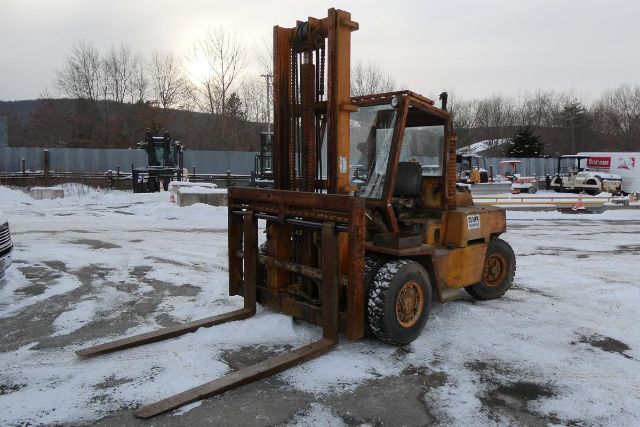
Have clark lifts - fork trucking equipment to sell? List it here to reach thousands of buyers.
About Clark Lifts - Fork in New York
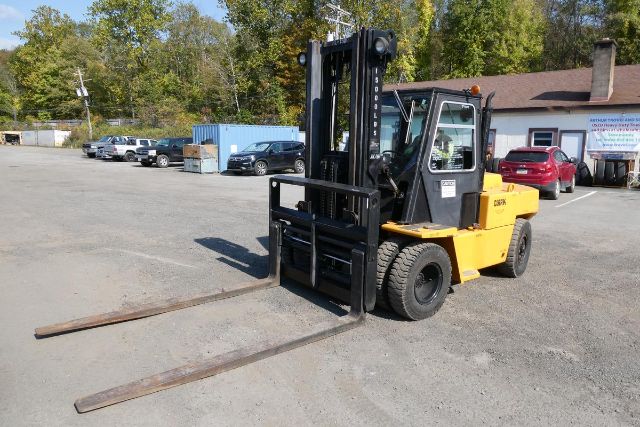
Heavy-capacity Clark forklifts commonly show up in the 9,000 to 15,000 lb range, which puts them in a useful middle ground for handling machinery, palletized building products, steel, pipe, and large crated freight. Buyers should pay close attention to the data plate and confirm rated capacity at the actual load center, especially if the truck has side shift, fork positioners, long forks, or other attachments that reduce effective lift capacity. Mast configuration matters just as much. A tri-mast gives better lift height and lower collapsed height for loading in tighter spaces, while a two-stage mast may be simpler and better suited to buyers who do not need maximum stacking height.
On older Clark diesel forklifts, powertrain condition is often more important than cosmetics. Many are equipped with proven mechanical diesel engines such as Perkins, paired with basic automatic or powershift-style transmissions. That can be an advantage for operations that want a machine their in-house mechanic can diagnose without proprietary software. Check for dry lift and tilt cylinders, mast chain wear, carriage play, steer axle looseness, brake performance, cold-start behavior, and transmission engagement in both directions. Tire type also matters. Air-filled pneumatic tires are common on these larger Clark lifts and are better suited for gravel yards, uneven pavement, and outdoor loading areas than cushion-tire warehouse units.
For New York buyers, actual operating environment should drive the decision. A forklift used around docks, contractor yards, recyclers, or ag and industrial properties may need an enclosed cab, block heater, good glass, and strong brakes for cold-weather use. Overall width, mast lowered height, and fork length should be matched to trailer access, aisle space, and the product being handled. Clark remains a recognized name in fork trucking equipment because these machines are generally built for practical service life, readily understood controls, and solid lifting performance in demanding day-to-day work.
Frequently Asked Questions
What should I check first when buying a used Clark fork lift?
Start with rated capacity, mast type, and overall dimensions, then move to mechanical condition. The data plate should match the truck's current mast and attachment setup. After that, inspect engine cold-start performance, transmission engagement, brake function, hydraulic cylinder leakage, mast chain wear, carriage movement, steering looseness, and tire condition. On older heavy forklifts, these items usually matter more than cosmetic appearance.
Are Clark forklifts good for outdoor yard and loading work?
Yes. Many Clark fork lifts in this class are pneumatic tire, diesel-powered machines designed for outdoor service on pavement, gravel, and mixed yard surfaces. They are commonly used for loading flatbeds, moving steel or lumber bundles, handling machinery, and supporting industrial sites. Buyers should still match tire type, mast height, and cab configuration to the surface and climate where the truck will actually operate.
How do attachments affect forklift capacity?
Attachments such as hydraulic side shift, fork positioners, and longer forks can reduce the truck's effective lifting capacity because they add weight and change the load center. A forklift rated at one capacity in standard form may have a lower usable rating once attachments are installed. The correct reference is the capacity shown on the data plate for that exact configuration, not just the base model rating.
What is the advantage of a tri-mast on a Clark forklift?
A tri-mast, also called a three-stage mast, gives more lift height while keeping the collapsed mast height lower than many comparable two-stage setups. That helps when a truck needs to stack high but still pass through doors, under canopies, or into trailers with height limits. The tradeoff is added mast complexity, so buyers should inspect chain condition, rollers, and hydraulic function carefully.
Are older diesel Clark forklifts still practical to own?
They can be very practical if the machine is mechanically sound and the intended use fits the truck. Older Clark units often use straightforward diesel engines and simpler driveline systems that many independent shops can service. That makes them attractive to buyers who value repairability and lower acquisition cost. The main concern is condition, especially brakes, hydraulics, transmission response, and parts support for model-specific components.