
Atlas Copco Trucking Equipment For Sale
Browse Atlas Copco trucking equipment, including diesel air compressors known for reliable CFM output, jobsite durability, and easy towing.
Learn moreBrowse Atlas Copco Trucking Equipment by Category
Have atlas copco trucking equipment to sell? List it here to reach thousands of buyers.
About Atlas Copco Trucking Equipment
On Atlas Copco compressors, output ratings often matter more than age alone. A unit in the 185 CFM to 400 CFM range can fit very different applications, so matching tool demand to compressor capacity is critical. Lower-CFM machines are common for service work and lighter pneumatic tools, while 375 to 400 CFM models are better suited for higher-volume applications and continuous-duty use. Buyers should also look at pressure rating, aftercooler setup if applicable, air-end condition, and whether the machine holds pressure cleanly under load. Engine make is another major factor because parts support and service familiarity can influence long-term operating cost as much as purchase price.
Condition details on this type of trucking equipment deserve close attention because towable compressors live hard lives. Hour meter readings help, but service records, cold-start behavior, blow-by, fuel system condition, tire date codes, brake and light function, and evidence of air leaks are just as important. Check the frame, tongue, canopy, doors, and jack assembly for damage from towing or jobsite handling. Buyers should also inspect discharge valves, hose outlets, and control panel gauges to confirm the compressor still produces rated air and cycles correctly. If the unit includes features like air-to-air cooling, larger outlet connections, or a well-supported diesel engine package, that can add real value for contractors who need reliable daily uptime.
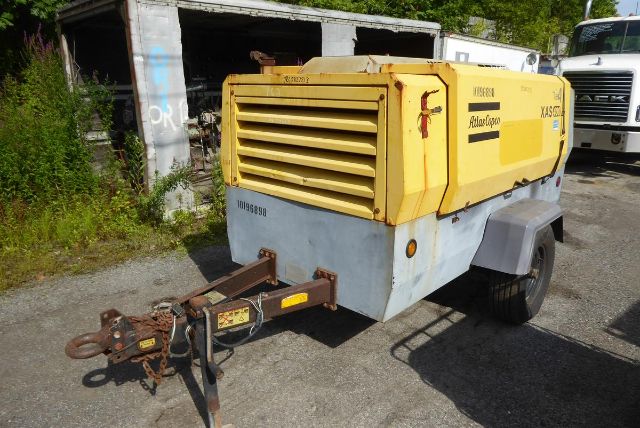
For trucking-related use, Atlas Copco equipment appeals to operators who need portable utility support that can move easily between yards, roadside projects, pipeline work, construction sites, and municipal jobs. These machines are often called tow-behind air compressors or portable diesel compressors, and the best choice usually comes down to transportability, air delivery, and serviceability. A buyer comparing listings should focus on actual application fit: rated output, connection layout, ease of towing behind a pickup or service truck, and how well the compressor has been maintained over time.
Frequently Asked Questions
What should I check first when buying a used Atlas Copco air compressor?
Start with the compressor’s rated CFM and PSI, then confirm the unit actually produces that air under load. After that, inspect the engine, hour meter, air-end condition, service history, and the towing components such as tires, hubs, lights, coupler, and jack. A used portable compressor can look clean and still have expensive issues if it has weak compression, air leaks, or poor engine performance.
What is the difference between CFM and PSI on a towable compressor?
CFM measures air volume, while PSI measures air pressure. Most pneumatic tools require a certain pressure to operate correctly, but overall job performance usually depends on having enough CFM to keep those tools supplied continuously. If the compressor’s CFM rating is too low, tool performance will drop even if the PSI number looks adequate on paper.
Are Atlas Copco portable compressors suitable for towing behind a pickup or service truck?
Many Atlas Copco tow-behind compressors are designed for easy transport behind pickups, mechanics trucks, and service bodies, but the right match depends on trailer weight, hitch style, brake setup, and local towing regulations. Buyers should verify GVWR, tongue weight, axle condition, tire size, and overall dimensions before putting a unit into regular road service. A compressor that fits the air demand but overloads the tow vehicle is not the right spec.
How many hours is too many on a used diesel air compressor?
Hour count alone does not determine value because maintenance and operating conditions matter just as much. A higher-hour compressor with documented service, strong engine performance, and a healthy air end can be a better buy than a lower-hour machine with poor upkeep. The better question is whether the unit starts cleanly, carries load, makes rated air, and shows evidence of regular fluid, filter, and separator maintenance.
What applications are common for Atlas Copco tow-behind compressors?
These compressors are commonly used for construction, utility work, line striping support, road repair, pipeline projects, demolition tools, sandblasting, and mobile service operations. The right application depends on airflow, pressure, and outlet configuration. Higher-capacity machines are typically chosen for continuous-duty jobs or multiple-tool use, while smaller units fit lighter service and contractor work.