
Truxton Vacuum Trailers For Sale in Colorado
Shop Truxton vacuum trailers for oilfield and fluid hauling work, including aluminum non-code tanks with pump-ready specs and durable construction.
Learn more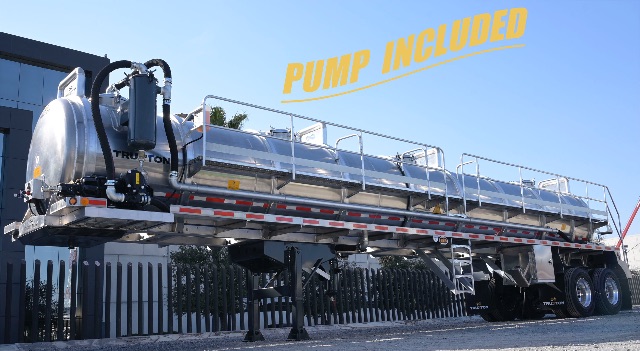
Have truxton vacuum trailer to sell? List it here to reach thousands of buyers.
About Truxton Vacuum Trailers in Colorado
Material choice matters on a vacuum trailer, and Truxton aluminum tanks stand out for buyers trying to manage tare weight and corrosion resistance. Aluminum shell construction can help preserve payload while holding up well in wet and chemically variable service, provided the trailer is matched to the commodity being hauled. Buyers should verify shell thickness, head thickness, internal baffle count, and the protection built into the vacuum system, including primary and secondary shutoffs, relief valves, and a readable manovac gauge. On many units, you will also see rear-mounted sight indicators, top and rear manways, and full-length walkways with handrails. Those are not cosmetic details. They affect cleanout access, inspection time, and day-to-day operator safety.
Pump and plumbing spec is where one vacuum trailer can separate itself from another. Truxton trailers in this class are commonly equipped with hydraulic-driven vacuum pumps and rear sump discharge arrangements, often with a 4-inch suction connection and a larger rear discharge tube. Buyers should confirm pump model, hydraulic requirements, relief valve settings, valve material, and whether the trailer has the shutdown protection needed for the intended fluid stream. If the trailer will see thicker sludge, produced water, or mixed waste, look closely at discharge diameter, sump design, and internal coating or lining. If it will spend most of its life on county roads and Colorado energy routes, suspension rating, brake spec, ABS configuration, kingpin structure, and tire size are just as important as tank capacity.
For Colorado buyers, service conditions can shift quickly between highway miles, lease roads, cold weather mornings, and high-elevation work. That makes corrosion resistance, lighting quality, ladder and walkway design, and easy-to-service components worth more than they look on paper. A well-spec'd Truxton vacuum trailer should offer a stable chassis, practical access points, compliant lighting and wiring, and subframe components that can stand up to rough-field use. When comparing listings, the best approach is to match the barrel capacity, tank material, pump setup, and code status to the actual fluid, route, and unloading method your operation uses every week.
Frequently Asked Questions
What is a Truxton vacuum trailer typically used for?
A Truxton vacuum trailer is typically used to recover, haul, and discharge liquids or semi-fluid waste in oilfield, industrial cleaning, and environmental service applications. Common loads include produced water, drilling fluids, wash water, light sludge, and similar non-hazardous or application-specific materials. The exact use depends on the trailer's code status, tank rating, pump setup, and valve configuration, so buyers should match the trailer to the fluid stream and the jobsite requirements before purchase.
What does 150 BBL mean on a vacuum trailer?
150 BBL means the tank holds 150 barrels of liquid capacity, which is about 6,300 gallons. In vacuum trailer terms, that is a popular mid-to-large capacity because it provides useful volume for field service work without moving into a much longer or heavier trailer than many operators want to manage. Actual legal payload still depends on the trailer's empty weight, axle ratings, commodity weight per gallon, and state or route restrictions.
Why do buyers choose an aluminum vacuum trailer?
Buyers choose an aluminum vacuum trailer mainly for lighter tare weight and strong corrosion resistance. A lighter trailer can improve available payload, and aluminum construction is often attractive in water, brine, and general fluid service where steel units may require more ongoing corrosion management. Buyers still need to confirm chemical compatibility, shell thickness, repair considerations, and whether the trailer has any interior coating or lining that affects long-term durability.
What should I check on the pump and valve system of a vacuum trailer?
The pump and valve system should be reviewed as closely as the tank itself. Important items include the pump make and model, hydraulic drive requirements, suction and discharge pipe size, sump layout, relief valve settings, primary and secondary shutdown protection, and valve type at the rear discharge. These details affect loading speed, unloading efficiency, product compatibility, and operator protection. A trailer with the right capacity but the wrong pump or plumbing setup can become inefficient very quickly in daily service.
Are non-code vacuum trailers suitable for all hauling jobs?
No. Non-code vacuum trailers are not suitable for every hauling job because their legal use depends on the material being transported, the route, and the applicable federal, state, and customer requirements. They are often used in oilfield and off-road or limited-road service for specific non-regulated fluids, but buyers should verify compliance before assigning one to a broader transport role. Code status should always be checked against the commodity, destination, and operating jurisdiction.