
Vanguard Reefer Trailers For Sale
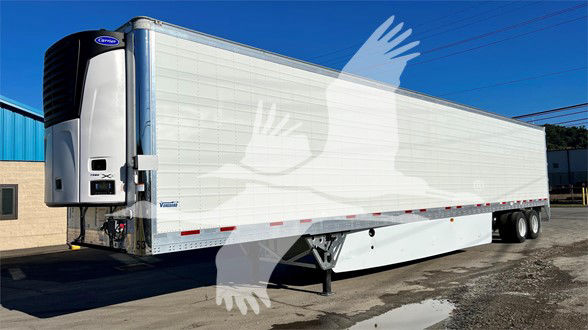
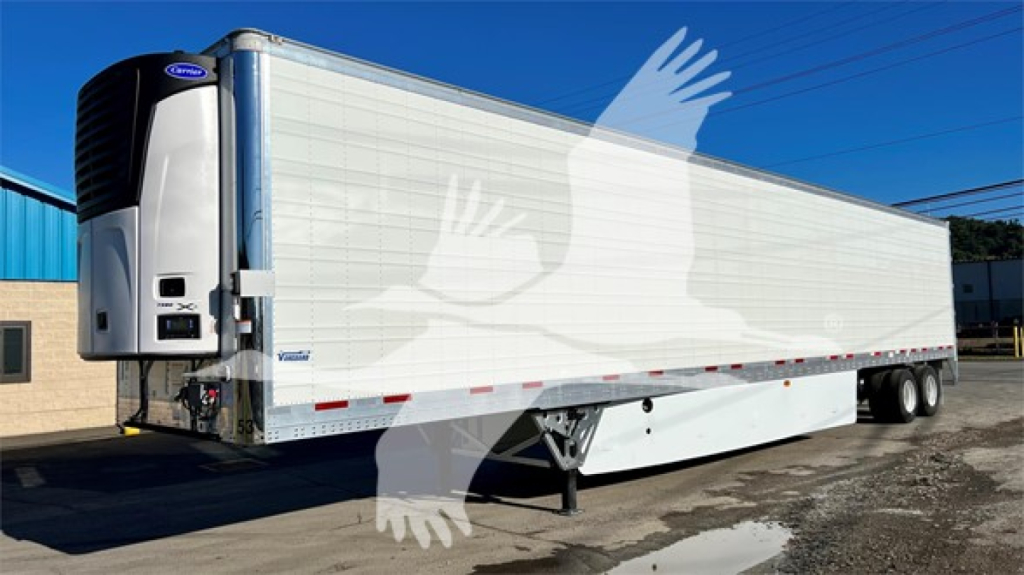
Shop Vanguard reefer trailers with 53-foot specs, insulated bodies, air ride, sliding tandems, and Carrier or Thermo King units.
Learn more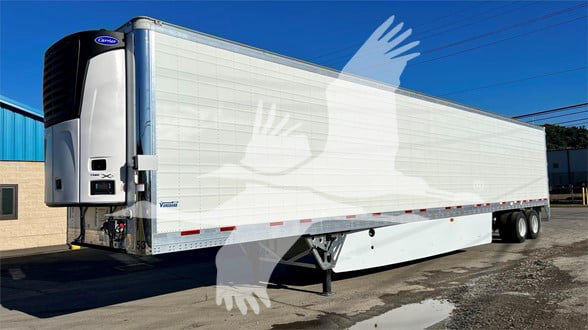
Showing 13 to 15 of 15 results
Have vanguard reefer trailer to sell? List it here to reach thousands of buyers.
About Vanguard Reefer Trailers
A typical Vanguard reefer spec includes foamed-in-place polyurethane insulation, an aluminum roof, corrugated aluminum sides, swing rear doors, and a heavy-duty duct floor designed to move air under the load. Inside dimensions on late-model units often land near 97.75 inches wide and roughly 104.5 inches high, with door openings around 98 inches wide by 103 inches high. Buyers should pay close attention to floor design, air return bulkheads, and air chute condition because those components directly affect temperature consistency from nose to doors. Scuff liners, Kemlite-style interior lining, stainless rear structures, and dock protection hardware are worth noting on high-cycle distribution work.
The refrigeration unit is the other major decision point. Vanguard reefer trailers are commonly paired with Thermo King or Carrier units, and both are widely supported across the market. Unit model, engine hours, service history, fuel tank size, and control package matter more than brand alone. For multi-stop grocery and foodservice work, look closely at pulldown performance, door cycle tolerance, and how well the trailer maintains setpoint after repeated openings. Features like air ride suspension, MTIS with ThermALERT, side skirts, galvanized crossmembers, composite floor stringers, and a 36-inch kingpin setting can also affect operating cost, tire life, and fleet compatibility.
For buyers comparing listings, the best Vanguard reefer trailer is usually the one whose body spec matches the freight profile. Frozen and deep-chill freight puts more emphasis on insulation package, door seal integrity, and reefer health. Produce and mixed temp operations tend to care more about airflow management, clean interior surfaces, and floor condition. Regional fleets may prioritize lightweight aluminum construction and aerodynamic skirts, while warehouse-intensive operations may focus on rear frame durability, landing gear, slider function, and evidence of hard dock contact. A clean reefer body with a straight floor, tight doors, consistent unit service, and no signs of moisture intrusion is generally more valuable than cosmetic extras.
Frequently Asked Questions
What should I look for first when buying a Vanguard reefer trailer?
Start with the refrigeration unit, insulation integrity, and floor condition. Reefer make and model, total unit hours, maintenance records, and current operating performance are critical because the unit is the most expensive system on the trailer. After that, inspect the duct floor for damage, check door seals and the rear frame for air leaks, and look for any signs of moisture intrusion in the walls, roof, or floor. A reefer trailer can look clean outside and still have airflow or temperature-control issues inside.
Are Vanguard reefer trailers usually 53 feet long?
Yes. The most common Vanguard reefer trailer in the market is a 53-foot tandem axle trailer with a 102-inch outside width and 13-foot 6-inch overall height. That size is standard for over-the-road and regional refrigerated freight because it balances cubic capacity, dock compatibility, and resale demand. Buyers should still confirm inside width, inside height, and door opening dimensions when freight is pallet-sensitive or high-cube.
Is Thermo King or Carrier better on a Vanguard reefer trailer?
Both are proven refrigeration platforms, and the better choice often comes down to dealer support, technician familiarity, and service history on the specific unit. Thermo King and Carrier both have strong parts networks and broad market acceptance. A well-maintained unit with documented service, proper pulldown, and stable temperature control is usually a better buy than choosing by brand name alone.
Why do duct floors, air chutes, and bulkheads matter on a reefer trailer?
Those components control airflow, which is essential in refrigerated transport. The duct floor allows cold air to move under the load, the air chute helps distribute supply air along the ceiling, and the return bulkhead supports proper circulation back to the unit. If any of those parts are damaged, blocked, or missing, the trailer may struggle to hold even temperatures from front to rear. That can lead to hot spots, rejected loads, and excessive run time on the reefer unit.
What trailer specs affect operating cost on a Vanguard reefer?
Operating cost is influenced by trailer weight, aerodynamics, tire management, suspension design, and reefer efficiency. Aluminum construction can help preserve payload. Side skirts can improve fuel economy. MTIS can reduce tire-related downtime and irregular wear. Air ride suspension helps protect freight and trailer structure. Buyers running high annual miles should also consider sliding tandem condition, kingpin setting, brake and wheel-end spec, and how easy the reefer unit is to service in their normal operating lanes.