
Used Trailmobile Reefer Trailers For Sale
Browse used Trailmobile reefer trailers with key specs, door options, floor types, and insulation details that matter to cold-chain buyers.
Learn more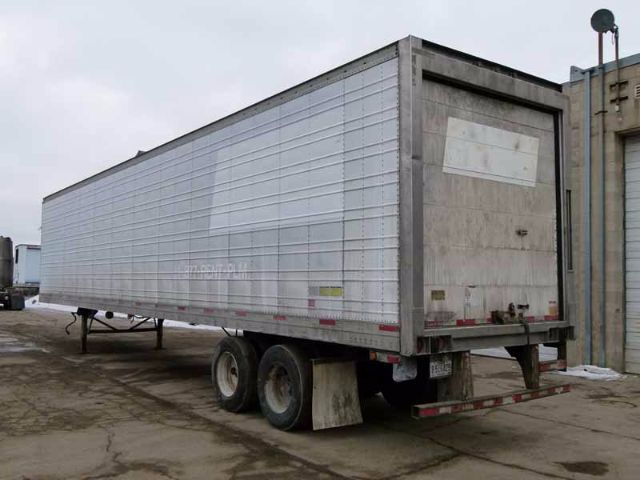
Have used trailmobile reefer trailer to sell? List it here to reach thousands of buyers.
About Used Trailmobile Reefer Trailers
Body construction and interior condition are major value drivers on a reefer trailer. Aluminum construction is common and helps keep tare weight in check, while the interior should be inspected for liner damage, soft spots in the floor, corrosion around the front wall, and signs of past moisture intrusion. Flat floors, duct floors, and scuff plates all influence how the trailer performs in foodservice, produce, frozen freight, or warehouse overflow use. Door style is another practical buying point. Swing doors are still standard for over-the-road reefer work, but roll-up doors show up on some Trailmobile units and can be useful in dock-heavy regional service or fixed-position storage applications.
Running gear and chassis specs deserve just as much attention as the box itself. Sliding tandem suspensions add flexibility for bridge law compliance and axle spacing, while tire size, wheel type, brake configuration, and suspension design all affect maintenance cost and daily usability. Many older used reefer trailers will be 96 inches wide, with an overall height around 13 feet 6 inches, so clearance, dock compatibility, and lane restrictions should be confirmed for the routes you run. Buyers should also verify the condition of the landing gear, rear frame, crossmembers, and kingpin area, especially on older trailers that have spent years in heavy regional or warehouse service.
A used Trailmobile reefer trailer can serve over-the-road refrigerated hauling, local multi-stop delivery, seasonal storage, or dedicated cold storage at a facility. The most important buying decision is matching the trailer to the freight and the operating environment. If the unit is intended for active transport, reefer unit hours, air chute condition, fuel tank integrity, and return air flow are critical. If it will be used as stationary storage, electric standby capability, roll-up door condition, floor wear, and trailer seal at the dock may matter more than road miles. A careful spec review usually tells you very quickly whether a given trailer is suited for palletized frozen freight, produce, dairy, meat, or simply dependable refrigerated storage.
Frequently Asked Questions
What should I inspect first on a used Trailmobile reefer trailer?
Start with the refrigeration system status, then inspect the trailer body and floor. Confirm whether the trailer has a working reefer unit, an electric standby setup, or is being sold less unit. After that, check the interior liner, insulation integrity, floor wear, front wall condition, door seals, and signs of water intrusion. On older trailers, the understructure, crossmembers, rear frame, tandem slide rails, and kingpin area can tell you a lot about remaining service life.
Is a used reefer trailer without a refrigeration unit still useful?
Yes, a reefer trailer less unit can still be useful for cold storage conversion, insulated dry freight, or as a replacement body for a buyer planning to install a unit separately. It can also work well in warehouse overflow applications where active cooling is provided externally or is not required full time. The key is to value it correctly, because the cost of sourcing and installing a reefer unit can be significant compared with buying a complete operational trailer.
Are roll-up doors good on a reefer trailer?
Roll-up doors can be a good fit for frequent dock work, local delivery, and stationary storage because they reduce door swing clearance issues and can speed up loading in tight spaces. The tradeoff is that swing doors often provide a tighter seal and are more common in long-haul refrigerated service. Buyers should inspect roll-up door tracks, panel condition, seal integrity, and ease of operation because door air leaks directly affect temperature retention.
What sizes are common for used Trailmobile reefer trailers?
The most common used sizes are 48-foot and 53-foot trailers. Older units may also be 96 inches wide rather than the newer 102-inch standard seen across much of the trailer market. Length, width, and overall height matter because they affect pallet count, dock fit, route compliance, and resale flexibility. Matching trailer dimensions to your freight profile is just as important as the refrigeration spec.
Can a used Trailmobile reefer trailer be used for stationary storage?
Yes, many used reefer trailers are repurposed as stationary cold storage at food plants, farms, distribution yards, and seasonal operations. In that application, buyers often focus on electric power compatibility, door access, floor condition, and insulation performance more than suspension or tire life. If the trailer will stay parked, all-electric reefer setups and roll-up door configurations can be especially practical.