
Talbert Lowboy Trailers For Sale in Indiana
Shop Talbert lowboy trailers for heavy haul work. Compare hydraulic gooseneck, deck height, axle setups, capacity, and load well specs.
Learn more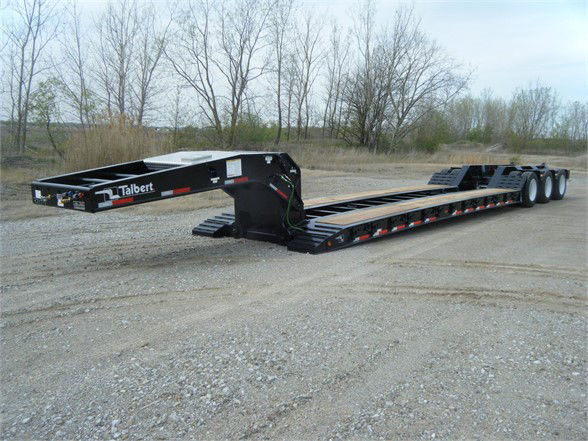
Have talbert lowboy trailer to sell? List it here to reach thousands of buyers.
About Talbert Lowboy Trailers in Indiana
Talbert is well known in the heavy haul market for stout frames, durable load wells, and configurations that can be tailored to the freight. Buyers comparing Talbert lowboys should pay close attention to loaded deck height, concentrated load rating in the boom well, overall well length, axle spacing, and kingpin setting. An open boom well can be a major advantage when hauling excavators or other equipment with deep center sections. Close-coupled designs can help with bridge law and maneuverability, while tridem configurations are commonly chosen when the goal is spreading weight without stepping up to a more specialized multi-axle platform.
For Indiana buyers, route conditions, permit practices, and typical Midwest heavy equipment applications make spec discipline important. A trailer that spends its life moving construction equipment locally may need a different setup than one running regional over-dimensional freight. Tire size, suspension type, frame reinforcement, outriggers, decking material, and ramp style all affect daily usability and maintenance costs. On hydraulic gooseneck models, inspect the neck cylinders, pin and bushing wear points, hydraulic lines, and gooseneck hook-up areas. On any used lowboy, crossmember condition, main beam integrity, axle alignment, brake condition, and signs of repeated overloading deserve close attention.
A Talbert lowboy is also commonly called a lowbed trailer, and in many fleets it fills the core role between a general-purpose tag trailer and a true specialized heavy haul platform. The right spec depends on the machines being hauled most often, the legal weight targets on your routes, and how quickly crews need to load and unload in the field. Buyers who match deck height, well length, neck design, and axle group to their actual freight mix usually end up with a trailer that works harder, permits more easily, and holds value better over time.
Frequently Asked Questions
What is the main advantage of a Talbert lowboy trailer for heavy equipment hauling?
The main advantage is low deck height combined with heavy-duty frame construction. That combination allows taller equipment to stay within legal loaded height while also supporting concentrated machine weight in the deck and boom well. Talbert lowboys are commonly selected for construction, paving, aggregate, and specialized heavy haul work where load stability, durability, and practical loading angles matter every day.
Should I choose a fixed neck or a hydraulic removable gooseneck on a Talbert lowboy?
A hydraulic removable gooseneck is usually preferred when the trailer will regularly load self-propelled equipment from ground level. It improves loading efficiency and reduces the need for external ramps or docks. A fixed neck can still make sense for certain dedicated applications, but most buyers hauling mixed fleets of excavators, dozers, and rollers find an RGN more versatile and easier to use in the field.
What specs matter most when comparing Talbert lowboy trailers?
Capacity is only the starting point. Buyers should also compare loaded deck height, load well length, boom well design, axle configuration, axle spacing, kingpin setting, suspension, and brake package. These details affect permit flexibility, bridge law compliance, turning characteristics, and the range of machines the trailer can carry safely. A lowboy with the right geometry often performs better than one that simply has a higher advertised ton rating.
What should I inspect on a used Talbert lowboy trailer?
Focus on the main beams, crossmembers, neck connection points, hydraulic system components, suspension, brakes, and axle alignment. Look for cracking, weld repairs, elongation at pin areas, uneven tire wear, and deck damage from repeated point loading. On hydraulic gooseneck trailers, cylinder condition, hydraulic leaks, and neck locking mechanism wear are especially important because those systems directly affect safe loading and unloading.
Are Talbert lowboy trailers a good fit for Indiana and Midwest hauling?
Yes. Talbert has a strong reputation in the Midwest heavy haul market, and the brand is a familiar choice for fleets working in construction, roadbuilding, quarry support, and equipment transport. Indiana and surrounding states often require buyers to pay close attention to axle layout, deck height, and legal weight distribution, so a properly spec'd Talbert lowboy can be a very practical match for regional permit and route demands.