
Load King Lowboy Trailers For Sale in Washington
Shop Load King lowboy trailers for heavy equipment hauling with low deck heights, strong load ratings, and detachable gooseneck options.
Learn more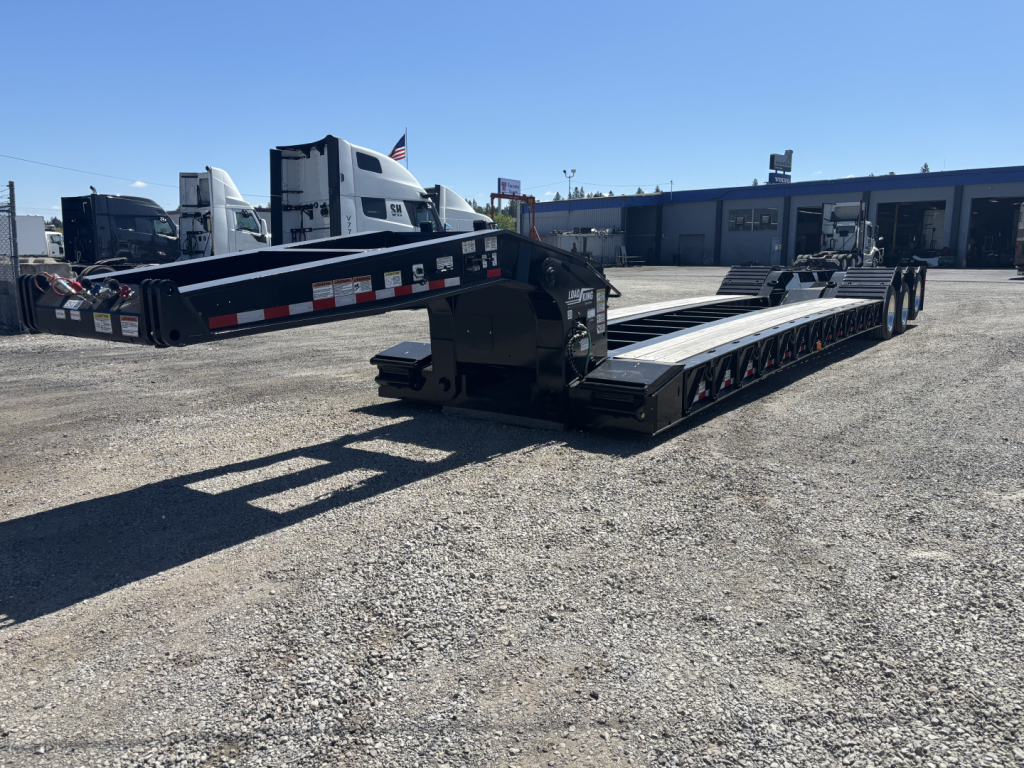
Have load king lowboy trailer to sell? List it here to reach thousands of buyers.
About Load King Lowboy Trailers in Washington
One of the first details to compare is deck configuration. Load King lowboys are commonly spec'd with a low deck height to keep overall loaded height under control, and many buyers focus on loaded deck height, ground clearance, and main deck length before anything else. Hydraulic detachable goosenecks are a popular choice because they speed up loading for tracked equipment and reduce reliance on ramps. Swing clearances, flip neck compatibility, ride height adjustment, and excavator-style deck features such as notch plates, backhoe troughs, chain slots, and swing-out outriggers can make a major difference if the trailer will carry more than one machine type. Apitong decking, heavy-duty D-rings, and side securement points are especially important for operators who need flexible tie-down options instead of a one-purpose deck.
Axle group and suspension setup matter just as much as capacity on paper. Many Load King lowboy trailers in this class run tandem or tri-axle layouts, with common heavy-haul specs including air ride suspension, air lift axles, and raise-lower valves to help with loading angles, maneuvering, and tire wear. Buyers should compare axle spacing, tire size, wheel package, and whether the trailer is prepped for a future jeep, stinger, or additional axle if operating needs are likely to grow. Concentrated load ratings are often more important than gross trailer rating alone because machine weight is rarely distributed evenly across the deck. A trailer rated for a high load in a short concentration can be better suited to excavators and similar equipment than a higher-GVWR trailer with less favorable deck loading characteristics.
The best Load King lowboy for sale is usually the one matched closely to the machines being hauled, not the one with the longest option list. Check loaded height with your tallest machine, verify neck length and deck space against track or wheelbase measurements, and make sure the securement layout supports your operators' normal loading routine. In the Pacific Northwest, corrosion resistance, lighting protection, fender durability, and service access for hydraulic and air systems deserve extra attention because weather and mixed road conditions tend to expose weak points quickly. A well-spec'd Load King lowboy can serve as a versatile heavy-equipment platform for contractors, equipment rental fleets, paving crews, utility work, and specialized transport operations.
Frequently Asked Questions
What is a Load King lowboy trailer best used for?
A Load King lowboy trailer is best used for hauling heavy equipment with tall overall dimensions or concentrated machine weight. Common applications include moving excavators, dozers, wheel loaders, pavers, compactors, and other construction equipment that would exceed legal height on a standard flatbed or step deck. The low deck profile helps keep loaded height down, while the heavier frame and deck structure are designed for point-loaded machine traffic and repeated jobsite loading.
What should I compare first when buying a lowboy trailer?
Start with deck height, main deck length, concentrated load rating, and gooseneck style. Those four items determine whether your equipment will fit, load safely, and run legally. After that, compare axle configuration, suspension type, ground clearance, securement layout, and any application-specific features such as outriggers, excavator buckets wells, flip ramps, or a detachable hydraulic neck. The trailer should be matched to the heaviest and tallest machine you move most often, not just occasional lighter loads.
Why does concentrated load rating matter on a lowboy?
Concentrated load rating matters because heavy equipment does not place weight evenly across the full trailer deck. Machines like excavators and dozers create high point loads in a relatively short section of the deck, especially under tracks or axle contact points. A lowboy with an appropriate concentrated load rating is built to carry that machine weight where it actually sits. This is often more useful than looking only at overall GVWR, which does not tell the full story about real machine-loading capability.
Are detachable gooseneck lowboys better than fixed-neck lowboys?
A detachable gooseneck lowboy is often better for operators who regularly load tracked equipment or need faster, safer loading without long ramps. Removing the neck allows machines to drive directly onto the deck from the front, which improves approach angle and reduces loading difficulty. A fixed-neck design can still work well in some fleets, but detachable hydraulic necks are generally preferred for construction and equipment transport because they improve versatility and jobsite efficiency.
What lowboy features are especially useful for buyers in Washington?
For Washington operations, useful lowboy features include durable lighting protection, corrosion-resistant finishes, dependable hydraulic and air system access, and axle setups that align with local permit and bridge-law considerations. Good ground clearance and adjustable ride height are also helpful because many routes involve a mix of paved roads, uneven jobsite entrances, and seasonal weather conditions. Buyers hauling different machine types may also benefit from swing-out outriggers, multiple tie-down locations, and deck features that support both tracked and wheeled equipment.