
Kaufman Lowboy Trailers For Sale in Colorado
Shop Kaufman lowboy trailers for sale in Colorado. Compare detachable neck, well length, ton rating, axle setup, and deck features.
Learn more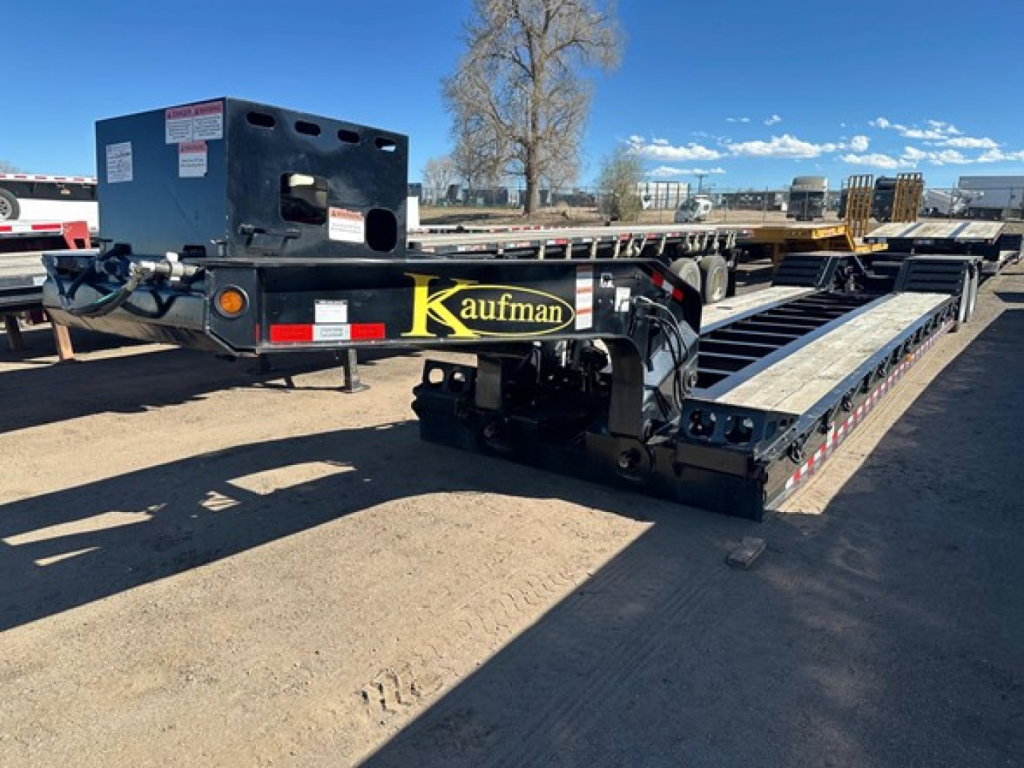
Have kaufman lowboy trailer to sell? List it here to reach thousands of buyers.
About Kaufman Lowboy Trailers in Colorado
The first buying decision is usually capacity and deck layout. Buyers often compare 35 ton, 40 ton, and 43 ton class lowboys, then look closely at well length, overall deck length, axle group, and neck style. A hydraulic detachable gooseneck is common on Kaufman lowboy trailers because it speeds up loading for tracked equipment and wheeled machines without relying on separate dock access. Many units are equipped with a pony motor to power the neck hydraulics independently. Other details that matter in day-to-day use include outriggers, D-rings, load bearing fenders, rear bridge length, ramp configuration, and whether the trailer rides on air ride or spring suspension.
Colorado operators should pay particular attention to weight distribution, deck construction, and tire specification. A 24-foot well is a practical size for many mid-size machines, but axle spacing, kingpin setting, and closed tandem or spread configuration can affect how the load scales on the tractor and trailer. Wood deck sections are common because they are serviceable and provide traction, while heavy-duty crossmember construction and reinforced transition areas matter when equipment is repeatedly driven on and off. Low profile 22.5 tires are often used to keep loaded deck height down. Buyers moving equipment in rough weather or on mixed surfaces may also value traction aids, lighting upgrades, and securement points placed for multiple machine types.
Kaufman lowboy trailers are often chosen by smaller fleets, owner-operators, and regional contractors who need a practical heavy haul trailer without stepping into a specialized multi-axle platform. The right spec depends less on brand name alone and more on how the trailer matches your heaviest machine, your normal route permits, and the tractor assigned to pull it. A buyer comparing listings should verify rated payload, neck operation, suspension condition, brake setup, tire size, deck wear, and any signs of stress around the neck, main beam, and axle group. Those details will tell you more about long-term value than paint or model year alone.
Frequently Asked Questions
What is the main advantage of a Kaufman lowboy trailer?
The main advantage is low deck height. A lowboy trailer lets you haul taller equipment while keeping overall loaded height lower than a flatbed or deckover trailer. That is especially important for construction and agricultural machinery with cabs, booms, or fixed structures that can push total height over legal limits. On a Kaufman lowboy, buyers usually focus on capacity, well length, and detachable neck design because those features directly affect what equipment can be loaded safely and legally.
Why does a hydraulic detachable neck matter on a lowboy?
A hydraulic detachable neck allows the trailer to be disconnected at the front so equipment can be driven directly onto the deck from ground level. That makes loading safer and faster for tracked machines, rollers, pavers, and other self-propelled equipment. A trailer with a pony motor can power the hydraulic system without depending on the tractor, which adds flexibility when switching power units or loading in the field. Buyers should still inspect the hydraulic components, neck locks, and frame connection points closely because those areas see repeated stress.
What capacity should I look for in a Kaufman lowboy trailer?
The right capacity depends on the heaviest machine you plan to move, plus attachments, fuel, chains, and any accessories carried with the load. Many buyers in this category compare trailers in the 35 ton to 43 ton range, but gross rating alone is not enough. You also need to consider concentrated axle loads from tracked equipment, deck length, axle configuration, and how the load balances with your tractor. A trailer that is rated correctly on paper can still be a poor match if the machine does not fit the well properly or scale well across the axle group.
What should buyers inspect on a used lowboy trailer?
The most important inspection points are the neck structure, main beams, crossmembers, suspension, axle alignment, brakes, and tire condition. Look for cracks, welded repairs, elongated pin holes, deck damage, and uneven tire wear that could indicate alignment or suspension issues. On detachable neck models, pay close attention to hydraulic cylinders, hoses, locking mechanisms, and wear at the connection points. Also inspect outriggers, D-rings, ramps, and load bearing fenders if the trailer will be used with multiple machine types.
Are lowboy trailers a good fit for Colorado hauling conditions?
Yes, lowboy trailers are a strong fit for Colorado when the trailer is matched to the route, permit requirements, and machine weight. Mountain grades, weather changes, and bridge restrictions make proper trailer setup more important than in flatter regions. Buyers should consider axle spacing, suspension type, tire profile, and braking condition, along with how the trailer distributes weight behind the tractor. A well-matched lowboy helps maintain legal height, improves loading access, and handles regional equipment moves more efficiently than a standard flat deck trailer.