
Viking Log Trailers For Sale in Alaska
Browse Viking log trailers for sale, including lightweight plantation-spec setups with bolsters, drop centers, load cells, and 25,000-lb axles.
Learn more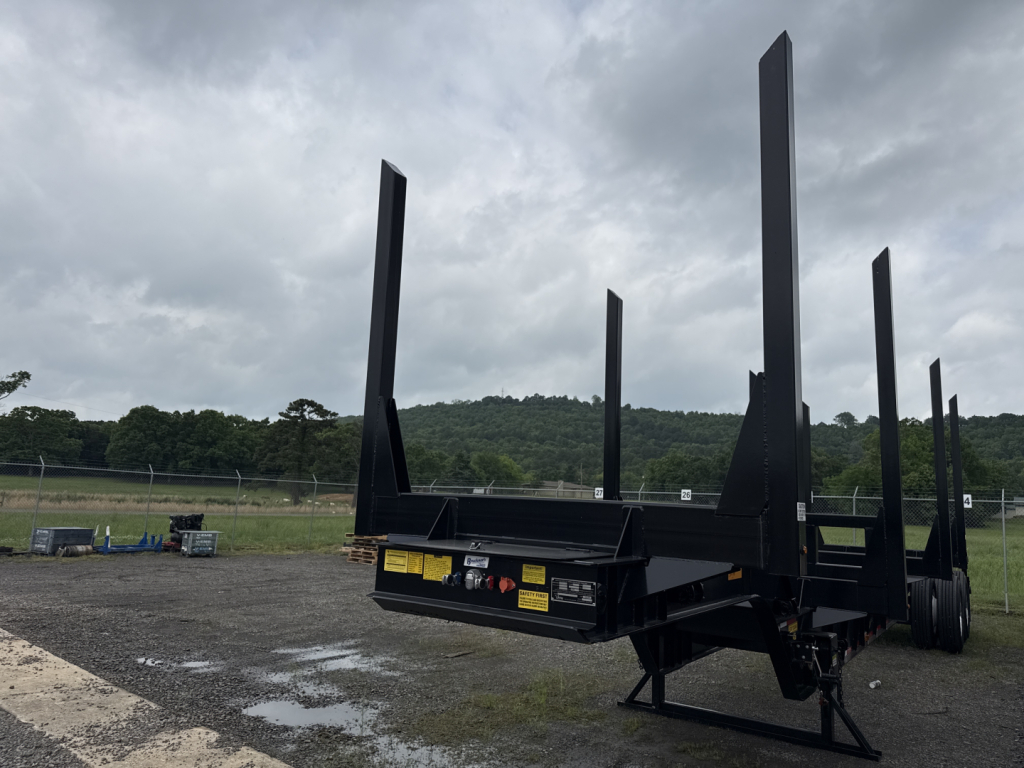
Have viking log trailer to sell? List it here to reach thousands of buyers.
About Viking Log Trailers in Alaska
Bolster count and trailer length are key spec decisions in this category. A 40-foot log trailer with four bolsters is a common setup for moving tree-length wood while maintaining load support across the bunk spacing. Features like a grapple bar, straps, and single-point suspension are typical on working logging trailers because they simplify loading and securement in the field. Buyers should also pay attention to axle ratings, tire size, and wheel material. A trailer equipped with 25,000-lb axles, 11R24.5 tires, and aluminum outside wheels can offer a solid balance of durability, serviceability, and weight control.
Brake type and suspension design matter more on log trailers than many first-time buyers expect. Drum brakes remain common because they are familiar to service and proven in heavy vocational use. Single-point suspension is popular for logging applications because it is rugged and predictable on rough haul roads, though ride quality and maintenance preferences can vary by operation. If the trailer includes load cells and onboard electronics, that can be a major advantage for payload management, especially when legal weights, mill scaling, and load consistency affect revenue.
When comparing Viking log trailers, look beyond basic length and price. Check bunk spacing, center drop, landing gear style, grapple compatibility, axle capacity, and how the trailer is set up for the type of timber you actually haul. A good log trailer is not just a platform on wheels. It is a purpose-built forestry trailer designed to maximize legal payload, stand up to repeated off-road use, and load efficiently at the landing and unload cleanly at the mill.
Frequently Asked Questions
What should I look for first when buying a Viking log trailer?
Start with the trailer's intended wood length, bolster configuration, axle capacity, and frame design. Those specs determine how well the trailer supports the log load, how much legal payload it can carry, and how it will perform on rough logging roads. After that, review suspension type, brake system, tire size, and any added features such as load cells, grapple bars, and winch-back landing gear.
Why does an 8-inch drop center matter on a log trailer?
A drop center lowers the load's center of gravity compared with a straight frame design. That can improve stability and help the trailer carry logs more securely, especially when hauling taller or uneven timber. It can also make loading more controlled by keeping the wood seated lower between the bolsters.
Are load cells useful on a log trailer?
Yes. Load cells and onboard electronics help the operator monitor payload in real time, which is valuable when legal axle weights and gross weight limits affect profitability. In timber hauling, accurate weight information can reduce under-loading, help avoid overweight citations, and improve consistency from load to load.
Is single-point suspension a good choice for logging trailers?
Single-point suspension is widely used in logging because it is robust, relatively simple, and suited for off-road vocational work. It handles rough surfaces well and has a reputation for durability in demanding timber operations. The best choice still depends on your roads, maintenance program, and how much priority you place on ride characteristics versus simplicity.
How many bolsters does a 40-foot log trailer usually need?
A 40-foot log trailer commonly uses four bolsters, but the right number depends on the wood length, species, loading method, and local hauling practices. Proper bolster spacing is important because it supports the logs evenly and helps keep the load stable during transport. Buyers should match bunk layout to the timber they haul most often rather than assuming one arrangement fits every operation.